






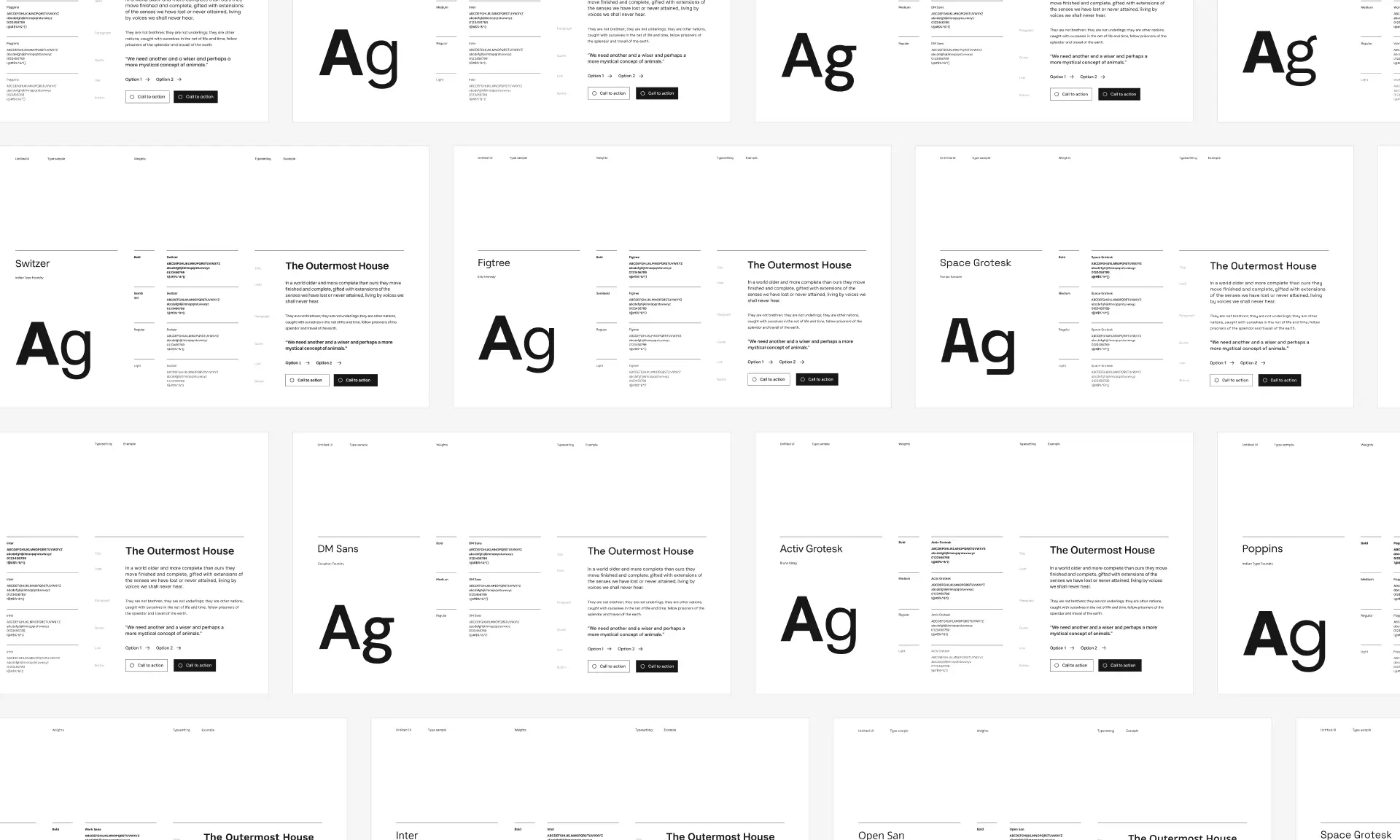
Your typography system is one of the most foundational parts of UI design, right alongside your color palette. Getting it right isn’t about picking a "safe" web font or grabbing the first free typeface you find — if people can’t comfortably read your interface, they won’t stick around long enough to notice anything else you did well. A rudimentary understanding of typography is enough to pick genuinely good fonts for almost any UI or product design project.
Good typography goes unnoticed when it’s done well, but a well-chosen typeface can elicit emotion, guide attention and build a typographic identity on its own — it’s one of the most undervalued parts of modern product design (a few of the books on our UI design reading list cover this properly). Bad typography, on the other hand, sticks out immediately, even to people with no design background, and quietly damages both the brand and the user experience.
Designers often fall back on trends rather than carefully choosing a typeface, partly because typography is one of the harder UI design skills to master. Most of the best Figma UI kits ship with a type scale already set up, if you’d rather start from a proven system than build your own.
This is our pick of the best free fonts for modern UI design in 2026 — every typeface below is free for personal and commercial use, and we’ve fact-checked the licensing, weights and designer credits for each one. But first, a quick refresher on the typography fundamentals that make any of these fonts actually work.
What does “Display” mean?
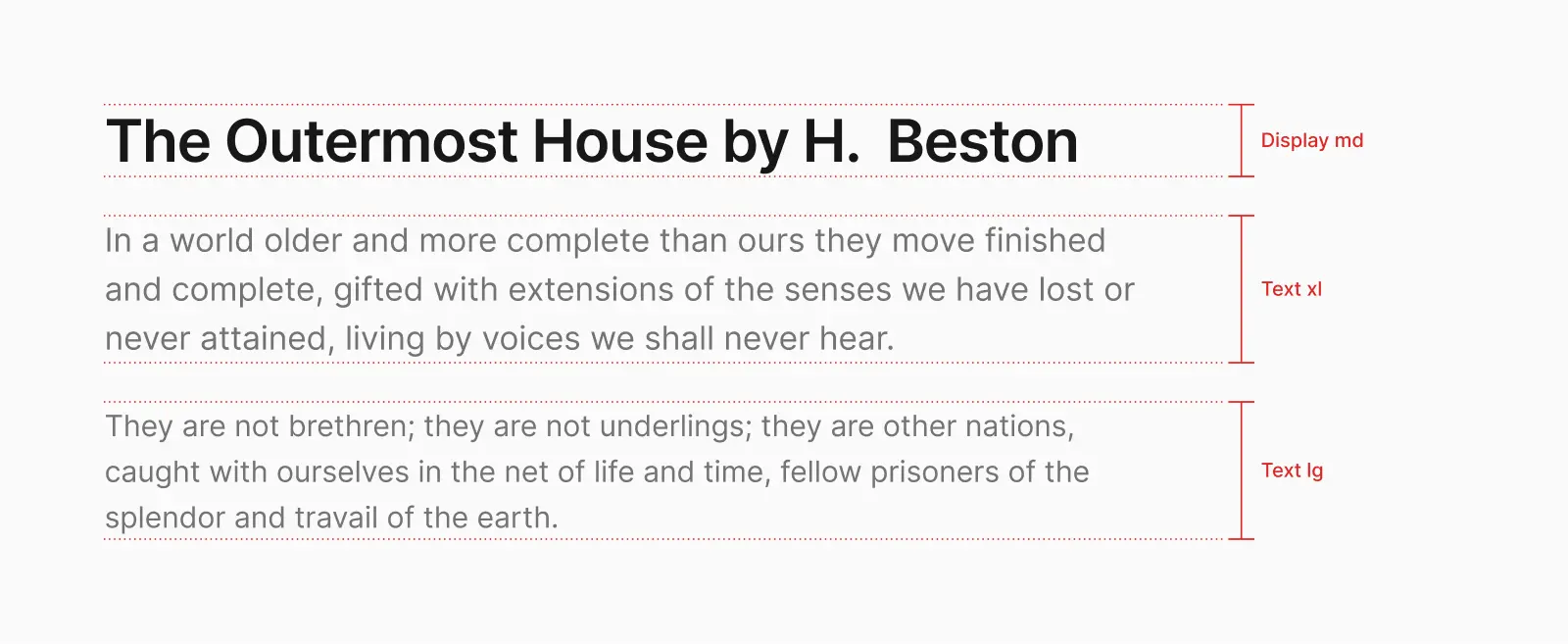
A display text style or display typeface is intended for use at large sizes for headings, rather than for extended passages of body text. Website headers are a great example of where a display typeface should be used.
As a general rule, “text” styles should be used for the majority of informational copy and body copy (paragraph text, labels, UI elements) and small sizes in user interfaces, while larger “display” styles should be reserved for headings (H1-H6).
Base font size
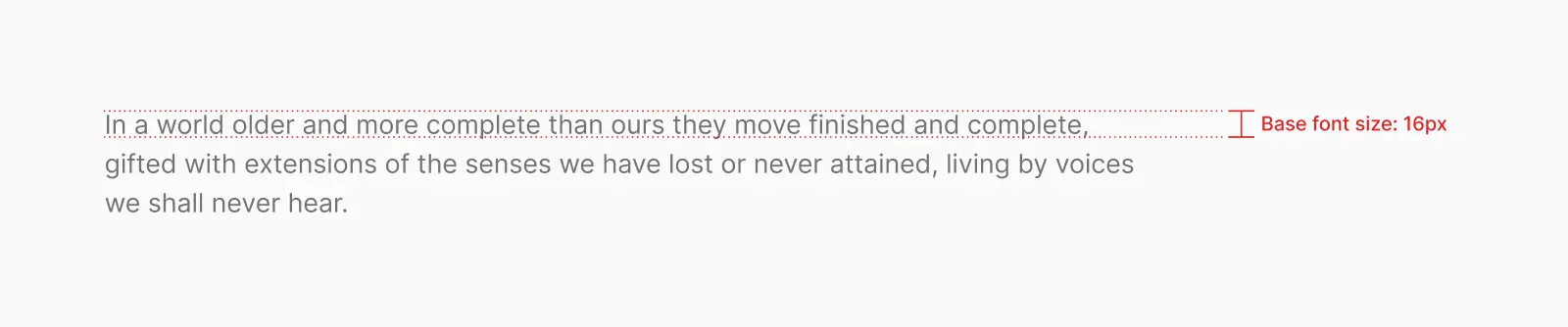
Your base font size is the “default” size used across most paragraphs, labels, menus and lists in a UI, and it’s a key input for responsive design.
Most modern UI and web design uses a base font size of 16px. It is a good default because text stays legible on screen.
Ultimately, you want the body text on your phone (when held at a natural distance) to be as readable as the text in a well-printed book (when held at a natural – usually slightly farther – distance).
Line height
The correct line height differs between typefaces and sizes, so it’s worth adjusting and experimenting until it looks and “feels” right—it’s not an exact science.
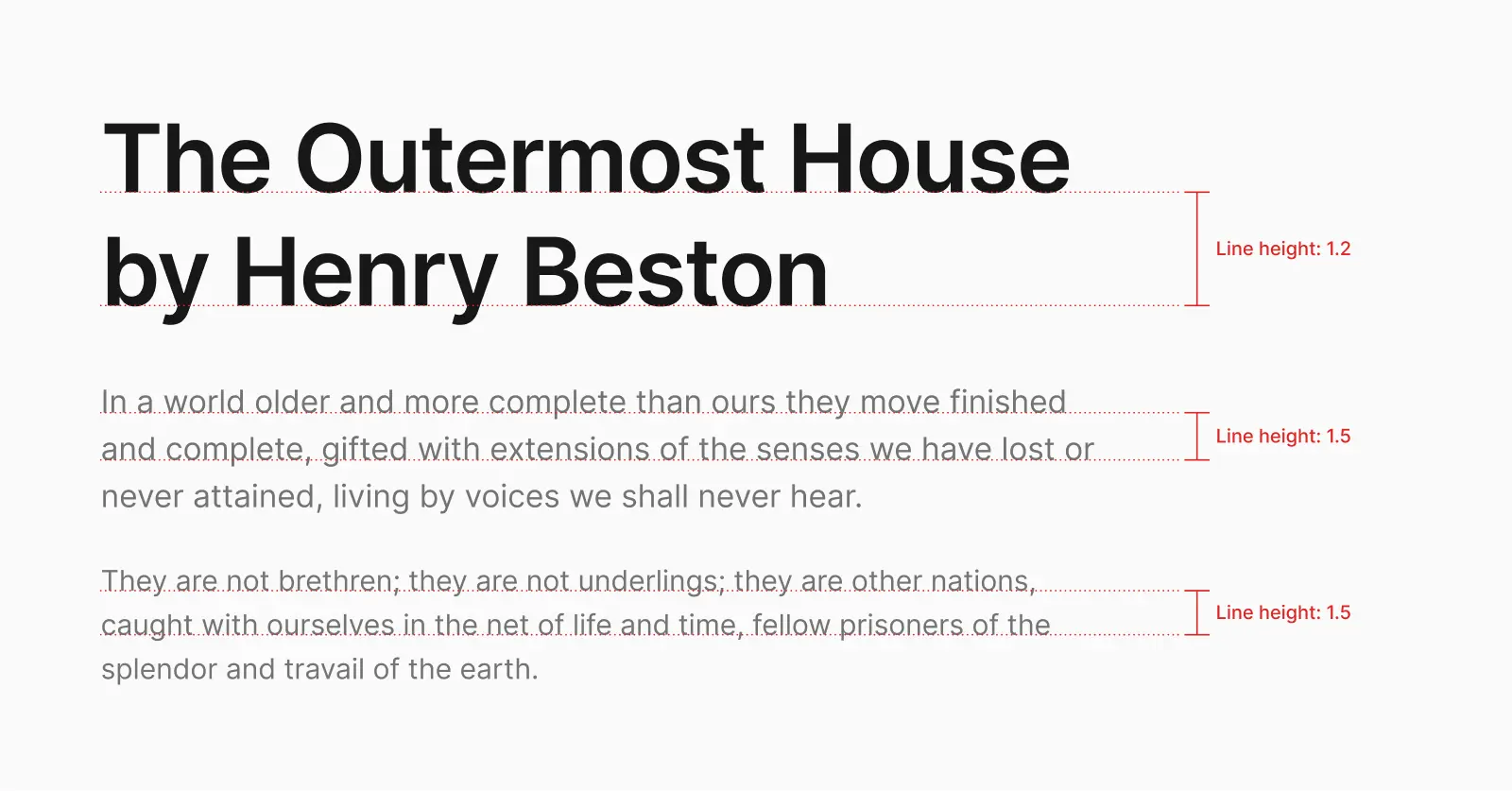
As a general rule (and a good starting point), body text should be between 1.5 to 2x the text size, depending on the width and length of the content. For example, if your body text is 16px, set the line height to 1.5 or 24px.
To complicate things further, there is an inverse relationship between font size and appropriate line height—the larger the text, the smaller the line height should be. As a general rule for display text (headings etc.), aiming for 1 to 1.25x is usually a safe bet. For example, if your display text is 60px, set the line height to ~1.2 or 72px and see how that looks.
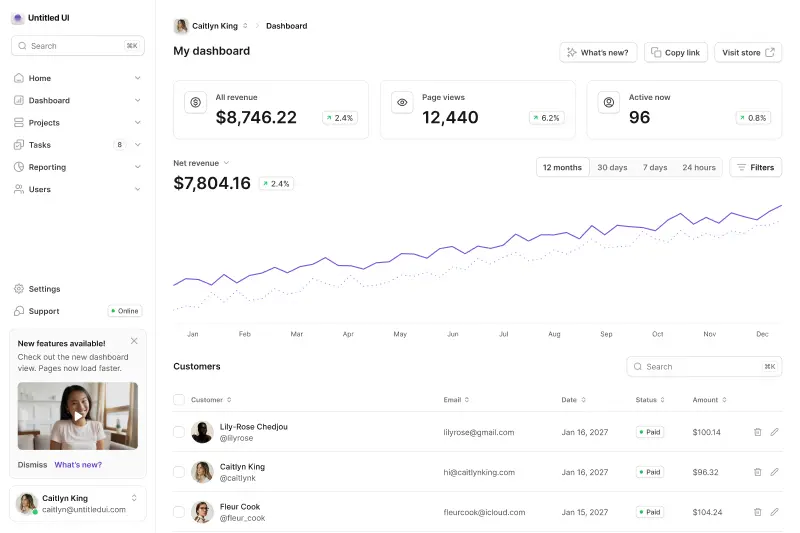
We’ve stress-tested Untitled UI’s typographic scale across dozens of projects to make sure it’s robust enough to use across (almost) any project.
Optimizing letter spacing for display text
Often, typefaces are designed with an intended usage in mind—they're optimized to be a display typeface (for larger headings), or body text (smaller body copy etc.) In general, text type is designed to be legible and readable at small sizes.
Don't worry, you don't necessarily need to choose a separate typeface for display and text. Many typefaces can be used for both. Inter is an excellent choice—its clean, consistent, and uncomplicated design features make it suitable for use at all sizes.
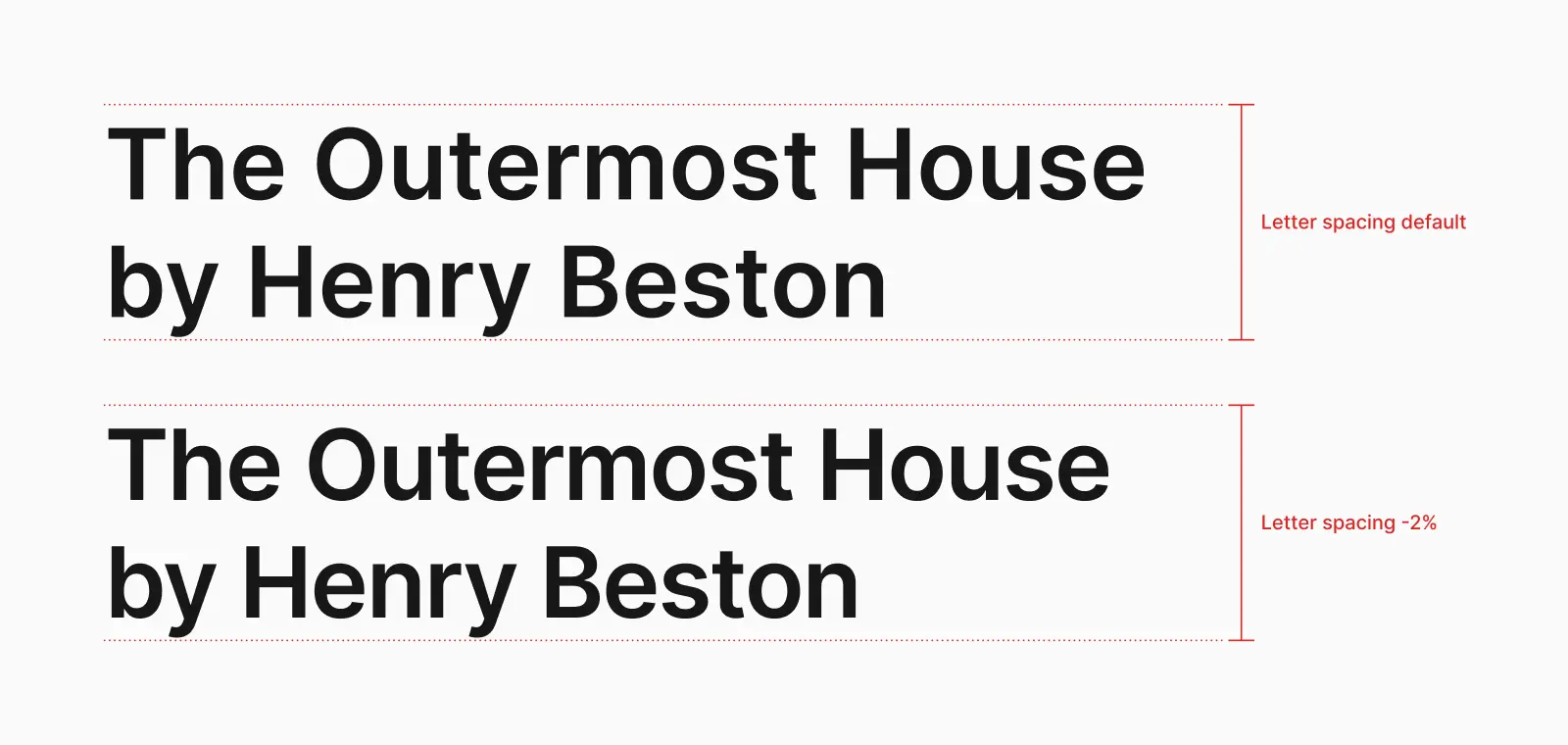
However, if you're using the same typeface for both body text and display text, it is often a good idea to tweak letter spacing to the display text style to make it more legible in larger sizing. Don't go overboard though, a little goes a long way and helps display text look and feel tighter.
Unfortunately, Figma only allows you to define a % value for letter spacing in text styles, which doesn't mirror CSS. If you're handing designs to a developer or building a design yourself, you'll need to define either a hard-pixel value or a rem/em value (e.g. -0.1em).
Choosing the right fonts for your project
In order to implement a good typography system, the first thing is to choose an appropriate font family. Every year, thousands of new typefaces are released, and it can be hard to choose the right one for your project.
Here's the thing: you should ignore 99% of these new fonts. This might sound hyperbolic, but 99% of modern fonts are low-quality and are usually just tweaked versions of popular font families in an effort to make a bit of money.
Here are a few tricks you can use to start picking out high-quality typefaces right away.
Look for fonts with at least five weights
When choosing a modern font for web design, a great indicator of quality is the number of font weights the typeface comes in. A good font will come with at least four—usually light, regular, medium, semibold, and bold (with italic versions of each)—and indicates it's been crafted with a little more care and attention to detail.
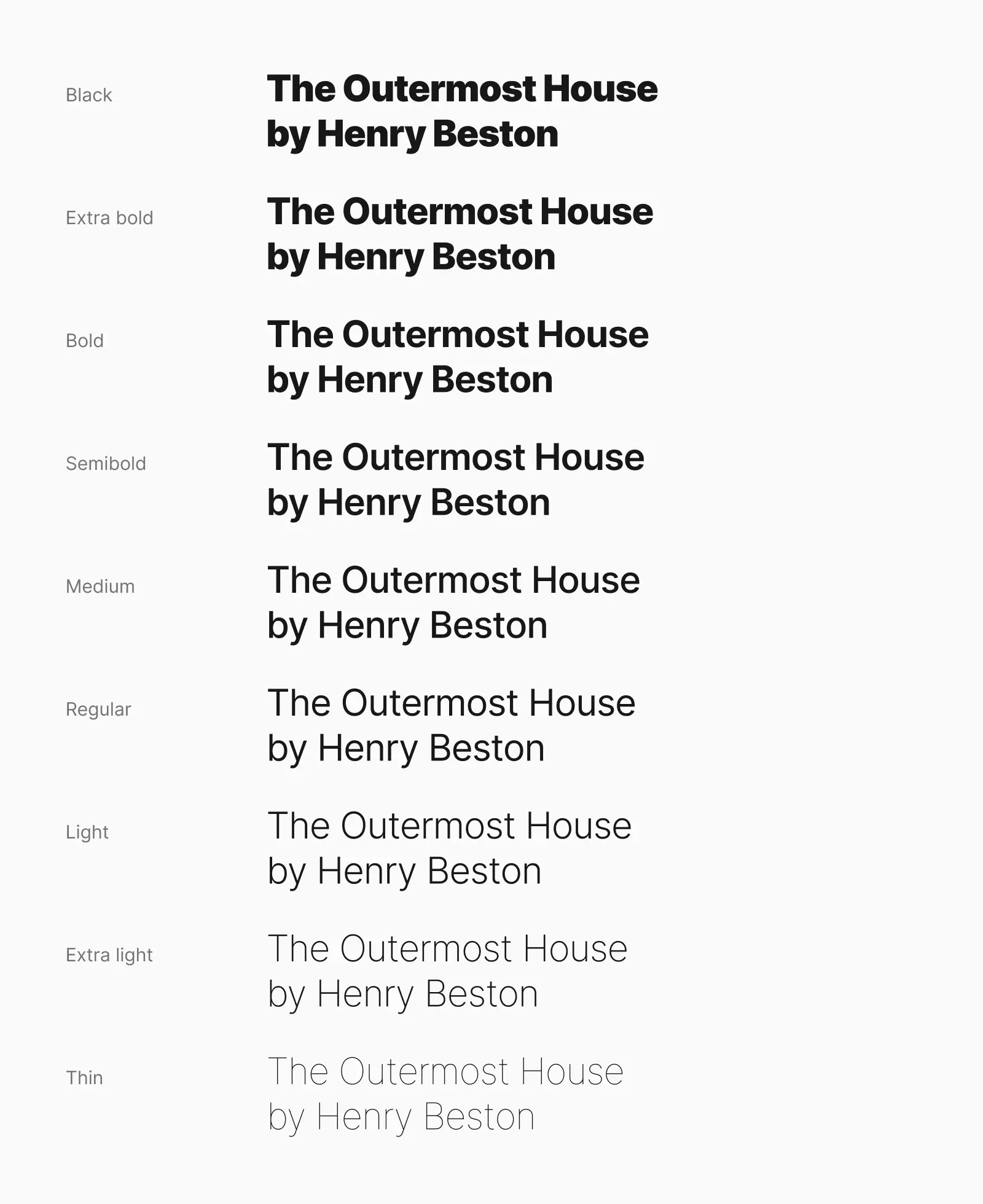
This isn’t always true, but as a general rule, typefaces that come in a lot of different weights tend to be crafted with more care and attention to detail than typefaces with fewer weights. It's also a great idea to check that the typeface includes all the special characters you'll need (such as punctuation marks), and multilingual support (different languages) if you need them!
Keep it simple
If you’re just starting out, a safe bet is to stick with tried and true typefaces that have stood the test of time. A neutral sans-serif typeface will never let you down. This is a good way to pick the right fonts until you get more experienced with picking the right font for each design project.
It can be tempting to seek out different fonts, script fonts, or other unique fonts for every project. Perhaps you've seen web designers revive vintage fonts or a combination of serif and sans-serif fonts. If you're comfortable tackling this—great! Keep in mind that this can be incredibly hard to get right. If you're just starting out, keep it simple and stick with using the font choices recommended in this post.
If the font you're considering is popular and already used by great designers or companies who value good UI design, it's likely a good font.
While it might not be the most ambitious choice, you can always swap things out later once you've laid the foundations and are more comfortable!
Learn from the best
Another good approach to choosing good fonts for web design is to pick a typeface that a large design-focused company is already using—you can bet that they’ve done the research and chosen a high-quality typeface.
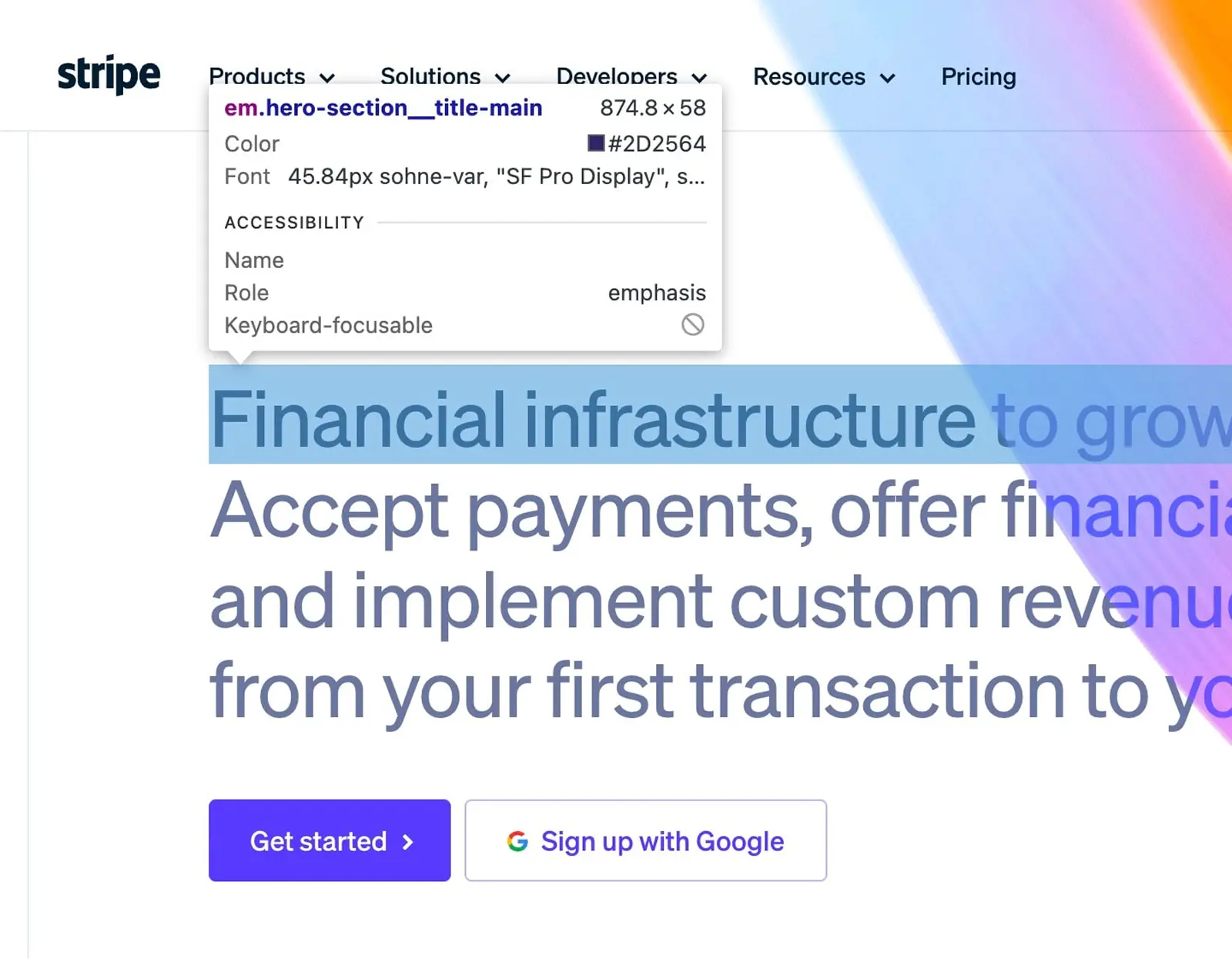
In this example, you can inspect Stripe and discover they’re using Söhne, a high-quality sans-serif typeface from Klim Type Foundry.
In this example, Söhne is a paid font, which means you’ll need to purchase a license to use it in a project. Not every project needs a super premium font! Many type foundries will permit you to download a free version or a “test” font to experiment before purchasing. If you're considering investing in a premium typeface, we recommend you try out both the free version as well as some similar free modern fonts in your designs first before making a decision—often, they're so similar it's not worth the investment.
Fewer fonts are best
When looking for the best fonts for your UI design, it can be tempting to pair fonts. Perhaps you can't decide between a few great fonts or you're considering a serif and sans-serif combination?
Whatever you decide, it's a good idea to limit your designs to using just one typeface. Multiple different fonts in a design can quickly look messy and cluttered unnecessarily.
If you absolutely need to, use a maximum of two. Often, you'll find that modern fonts come with enough variable weights to effectively act as several fonts at once.
Whichever fonts you do decide on, limit yourself to using just one or two at a time. Sometimes just using one font at various weights can be just as effective as using multiple fonts.
Comparison table: The 31 best free fonts for UI design at a glance
Here’s every typeface on this list side by side, in the same order as the full reviews below — useful once you’re slotting a typeface into a broader design system. If you already know the vibe you’re after, this is the fastest way to find it; the entries underneath cover weights, designer credits and pairing notes.
Okay, let’s get into it — here’s the full list of the best free fonts for UI design:
31 best free fonts for modern UI design
Most lists go a little overboard with recommendations. As we've covered, you probably don't need a library of hundreds of fonts—here are our picks for the best high-quality (and free) typefaces that are an excellent choice for almost any UI design project:
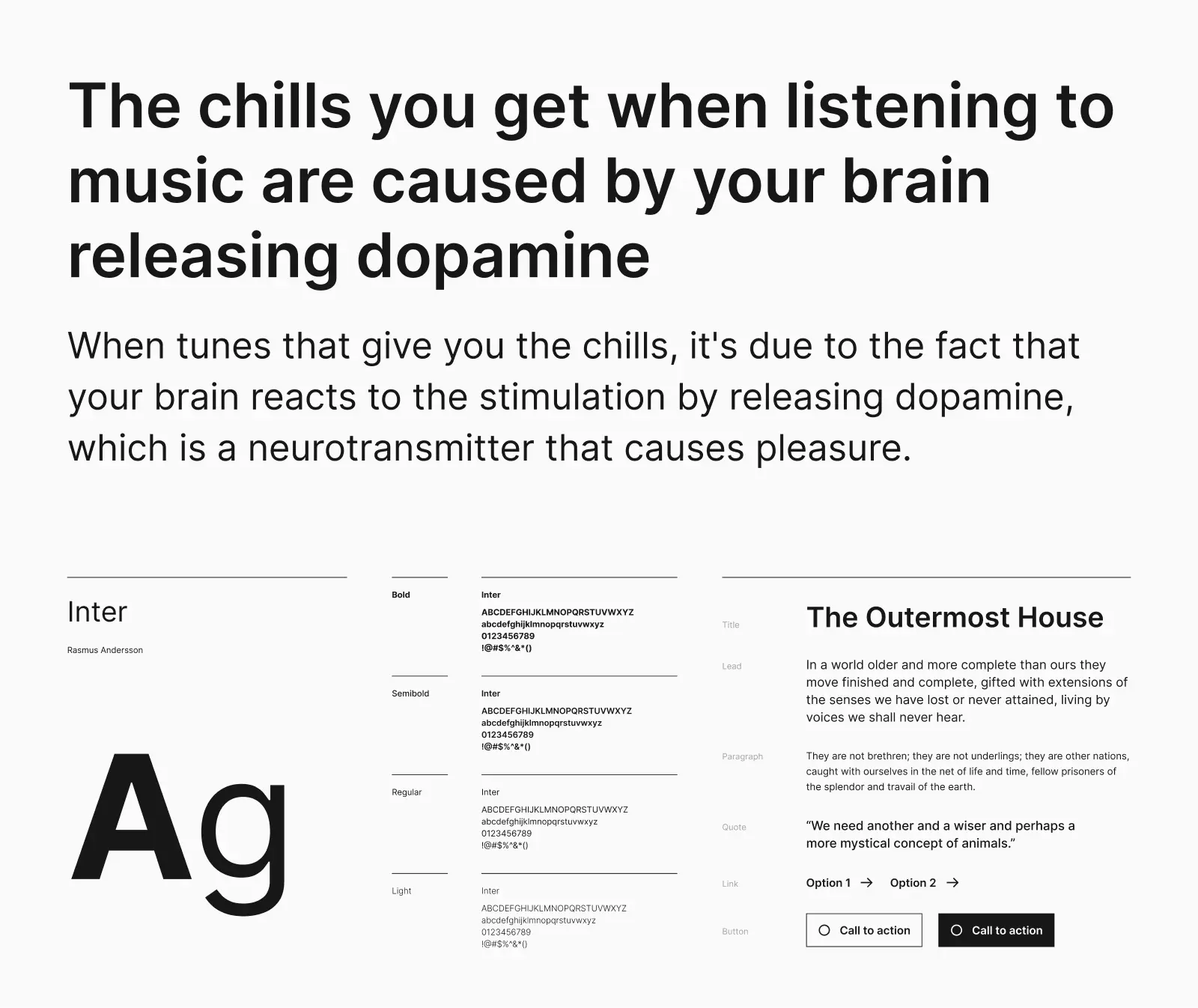
1. Inter (free)
Inter is a free, open-source sans-serif typeface designed by Swedish designer/programmer Rasmus Andersson. It was designed to work well on screens as a UI font and features a large x-height. Inter is an incredibly useful typeface that works well as both a display typeface and body text.
The family is available in nine weights with matching italics, as well as a variable font version. Inter is 100% free for personal projects and commercial use.
It's consistently ranked among the best fonts for digital products, and its tall x-height keeps small UI labels legible without bumping up the base font size.
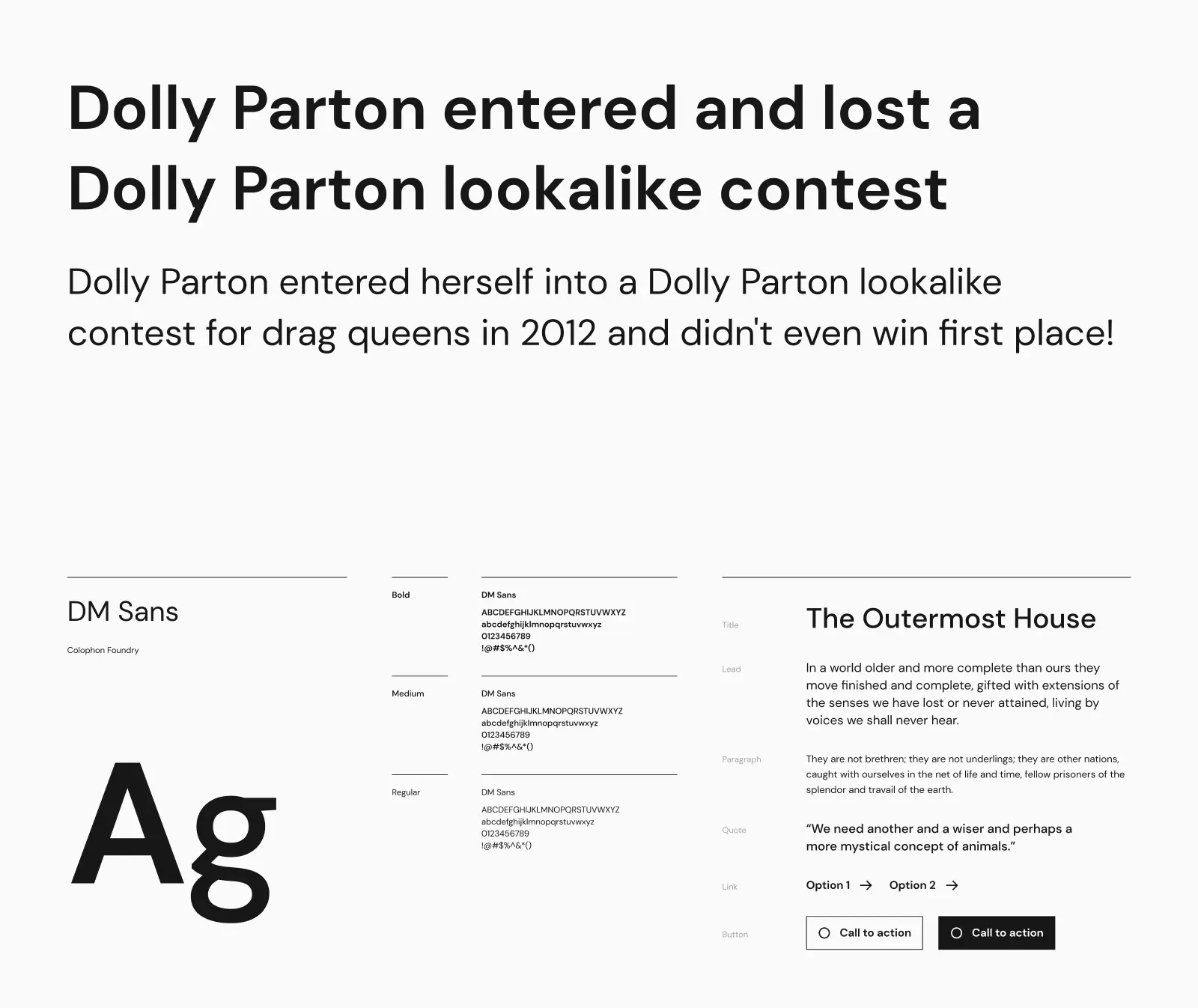
2. DM Sans (free)
DM Sans is a low-contrast geometric sans serif design, intended for use at small sizes which makes it an excellent choice for UI design. The DM Sans project was commissioned by DeepMind (Google's AI lab) from Colophon Foundry, with creative direction from MultiAdaptor, and is free for personal projects and commercial use.
DM Sans ships in nine weights (Thin to Black) with matching italics, plus a variable version spanning weight, optical-size, and italic axes—the optical-size axis is worth using, since it sharpens the design at small sizes, exactly where DM Sans is meant to work. It was designed by Colophon Foundry, which started from the Latin portion of ITF Poppins, by Jonny Pinhorn.
As a free Google font, it's easy to self-host or pull from the Google Fonts API, and its low contrast strokes give it excellent readability at small UI sizes.
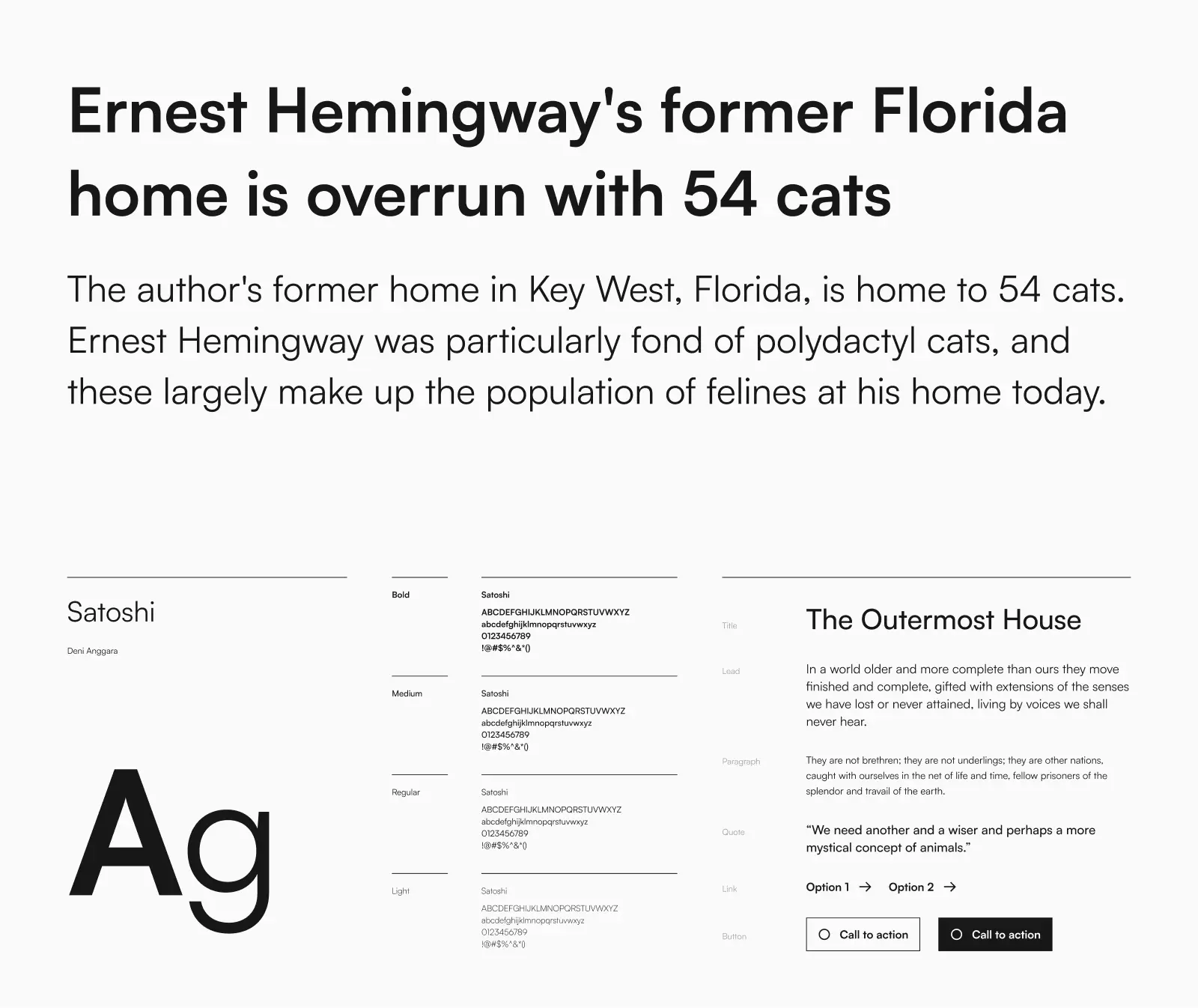
3. Satoshi (free)
Satoshi is a popular modernist and geometric sans serif font created by Deni Anggara, a Bandung-based (Indonesia) typeface and graphic designer. Satoshi made its debut on Fontshare in March 2021. It's a great all-rounder for UI design, with low stroke contrast and rounded terminals that keep it friendly at interface sizes.
We love Satoshi stylistically because it blends grotesque structure with a more geometric, constructed skeleton. Satoshi is available in 10 static and two variable styles and supports 135 languages. It's 100% free for personal projects and commercial use.
It's important to note that Satoshi does have a slightly lower x-height at 66%. This means it's a typeface not specifically designed for legibility at very small sizes, but it still maintains enough legibility to make it a great choice for UI design.
It's a good UI font choice when you want a modernist, low contrast sans-serif font without going fully geometric.
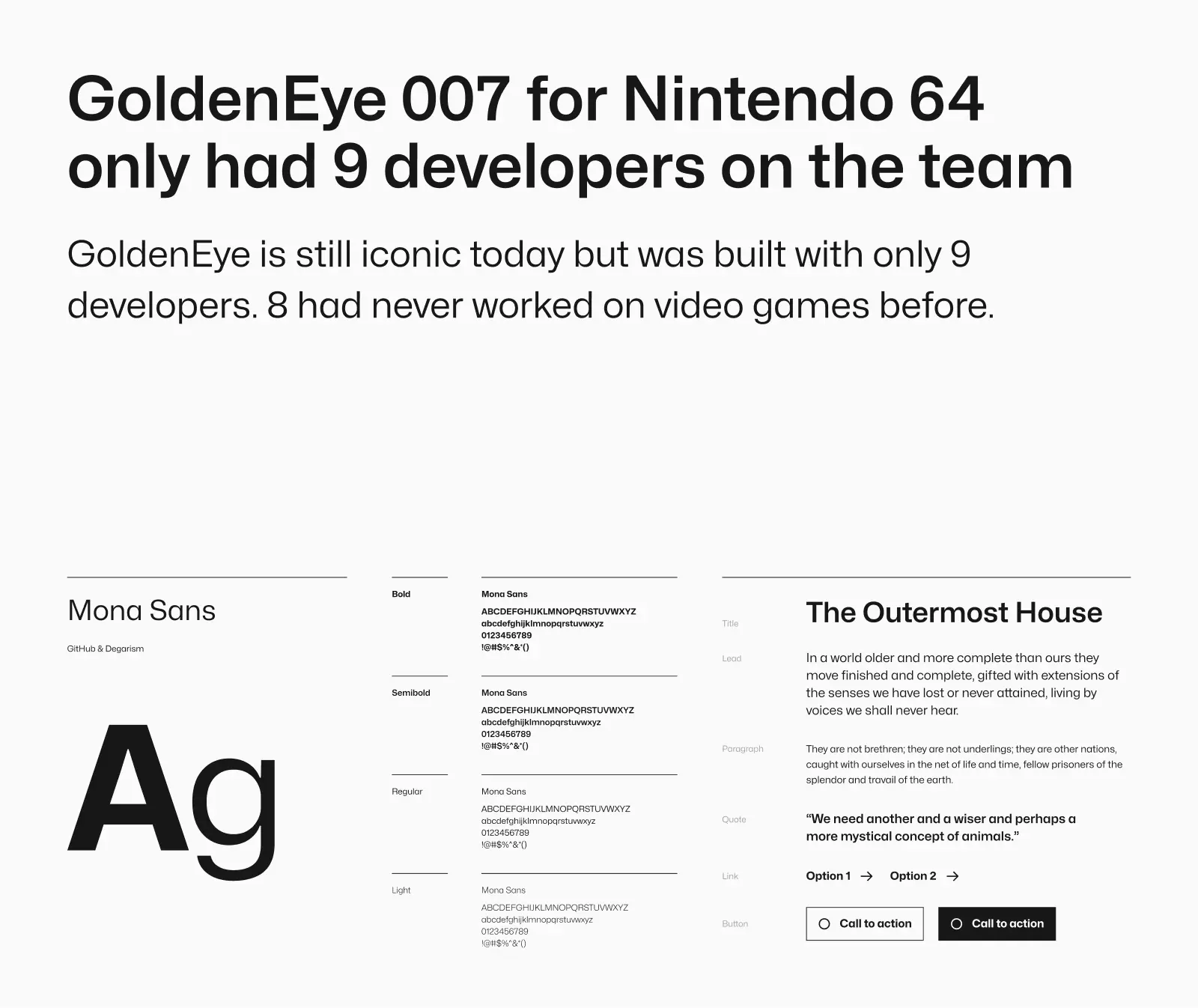
4. Mona Sans (free)
Released in November 2022, Mona Sans is a beautiful and versatile sans serif typeface by GitHub. This font family was designed alongside Indonesian studio, Degarism, and is 100% open source! It's designed specifically for product design, web design, and print, and pairs perfectly with Mona Sans's sidekick, Hubot Sans (see below).
This typeface was inspired by "industrial-era grotesques" and comes with 24 named styles with matching italics, plus a variable font spanning four axes: weight (ExtraLight to Black, 200–900), width (Condensed to Expanded, 75%–125%), optical size (tuned separately for text vs. display use), and italic. Experimenting with these variables unlocks an enormous range of styles from one file—genuinely useful when a single product UI needs both dense dashboard text and bold display headings.
GitHub built it to hold up across digital products of every kind, from dense developer dashboards to marketing pages on the main website.
5. Hubot Sans (free)
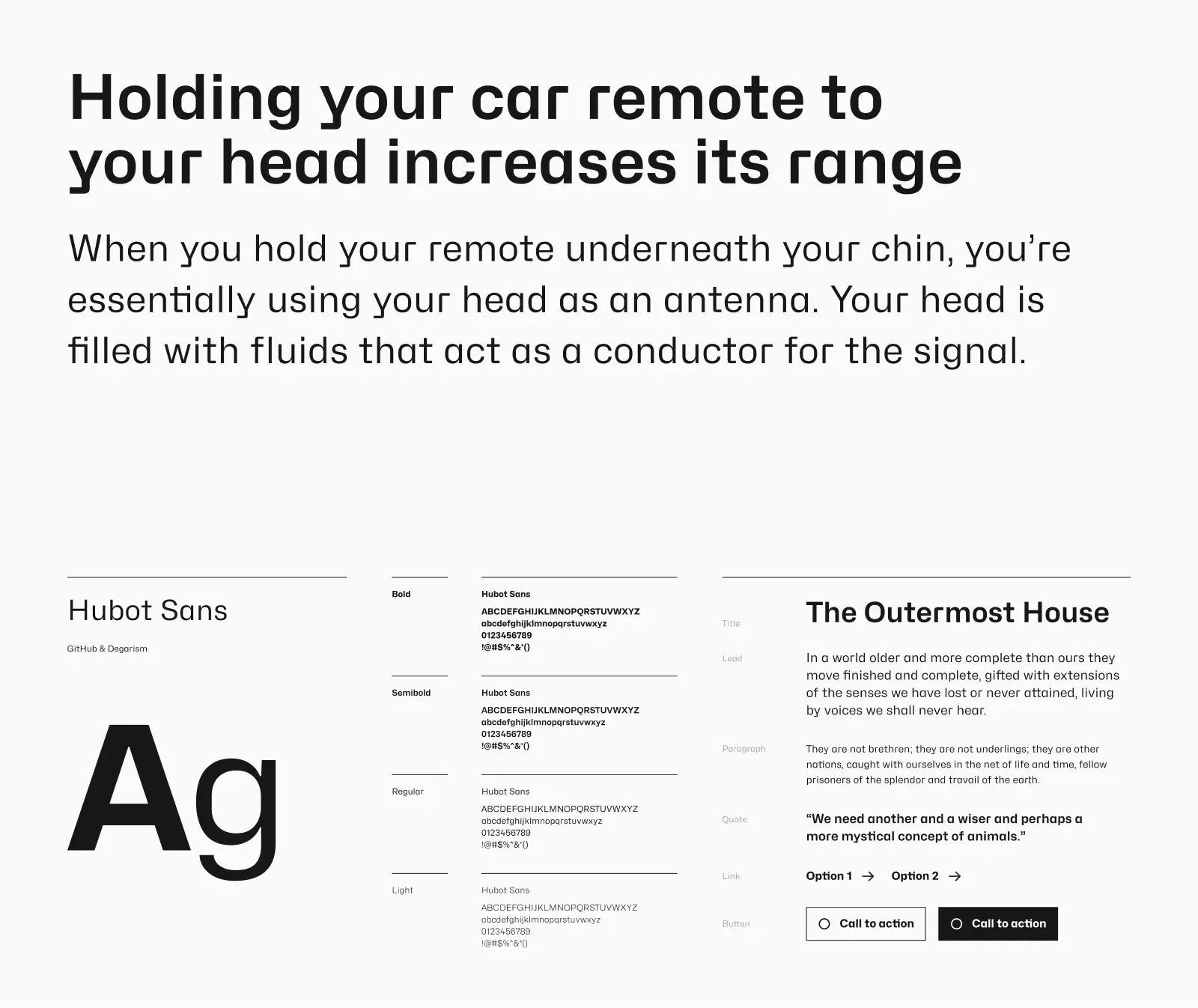
Hubot Sans is Mona Sans's "robotic sidekick" with clean and geometric accents. It's noticeably less neutral than Mona Sans, with a modern technical and idiosyncratic feel. It's perfect for display use, headers, and quotations.
Just like Mona Sans, this typeface includes 24 named styles (8 weights × 3 widths) with matching italics, plus a variable font spanning weight (200–900) and width (75%–125%) axes in a single file. GitHub made both of these typefaces 100% free for commercial use—you can use both font families in all your projects.
Because it's so distinct, save it for moments where you want users to notice, not dense day-to-day interface design.
6. Public Sans (free)
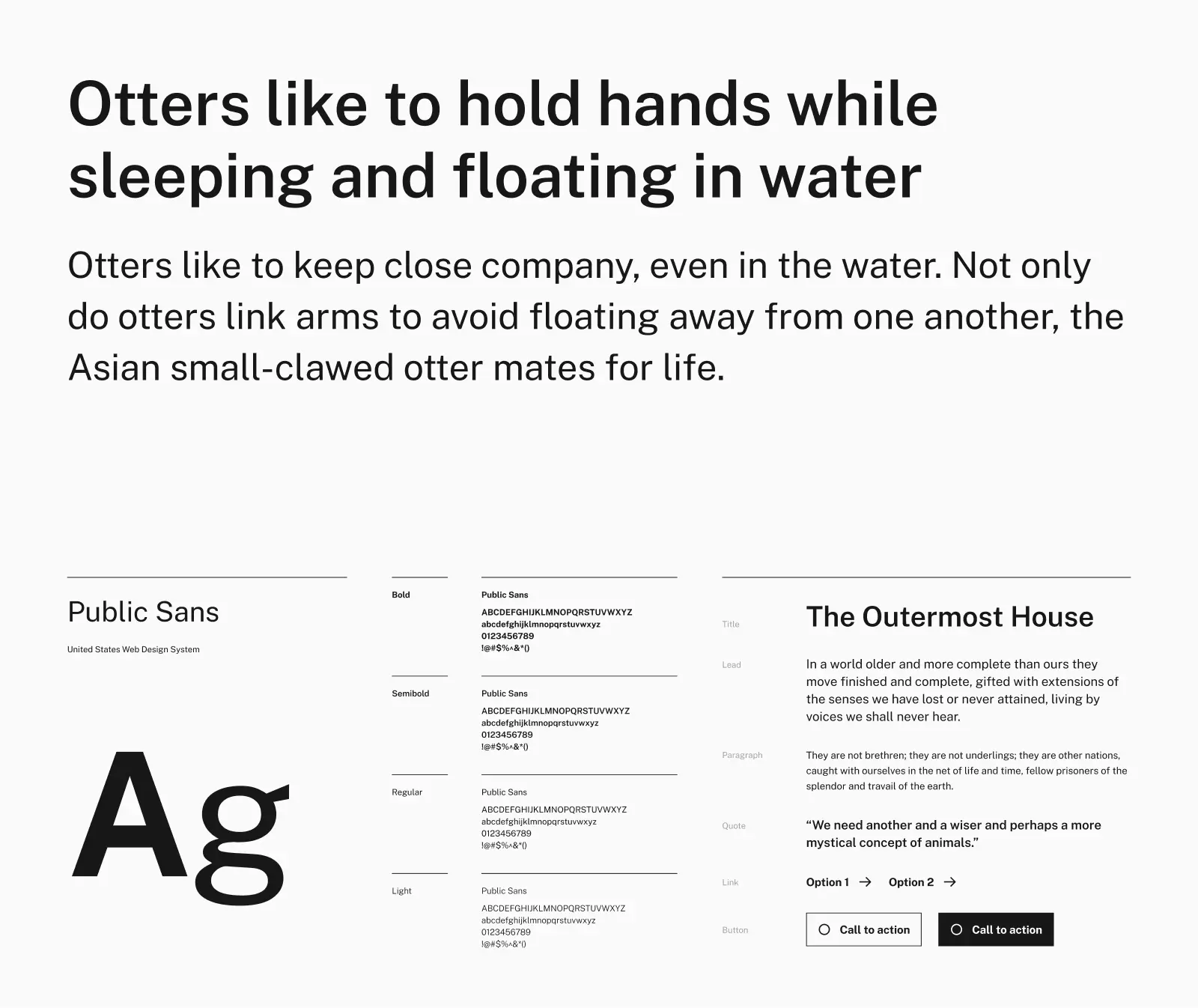
Public Sans is a strong, neutral, and free sans typeface designed specifically for UI design and web design. It was developed by the United States Web Design System and gained its (still-experimental) variable font version in May 2021.
Public Sans is originally based on the hugely popular open source Libre Franklin. While it shares many similarities with Libre Franklin, it has a more modern and neutral feel, with regularized stroke weights and non-rounded vertices. It's deliberately built to sit between the two dominant system fonts—closest to Apple's SF Pro Text, falling partway toward Google's Roboto in size and proportions—so it's a safe pick for UI text that needs to read consistently across iOS, Android, and the web (and it's 100% open source and free for personal projects and commercial use).
Its tall x-height and optimal legibility at small sizes make it a good UI font choice for civic interface design. It's built so users can read government text reliably, regardless of device or eyesight.
7. Switzer (free)
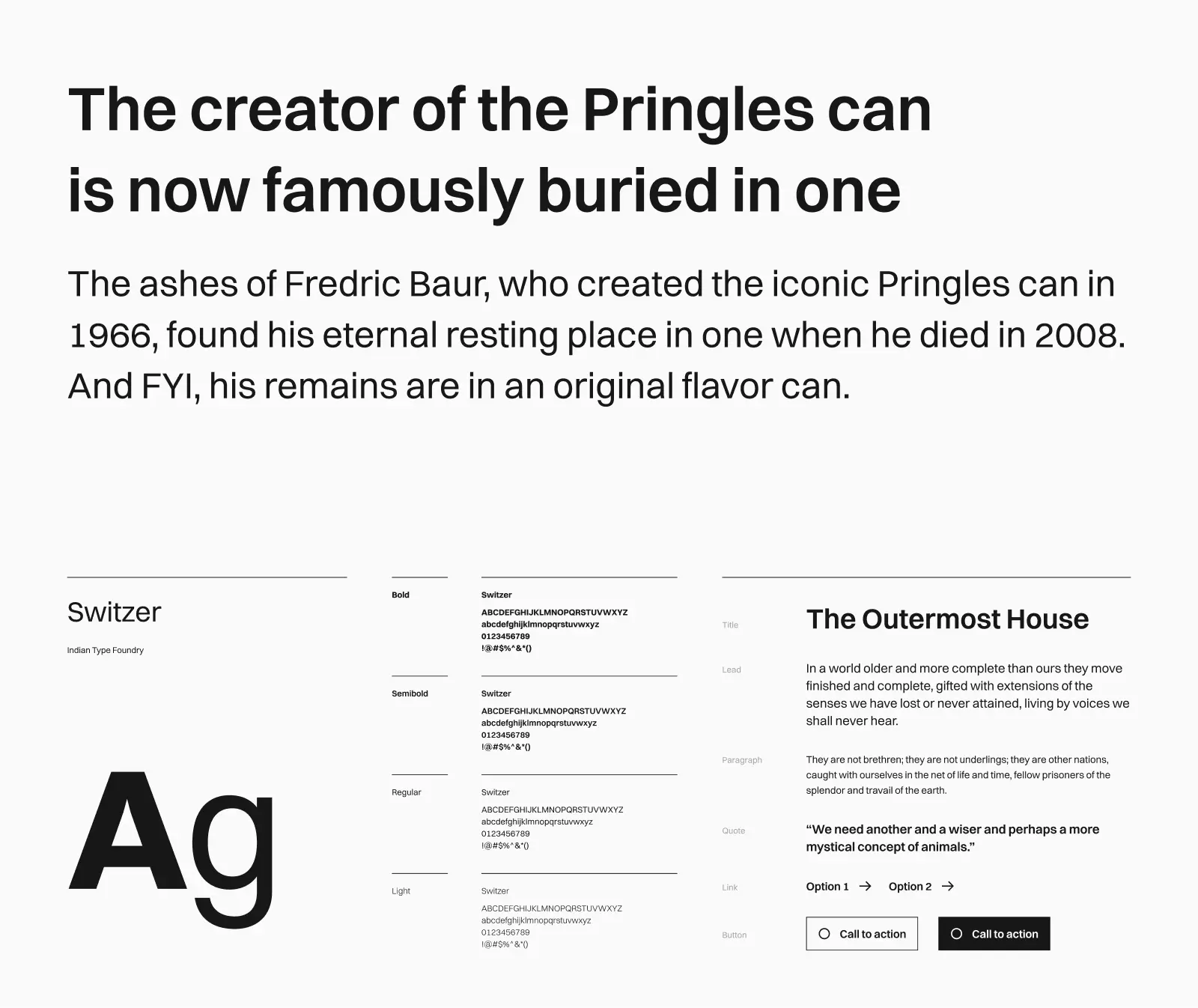
Switzer is a one-of-a-kind neo-sans serif font designed by Jérémie Hornus, originally introduced as "Volkart" on Indian Type Foundry's website and made its debut on Fontshare's platform in 2021. This Latin script, neo-Grotesk font has 18 different styles, out of which nine are matching italics.
Its lowercase counters run tight, so single-word logotypes and short headlines can look cramped—it's better suited to running UI text than large display type. With a high x-height of around 79%, it holds up well in information-dense dashboards and smaller screen sizes, giving it a modern, premium feel.
Switzer is free for both personal use and commercial use.
Low contrast strokes help it stay readable even in dense, information-heavy interface design.
8. Geist Sans (free)
Launched in October 2023, Geist Sans is the new brand font from Vercel, who builds products for developers and designers.
Vercel partnered with the team at Basement Studios (creators of Basement Grotesque) to design Geist Sans first, then expanded the family with Geist Mono—built for code editors, diagrams, terminals, and other text-based interfaces where code is represented, and tuned to pair perfectly with Geist Sans.
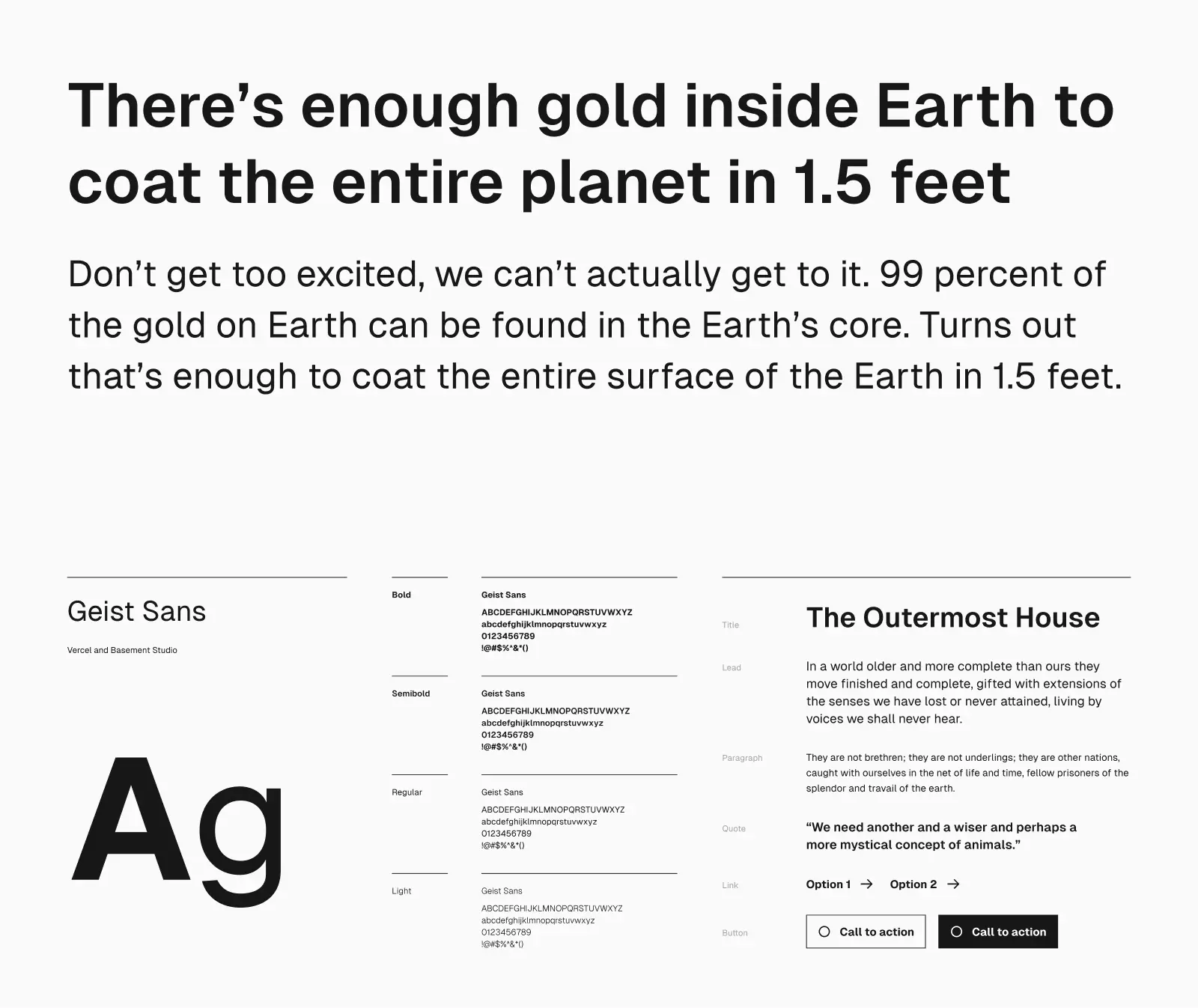
Geist Sans is a sans-serif typeface designed for legibility and simplicity. It's perfect for UI design. We love it because it's a simple, modern, geometric typeface that brings together the core principles of classic Swiss typography. If you love typefaces like Inter and Univers, you're going to love Geist Sans. Use it for everything from UI design to headlines, logos, posters, and other large display sizes.
It's a very versatile typeface and comes with a variable font format, as well as 9 fixed weights ranging from Thin to Ultra Black. Vercel have generously made Geist Sans 100% free and open source.
Vercel built it to work at every scale, from marketing website copy down to dense dashboard tables.
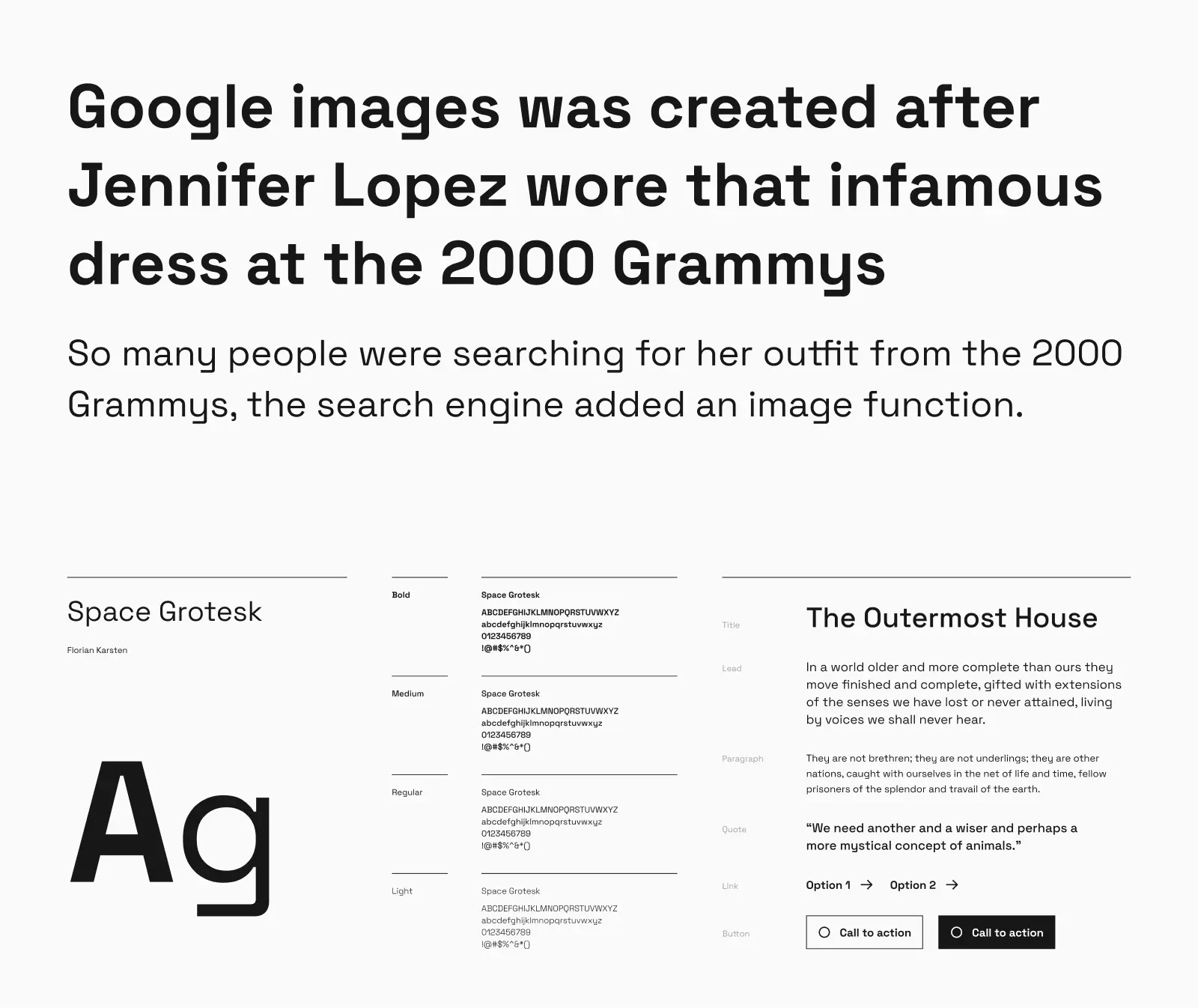
9. Space Grotesk (free)
Space Grotesk is a proportional sans-serif typeface variant based on Colophon Foundry's fixed-width Space Mono family (2016). Originally designed by Florian Karsten in 2018, Space Grotesk retains the monospace's idiosyncratic details while optimizing for improved readability at non-display sizes.
Space Grotesk is free for both personal use and commercial use.
It's a popular free Google font for tech and SaaS branding, with a wide range of uses spanning everything from a landing page website to in-product headlines.
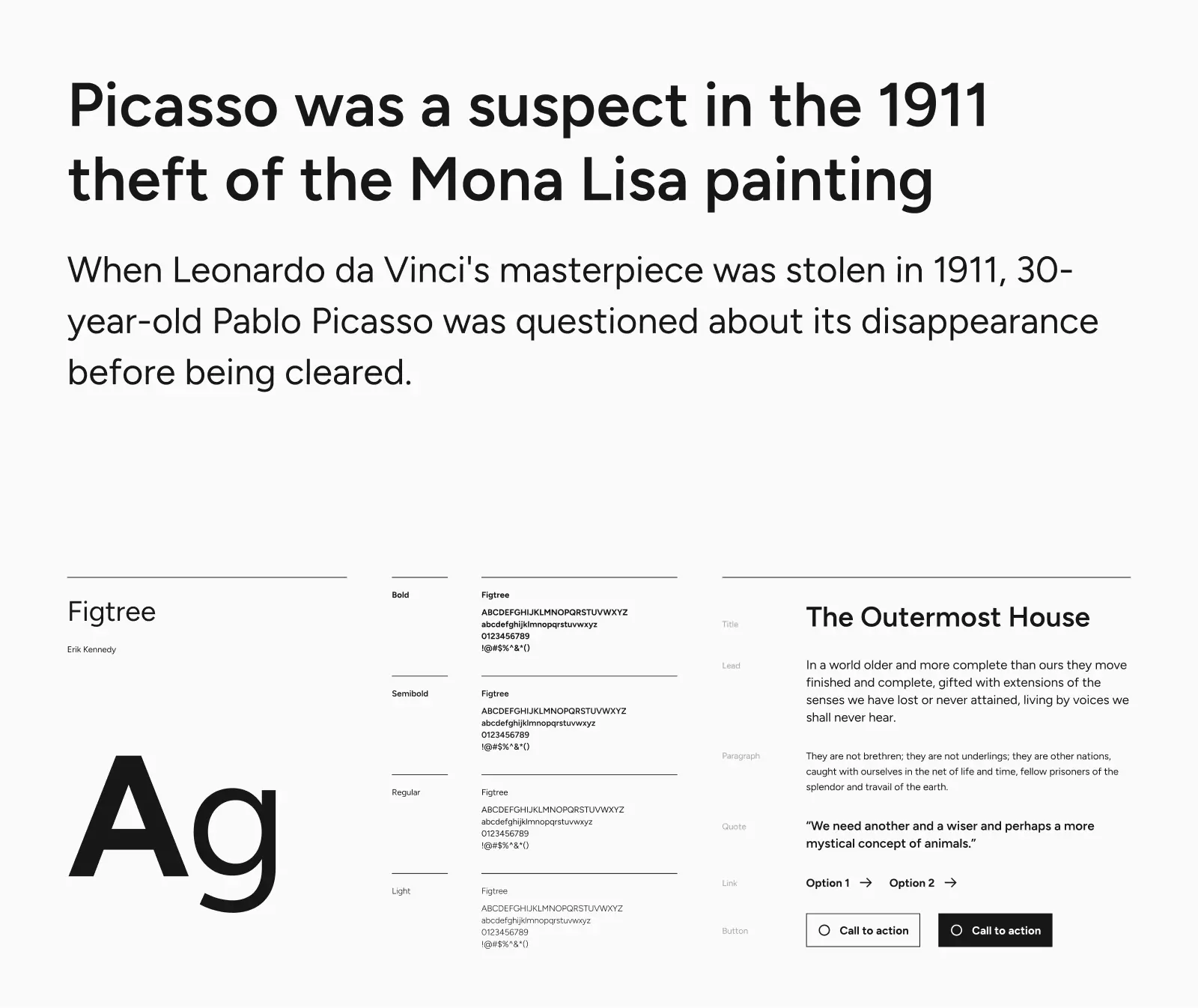
10. Figtree (free)
Figtree is a minimal and geometric sans serif design designed by Erik Kennedy, founder of the courses Learn UX Design and Learn UI Design. It was commissioned by Google Fonts and licensed under Open Font License. Figtree is a variable font that supports 280+ Latin languages and has 7 weights. Figtree's most distinctive letters are y, f, and t—each letter has unabashed curves, giving out a free, casual vibe to this font.
We love this font because it's a great balance between simplicity and friendliness. In Erik's own words, "Figtree is minimalist but not stiff, casual but not silly." Figtree is free for personal projects and commercial use.
As a free Google font, it strikes a good balance for both marketing copy and interface design.
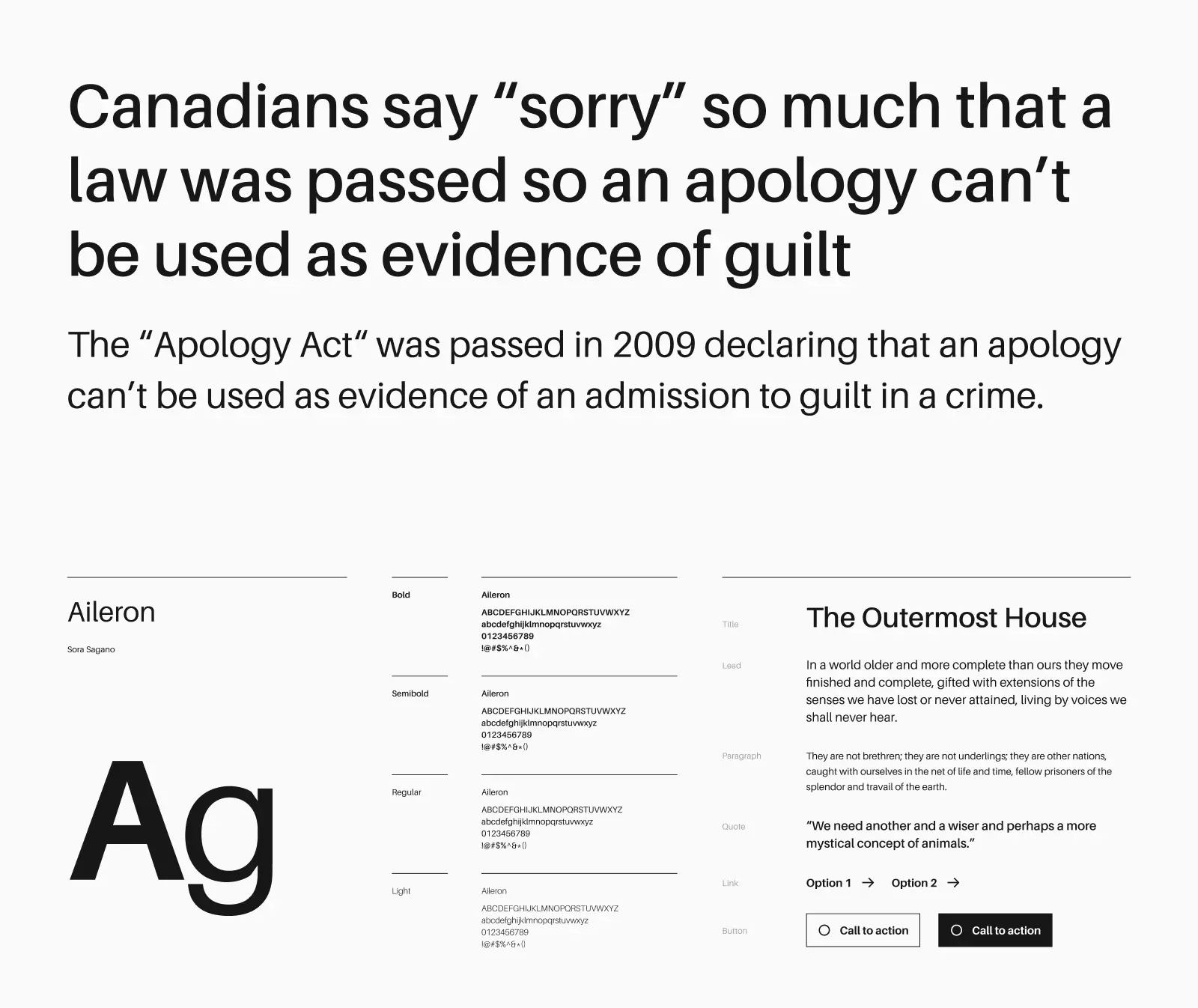
11. Aileron (free)
Aileron is a clean neo-Grotesque sans serif typeface designed by Sora Sagano from Dot Colon type foundry.
This typeface is heavily inspired by Helvetica, with subtle changes like circular dots and periods for a softer, friendlier feel. Aileron is available on Adobe Fonts, or you can download it directly from the Dot Colon website. It comes in 8 weights from ultra light to black, with matching italics, and is released under a CC0 license — public domain, no attribution required. If you find it useful, you can support the creator by buying them a coffee.
Its neutral shape makes it a good UI font whenever you want a Helvetica-style sans-serif font without a paid license.
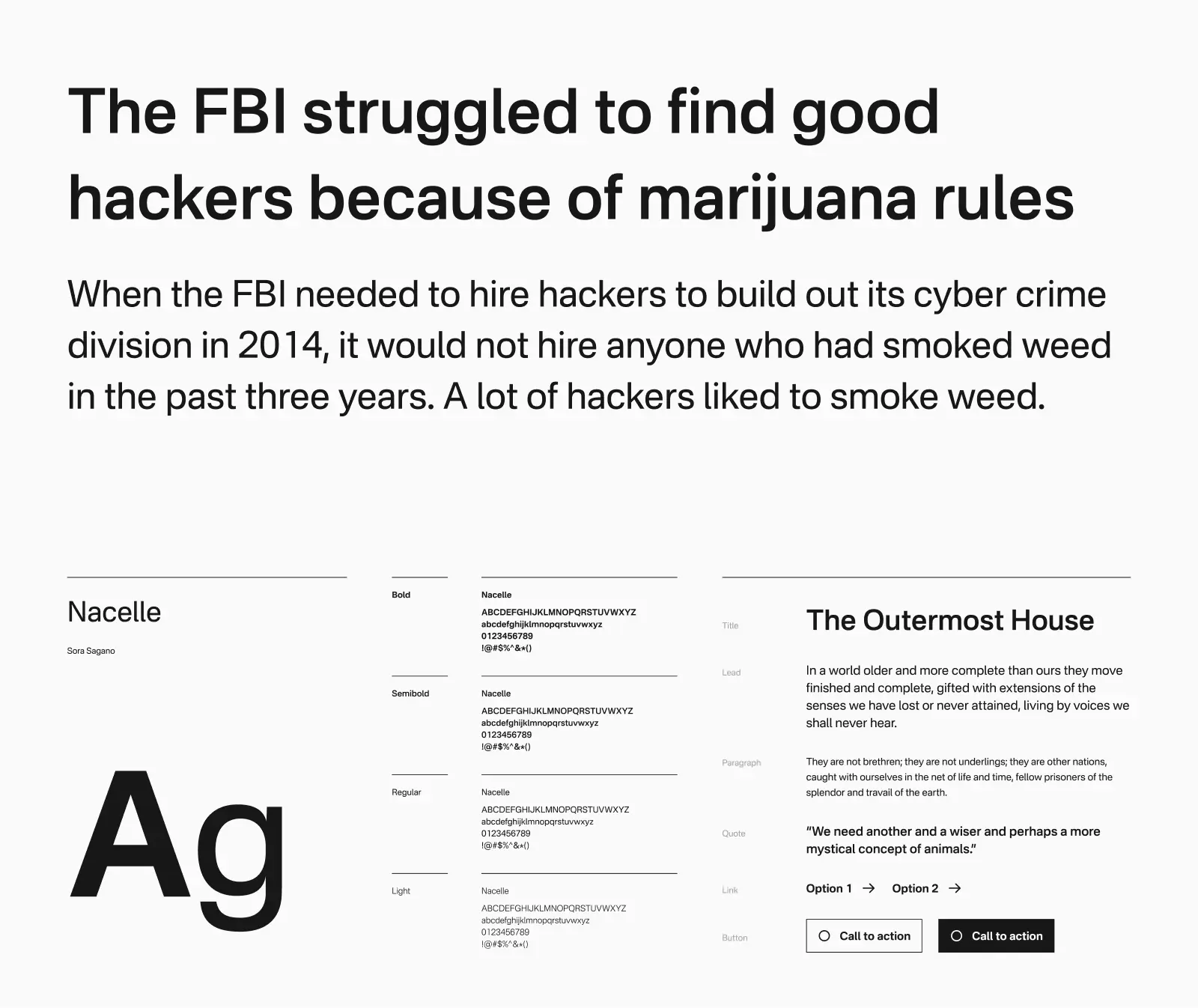
12. Nacelle (free)
Nacelle is a neo-Grotesque sans serif and the "redesigned" version of Aileron (Sora Sagano from Dot Colon). While it keeps the same Helvetica-esque neo-Grotesque styling, it has been subtly refurbished to feel more natural.
Just like Aileron, it comes in 8 weights with matching italics — a clean, neutral choice for UI work. Unlike Aileron's CC0 license, Nacelle ships under the SIL Open Font License; it's still 100% free for personal and commercial use, though you can thank the creator by buying them a coffee.
Like Aileron, it's a solid sans-serif font choice for teams that want a Helvetica alternative with a more natural, refurbished feel.
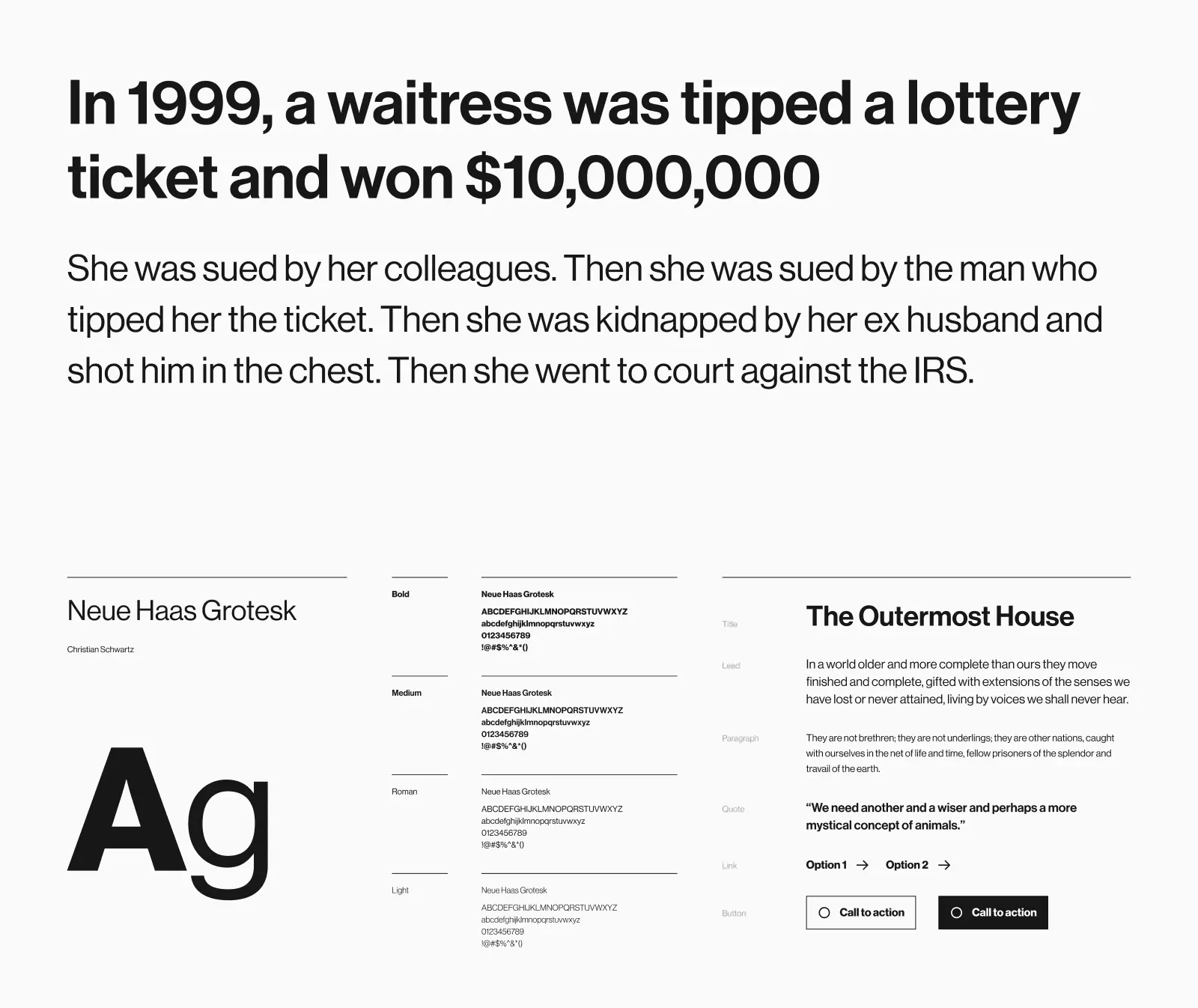
13. Neue Haas Grotesk (kind of free)
Neue Haas Grotesk was the original name for Helvetica, which has evolved and been tweaked over the years. Christian Schwartz from Commercial Type released Neue Haas Grotesk to bring back the original Helvetica typeface and set history right. It's just perfect and looks incredible for neutral and modern UI design.
This typeface is available on Adobe Fonts, which means you'll need an Adobe CC subscription to use it for personal use and commercial projects. We've tried to only include 100% free fonts on this list but Neue Haas Grotesk deserved a mention because it's so great.
Its low contrast strokes and optimal legibility at every size are exactly why it's still a favorite for neutral, modern digital products, decades after its original release.
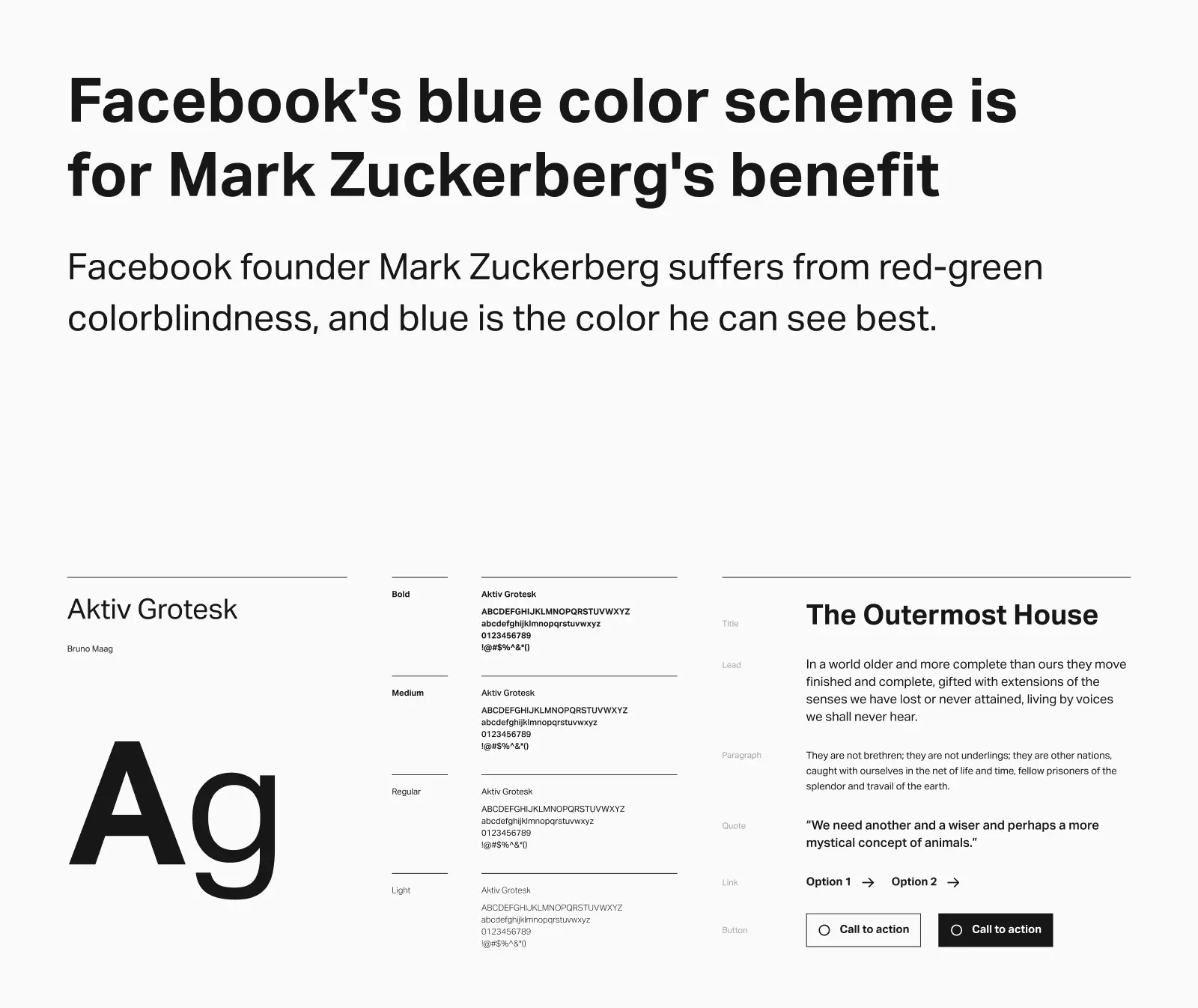
14. Aktiv Grotesk (kind of free)
Aktiv Grotesk is a minimal 21st-century interpretation of a grotesque sans-serif typeface designed in 2010 by Bruno Maag, founder of Dalton Maag. Like Neue Haas Grotesk above, it's only available on Adobe Fonts, so you'll need an Adobe CC subscription to use it for personal or commercial projects — not technically free, but good enough to earn a spot on this list.
Grotesque sans serifs have been hugely popular for UI design for decades, thanks to their neutrality and legibility, and Aktiv Grotesk is an authoritative but neutral take that makes a great modern choice. It's been described as a "Helvetica killer" — a label Bruno Maag shrugs off, since in his view actual Helvetica is the real "vanilla ice cream" of a designer's type library: safe, bland, and everywhere.
It's one of the best fonts for teams that want an authoritative, low-key grotesque rather than an obvious "default" typeface.
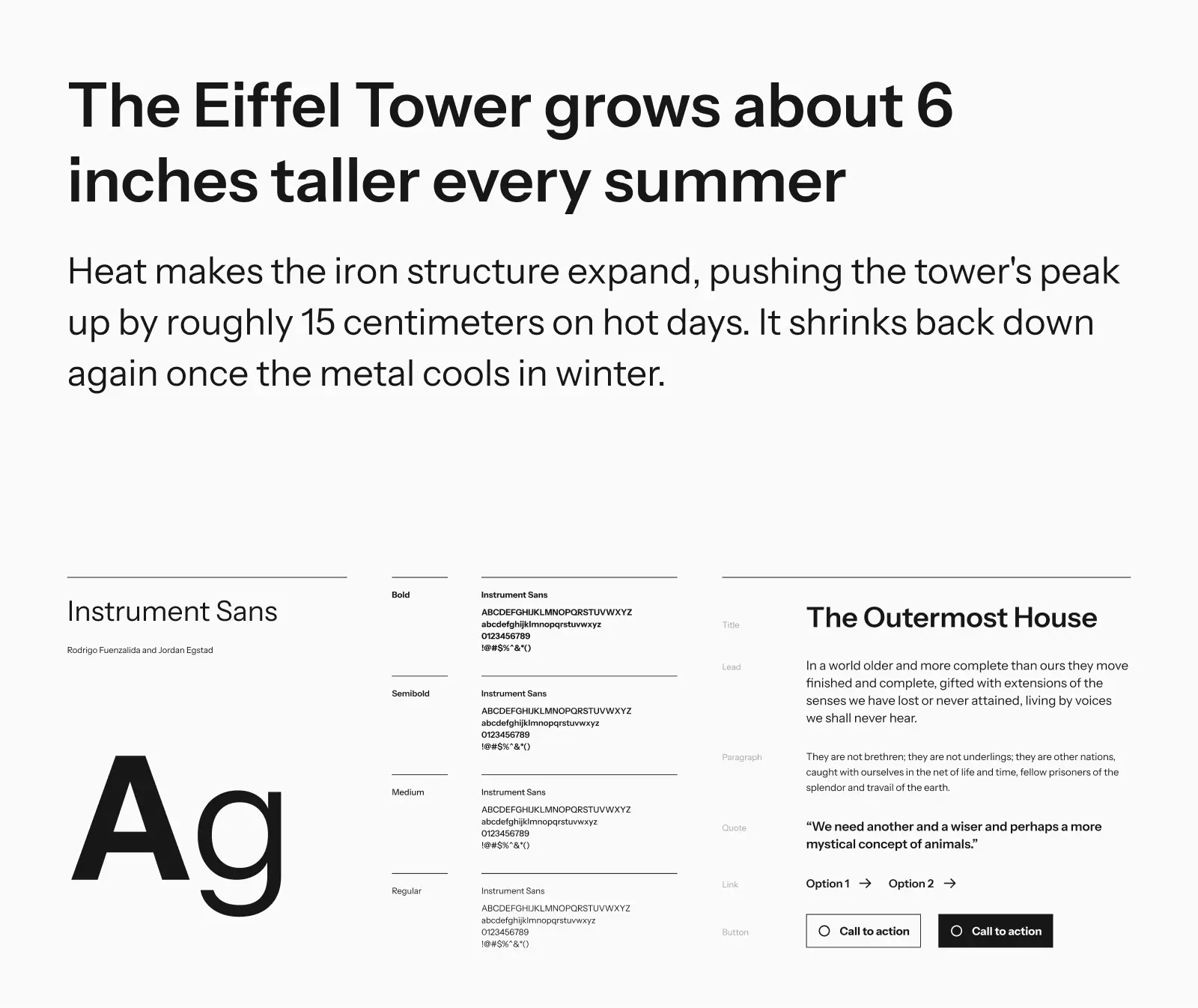
15. Instrument Sans (free)
Instrument Sans was designed by Rodrigo Fuenzalida and Jordan Egstad for the Instrument agency. It is a neo-grotesque variable font with weight (400–700) and width (75–100%) axes, 389 languages and 12 stylistic sets, under the SIL Open Font License.
The width axis is the genuinely useful one for UI work — dial it down to fit more text into a tight label or column without switching to a separate condensed cut, then back up for headings, all from one file. Italic is a variable axis too (0–100), so you get continuous control over slant rather than a single fixed style.
The variable width axis means users get a font that adapts to tight labels and spacious headings without you swapping files.
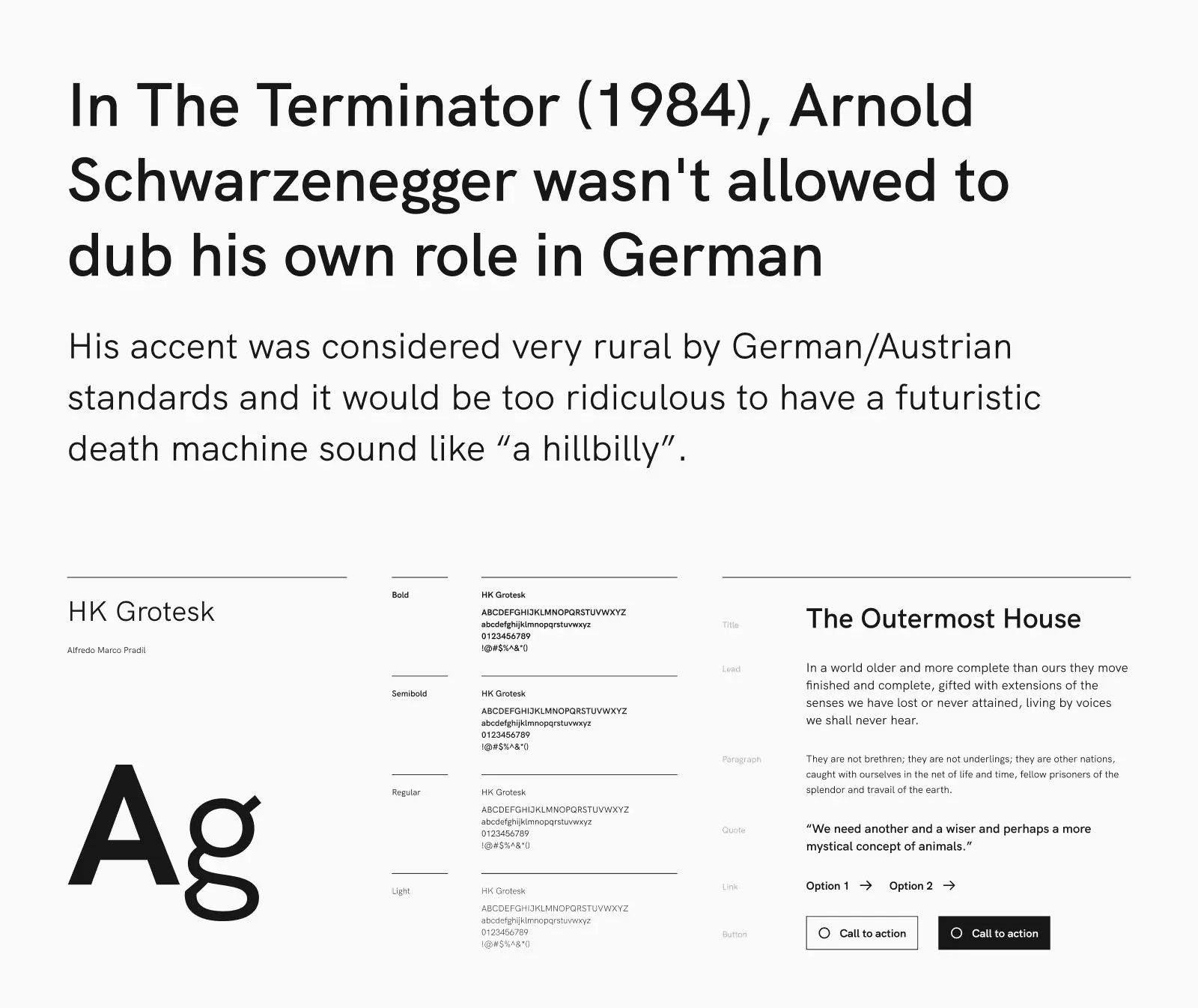
16. HK Grotesk (kind of free)
HK Grotesk is a gorgeous and neutral sans serif typeface crafted by Alfredo Marco Pradil and Hanken Design Co. It's inspired by the "classical grotesques" and is specifically designed for small text, making it great for UI design.
HK Grotesk comes in 9 styles with matching italics and is open source and free to use. Hanken Design Co. have also released a paid version of their free typeface called HK Grotesk Pro.
Its compact proportions give it optimal legibility at small sizes, which suits dense, data-heavy dashboards well.
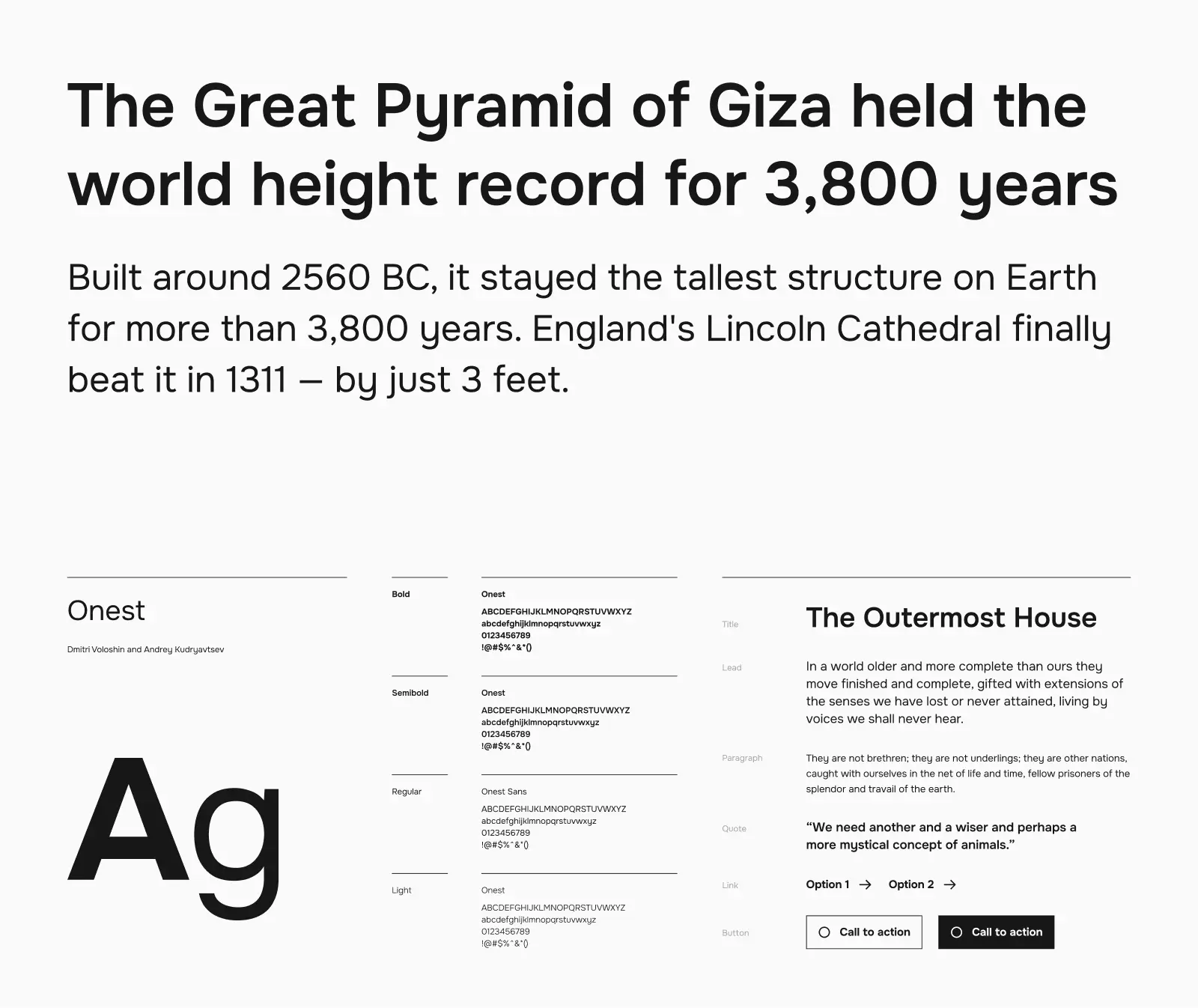
17. Onest (free)
Onest is a variable sans built for screens, blending geometric and humanist grotesque shapes for a neutral, legible feel. Free on Google Fonts with one weight axis (100–900) — fast becoming a favorite low-cost alternative to SF Pro for app UI.
Onest was designed by Dmitri Voloshin and Andrey Kudryavtsev and released by Moldovan digital company Simpals in March 2023, under the SIL Open Font License. It ships in seven static weights from Thin to ExtraBold alongside the variable version, with extensive diacritic support built in for multilingual interfaces.
It suits teams that want an SF Pro alternative for both website and native app UI.
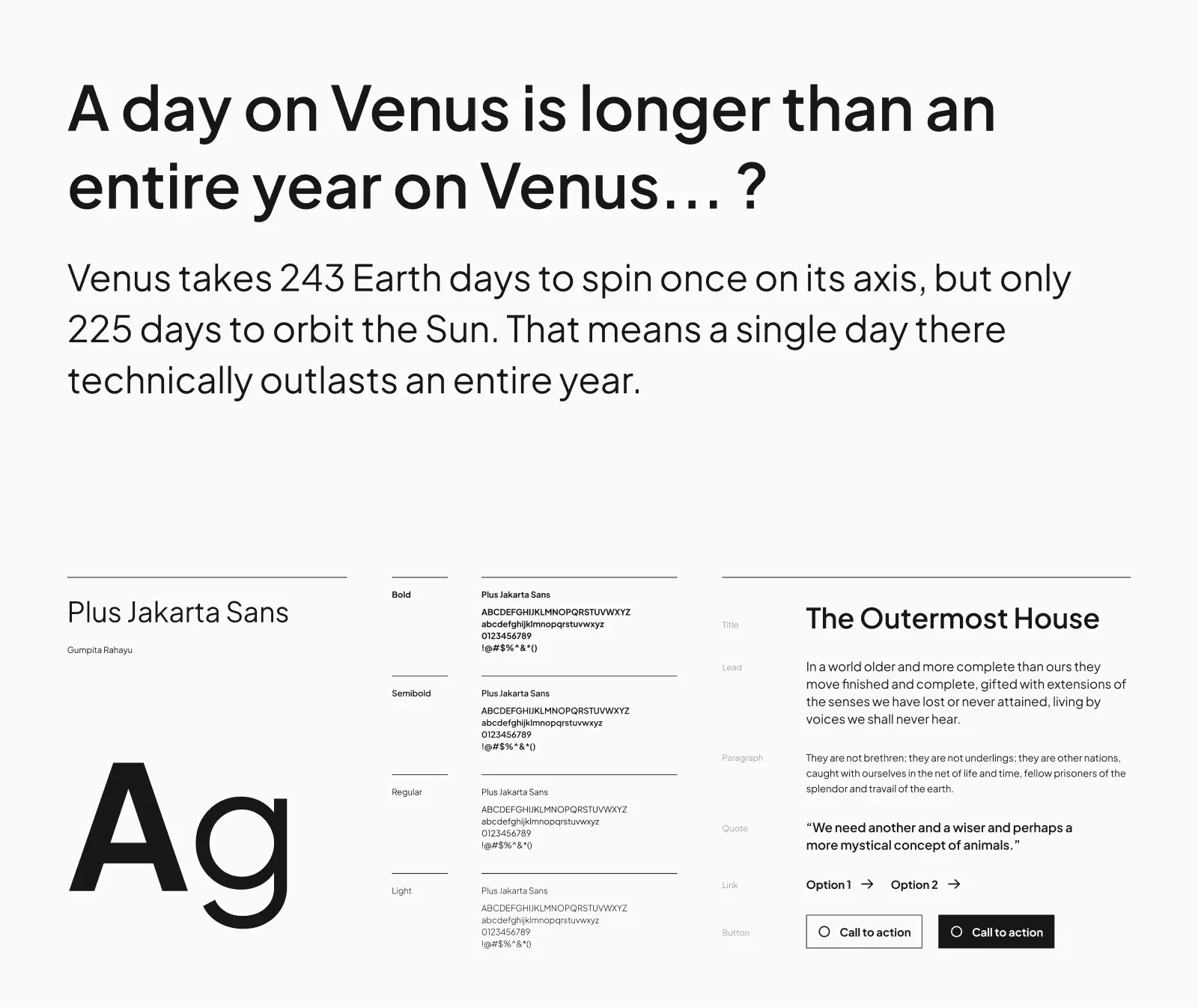
18. Plus Jakarta Sans (free)
Plus Jakarta Sans is a geometric sans by Gumpita Rahayu of Tokotype, free on Google Fonts in 7 static weights (200–800) plus a variable version. Its clean, slightly rounded letterforms have become a go-to choice for SaaS product UI.
Designed for Jakarta's “+City of Collaboration” identity program, it ships with matching italics across all seven weights, plus stylistic alternates (Sharp, Straight and Swirl) if you want to adjust its character without switching fonts. The slightly elevated x-height helps it hold up at small UI sizes. It's licensed under the SIL Open Font License.
That makes it a natural single sans-serif font for both body copy and display type.
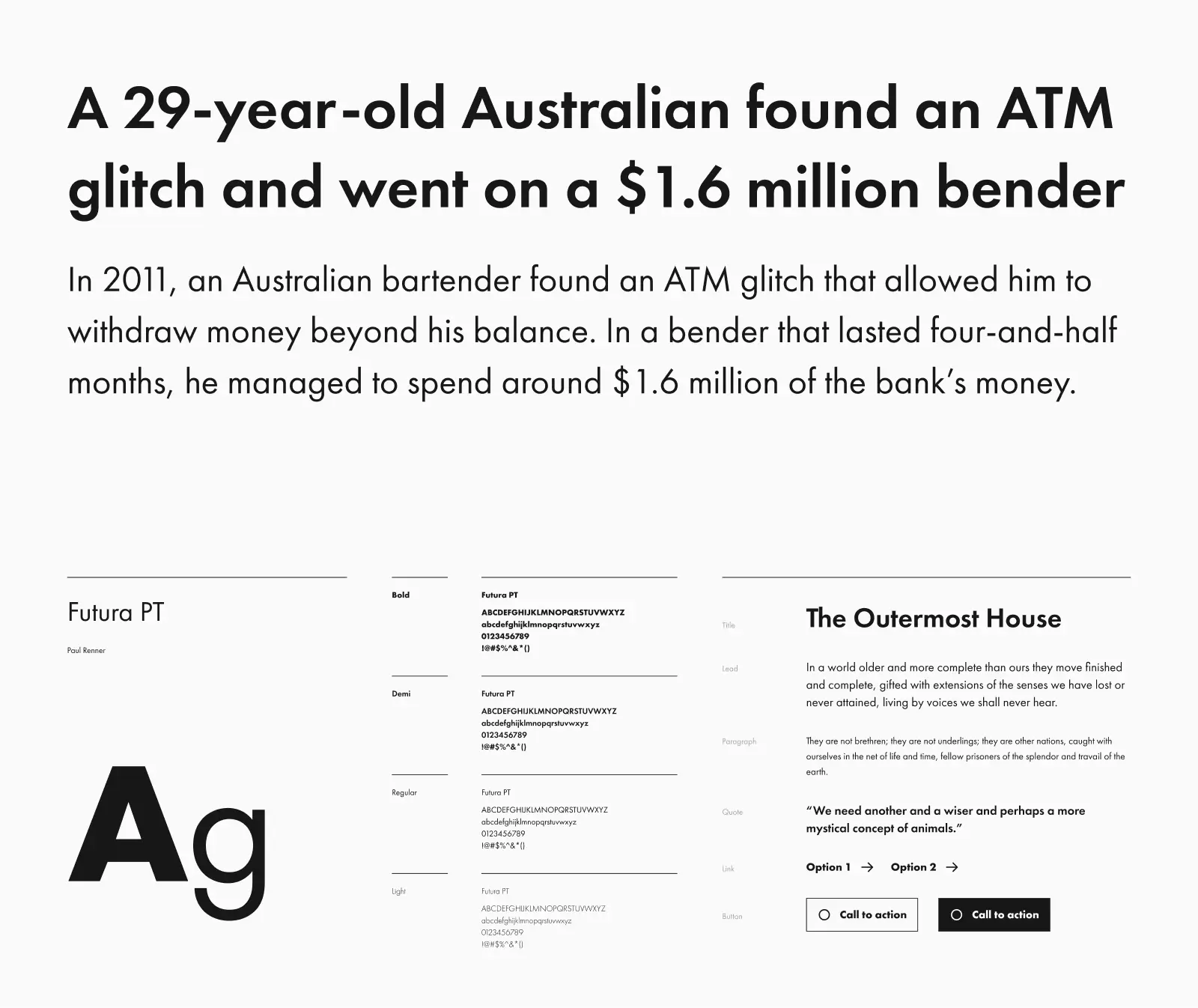
19. Futura PT (kind of free)
Futura PT is a geometric sans serif typeface originally designed by Paul Renner in 1927 for Bauer company. It was a revolutionary design for the 1920s because most books and print design in Germany was using heavy blackletter script.
Futura PT has stood the test of time and has been consistently updated and maintained for almost 100 years now. It's a favorite of directors Wes Anderson and Stanley Kubrick, and was Volkswagen's corporate typeface from the 1960s until the late 1970s, when VW switched to the custom VAG Rounded. In recent years, Futura PT has seen a resurgence in popularity for usage on the web and for UI design.
Like Neue Haas Grotesk, Futura PT is available to download via Adobe Fonts. This means it's not technically free—you'll need an Adobe CC subscription to use it for personal use and commercial projects. It still shows up on marketing website hero sections today, though most teams treat it as a display accent within a broader design system rather than the backbone of one.
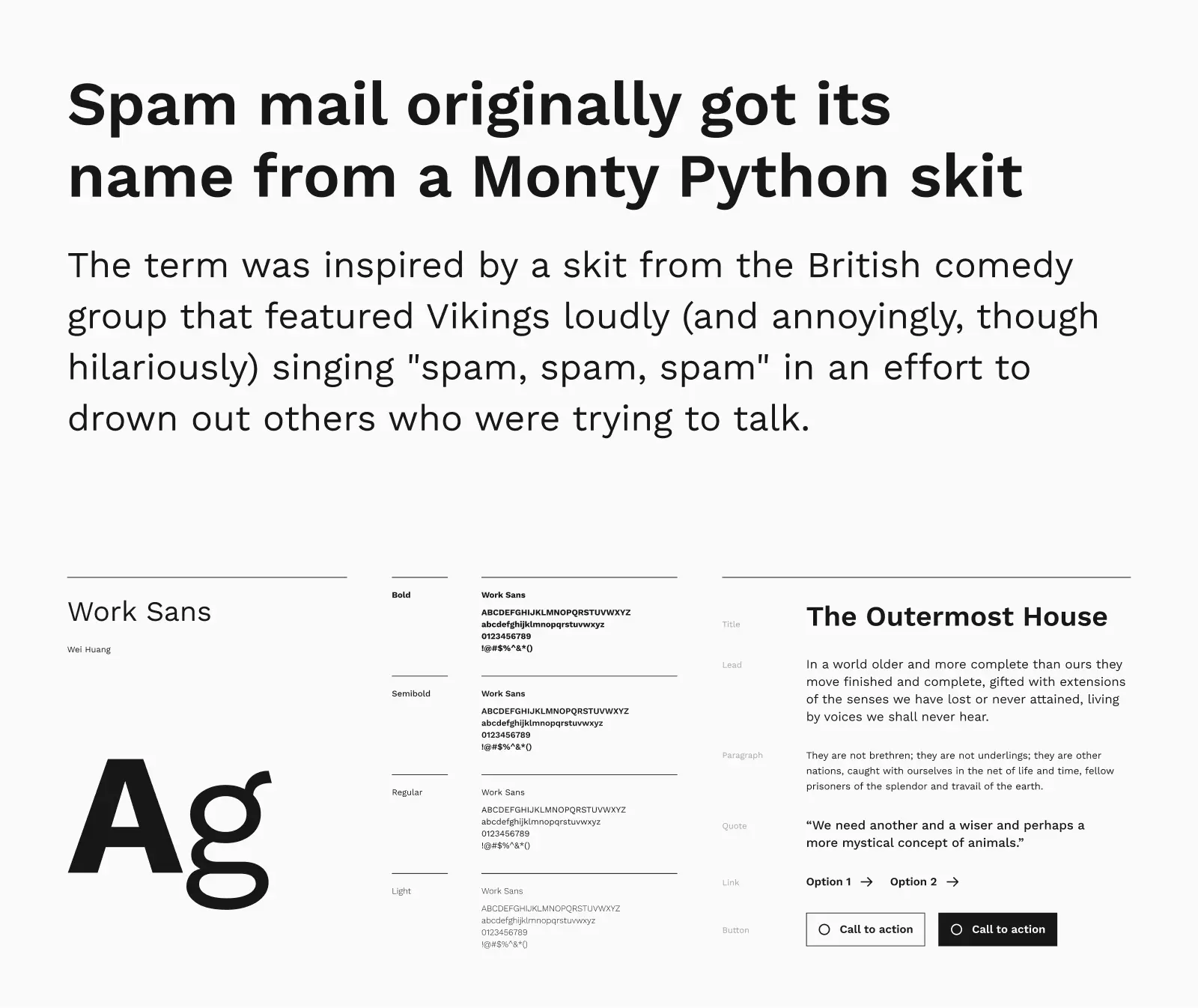
20. Work Sans (free)
Work Sans is a free, open-source typeface designed by Australian type designer Wei Huang, commissioned by Google Fonts and released in 2015. It's built and optimized for on-screen reading at UI text sizes, which makes it a solid, low-fuss choice for body copy and interface labels. Work Sans is free for personal projects and commercial use.
Work Sans ships in nine weights (Thin to Black) with matching italics and a variable font version, plus expanded language support added over several updates. Its diacritics are drawn deliberately oversized for better on-screen legibility — worth knowing if your product supports more than English. It's licensed under the SIL Open Font License.
Its tall x-height and optimal legibility at UI sizes are why type reviewers keep recommending it for plain, no-fuss product work.
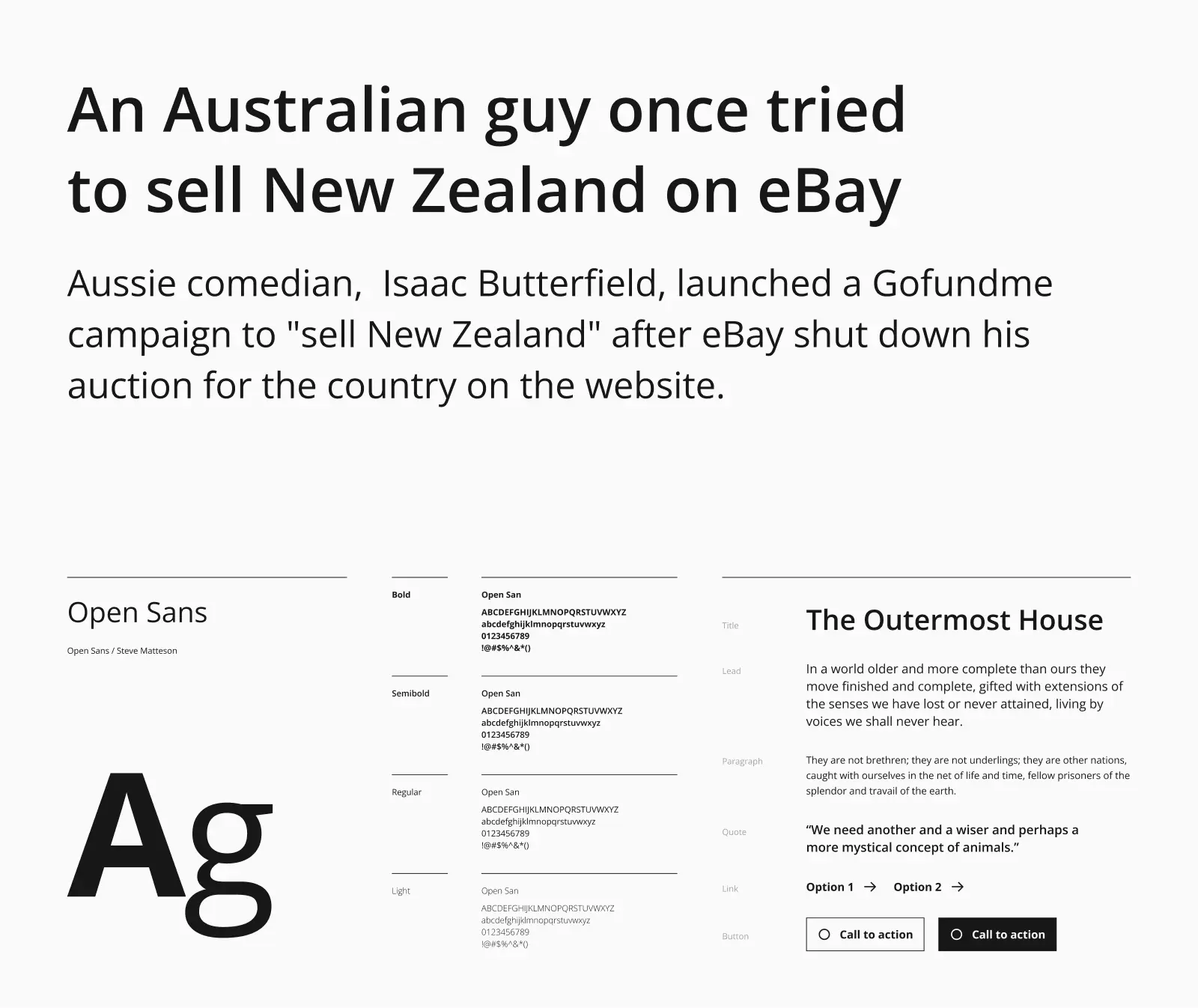
21. Open Sans (free)
Open Sans is an open-source, humanist sans-serif typeface designed by Steve Matteson and released in 2011. It's now a variable font spanning weights 300–800 (Light to ExtraBold) with matching italics and a condensed-width axis, making it even more versatile than the five static weights it originally shipped with.
It is a ubiquitous font on the web, used by everyone from Google to WordPress. I've even heard it referred to as the "flat design" font. I like to think of Open Sans as the new Arial.
Open Sans, like the name suggests, is open-source and 100% free for both personal use and commercial use.
Its tall x-height and excellent readability at small sizes are why it became such a common default across the web.
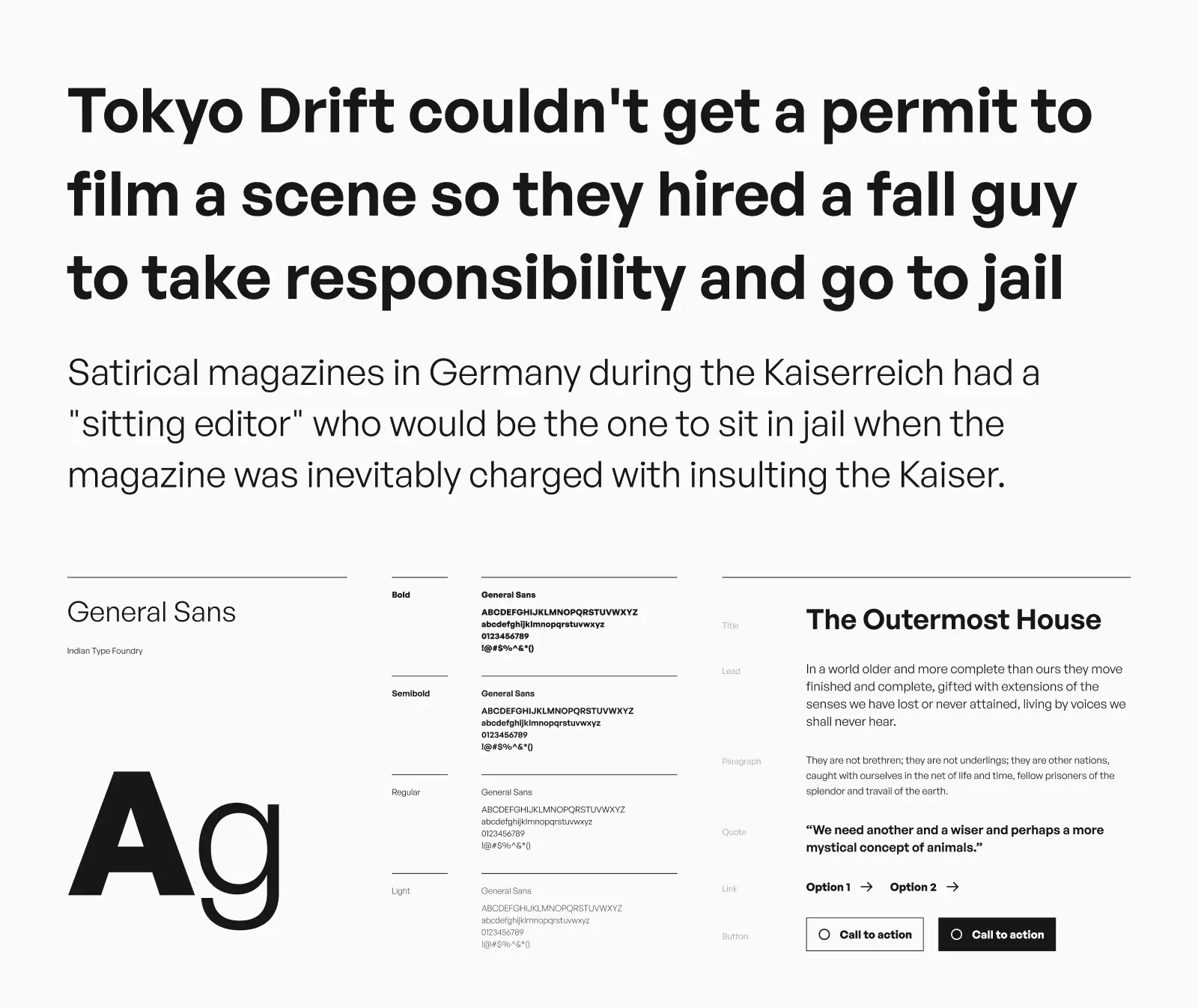
22. General Sans (free)
General Sans is a friendly and quirky geometric sans design by Norwegian type designer, Frode Helland via Indian Type Foundry.
Comparing it to other geometric sans like Montserrat, General Sans has distinctive personality and is noticeably more compact, more rational, and stricter. It saves on space without looking too condensed. This makes General Sans a great choice for UI design, particularly dense mobile app design.
It was originally released by Fontstore in 2017 and moved to Fontshare in March 2021, where it's 100% free for commercial use.
It's compact enough to suit users on small mobile screens without sacrificing readability, which is part of why designers reach for it so often. General Sans works just as well as a website body font as it does inside a mobile app.
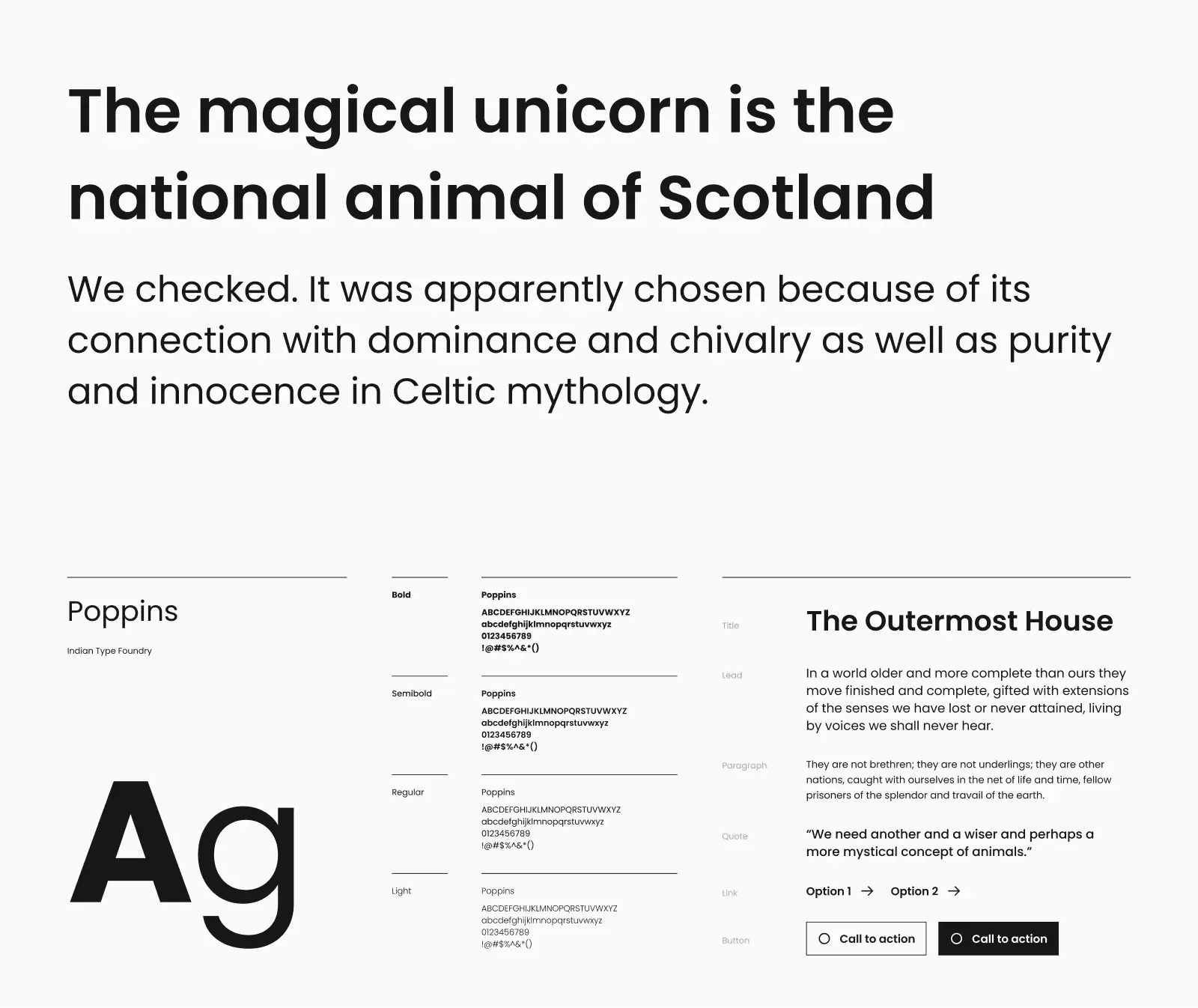
23. Poppins (free)
Poppins is a geometric sans-serif typeface published by Indian Type Foundry in 2015. It was released as open-source and is available for free on Google Fonts for personal projects and commercial use. While Poppins cops a little slack on Twitter for being overused in UI and web design, we think it's a great option if you're looking for a clean geometric option.
Indian Type Foundry describes Poppins as "an internationalist take on the geometric sans genre." It supports both Latin and Devanagari languages and is available in nine weights with matching italics.
It also has a comparatively large x-height, which helps it stay readable at small UI sizes.
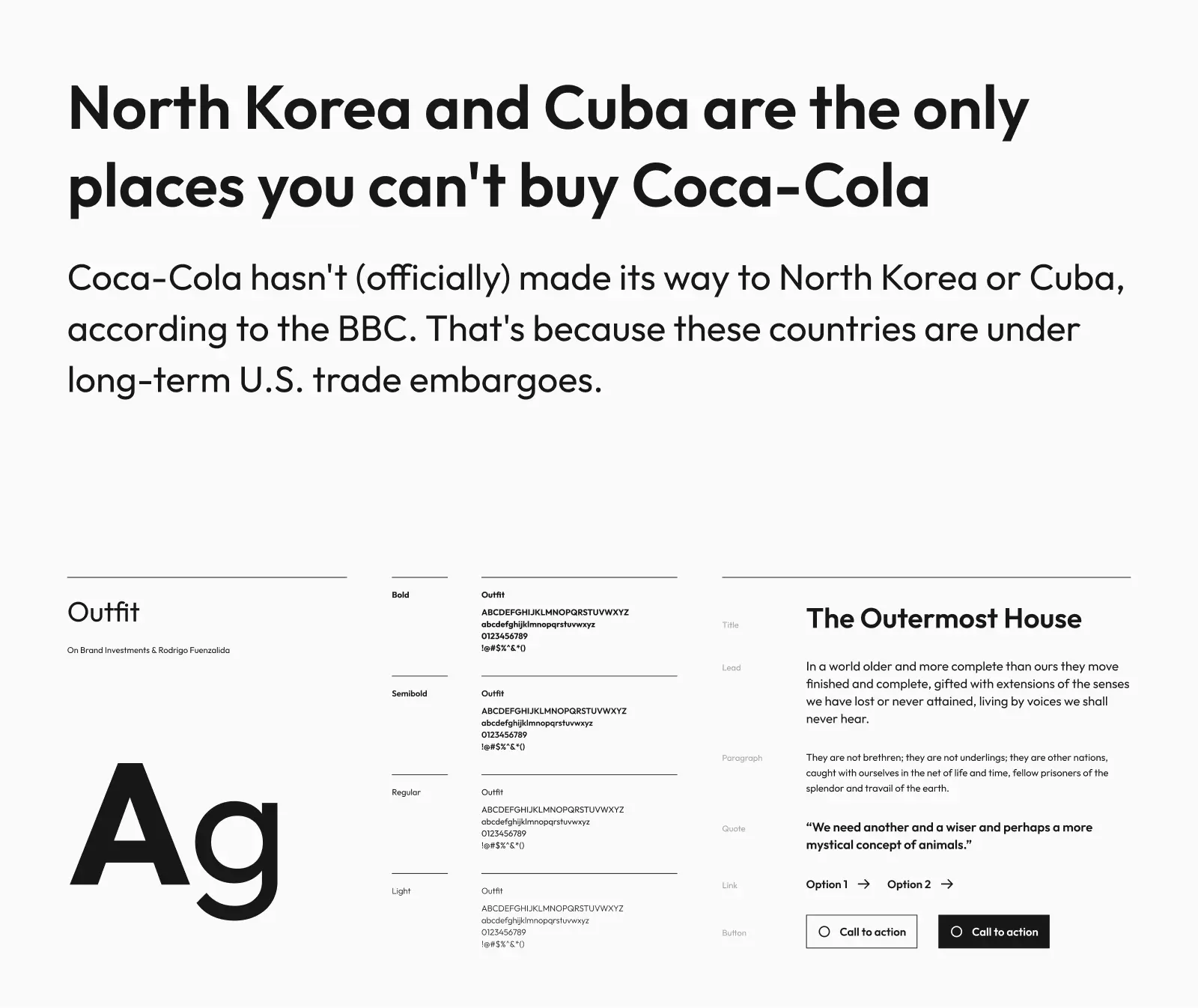
24. Outfit (free)
Outfit is a minimal geometric sans-serif originally designed for brand-automation company On Brand Investments Pty Ltd (Outfit.io) by Santiago de Chile-based type designer Rodrigo Fuenzalida, and commissioned by Google Fonts. Outfit.io was acquired by Smartsheet in 2022 and folded into its Brandfolder platform — Google Fonts now credits Smartsheet as steward alongside Fuenzalida, though the font itself remains free and actively maintained.
This typeface is an excellent choice for both digital and print design projects. We love it for modern UI design because of its simple, clean, and distinctive geometric style. It comes in 9 different weights but notably doesn't include matching italics. It's 100% free for personal projects and commercial use and particularly useful for logos and branding materials. It's become one of the best fonts for dashboard UI, where its rounded geometric letterforms help users scan numbers and labels quickly.
If you'd like to contribute to Outfit, click here.
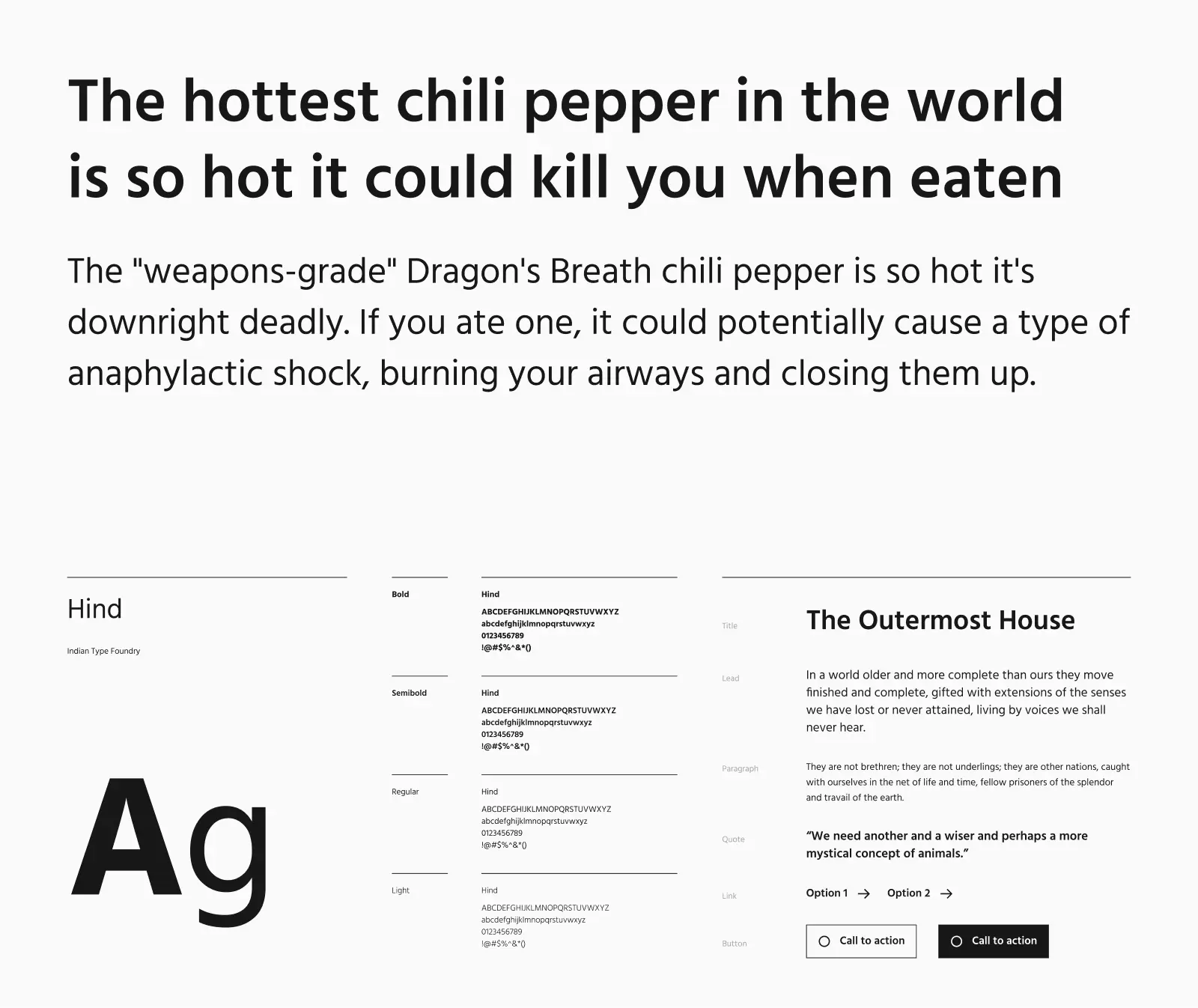
25. Hind (free)
Hind is a sans-serif typeface designed by Manushi Parikh for Indian Type Foundry, first published on Google Fonts in 2014. This open-source font family is free for personal use and commercial projects, and was built explicitly for user interface design — flat stroke terminals and open apertures keep it legible at small sizes on screen.
It comes in five weights (Light to Bold) and supports both Latin and Devanagari, making it a solid pick for UI work that needs a more humanistic, friendly feel than a strict grotesque.
Its open apertures give it excellent readability at small sizes, on top of solid multilingual support.
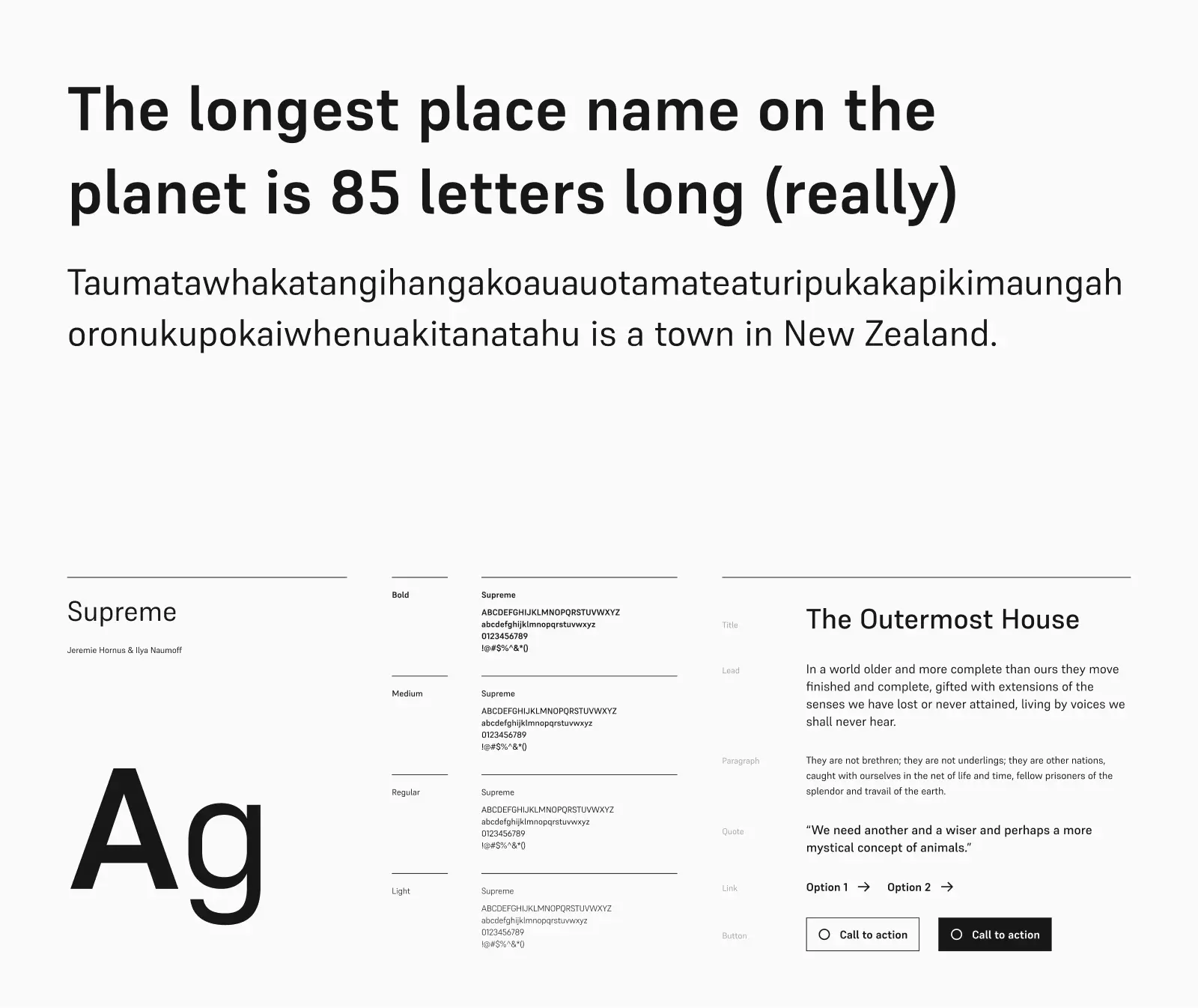
26. Supreme (free)
Supreme is a sans serif typeface designed by graphic designer Jeremie Hornus and art director Ilya Naumoff. It was originally designed in 2016 for Indian Type Foundry (released as Screen Sans), then renamed Supreme and relaunched on Fontshare in March 2021.
Supreme was initially used for tech branding and engineering but quickly rose up to become a popular and easily recognizable font for UI design due to its ability to diversify design projects without causing any distractions. While Supreme is slightly thinner compared to some other fonts and has an x-height of 67%, it still retains its good readability at small sizes. Supreme is available in 14 static and 2 variable styles and supports 135 languages.
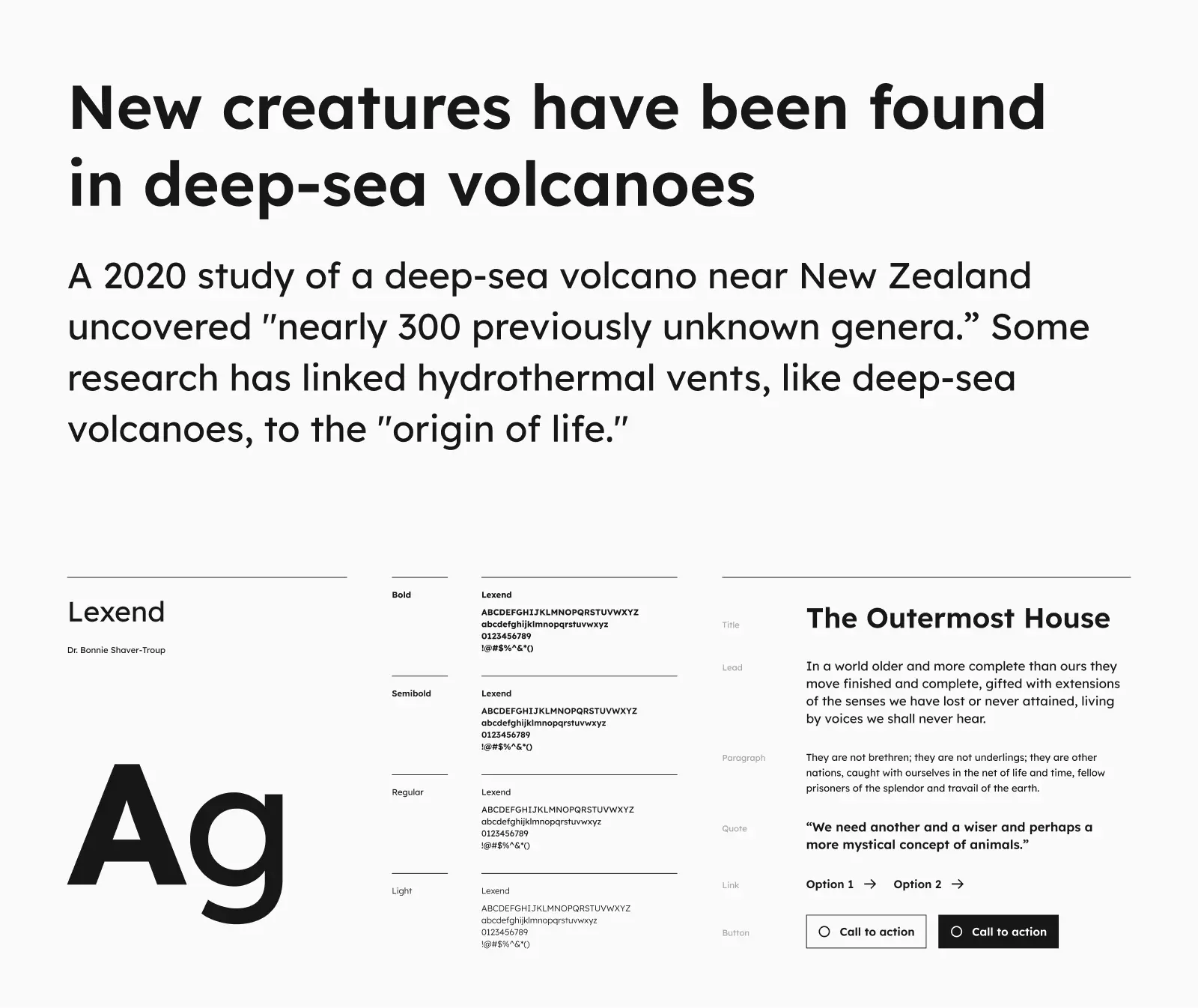
27. Lexend (free)
Lexend is a font family created by educational therapist Dr. Bonnie Shaver-Troup. What makes this addition special is that it was specifically designed to increase readability and improve the user experience of individuals with dyslexia and similar visual impairments.
While some of its variations (Zetta and Peta) can prove to be a bit cumbersome for smaller (compact) screen sizes, Lexend is a great choice for UI design due to its readability and accessibility. Lexend became available for free at Google Fonts in 2019, and is protected with the Open Font License.
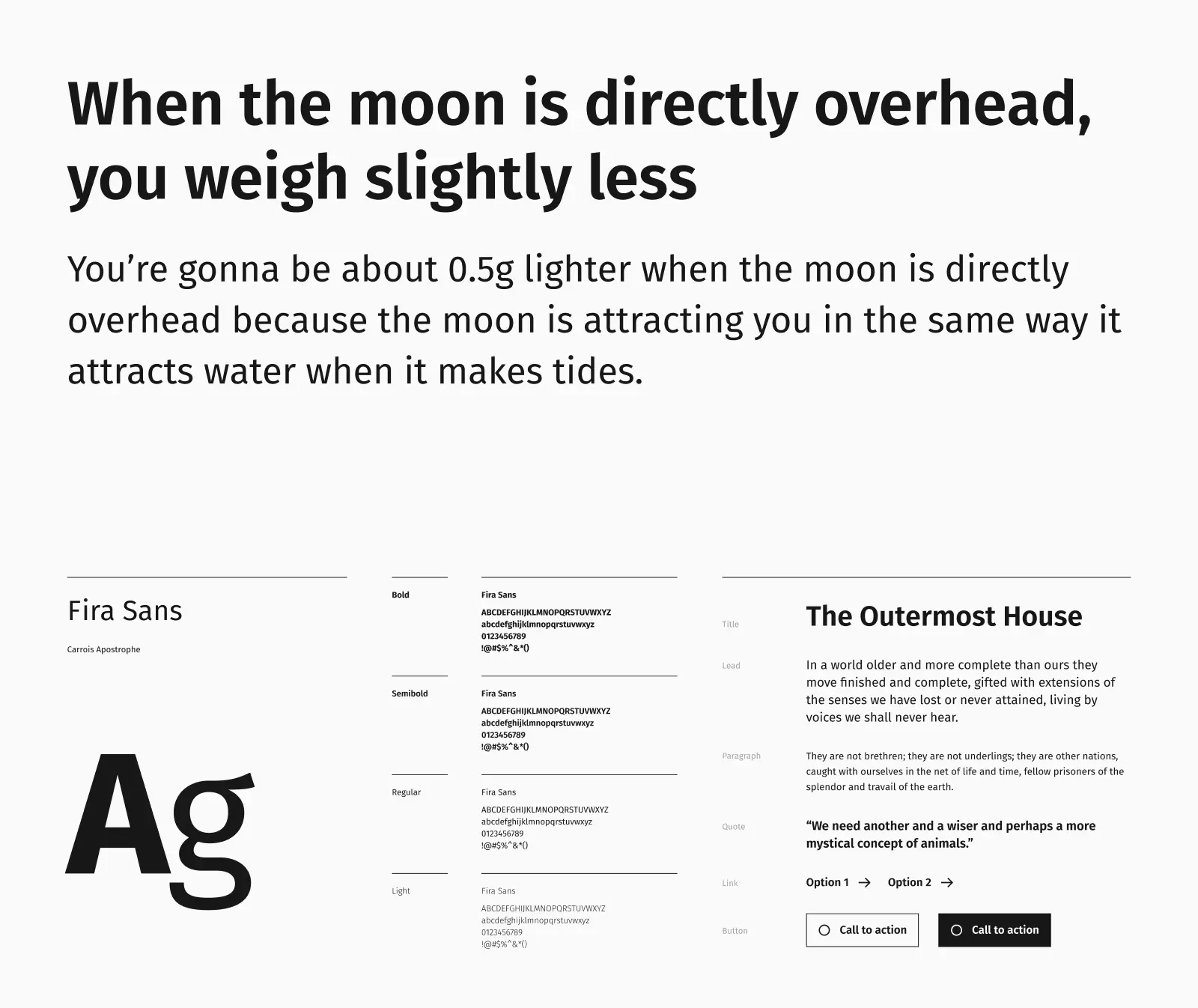
28. Fira Sans (free)
Fira Sans was designed in 2013 for Mozilla's Firefox OS by Berlin-based type foundry Carrois Type Design, and is now free to download via Fontshare. It contains 18 static and two variable styles.
These typefaces were created with the Mozilla FirefoxOS in mind, but they also seek to meet the readability requirements for a wide range of devices with different screen quality and rendering. Fira Sans is protected by the SIL Open Font License.
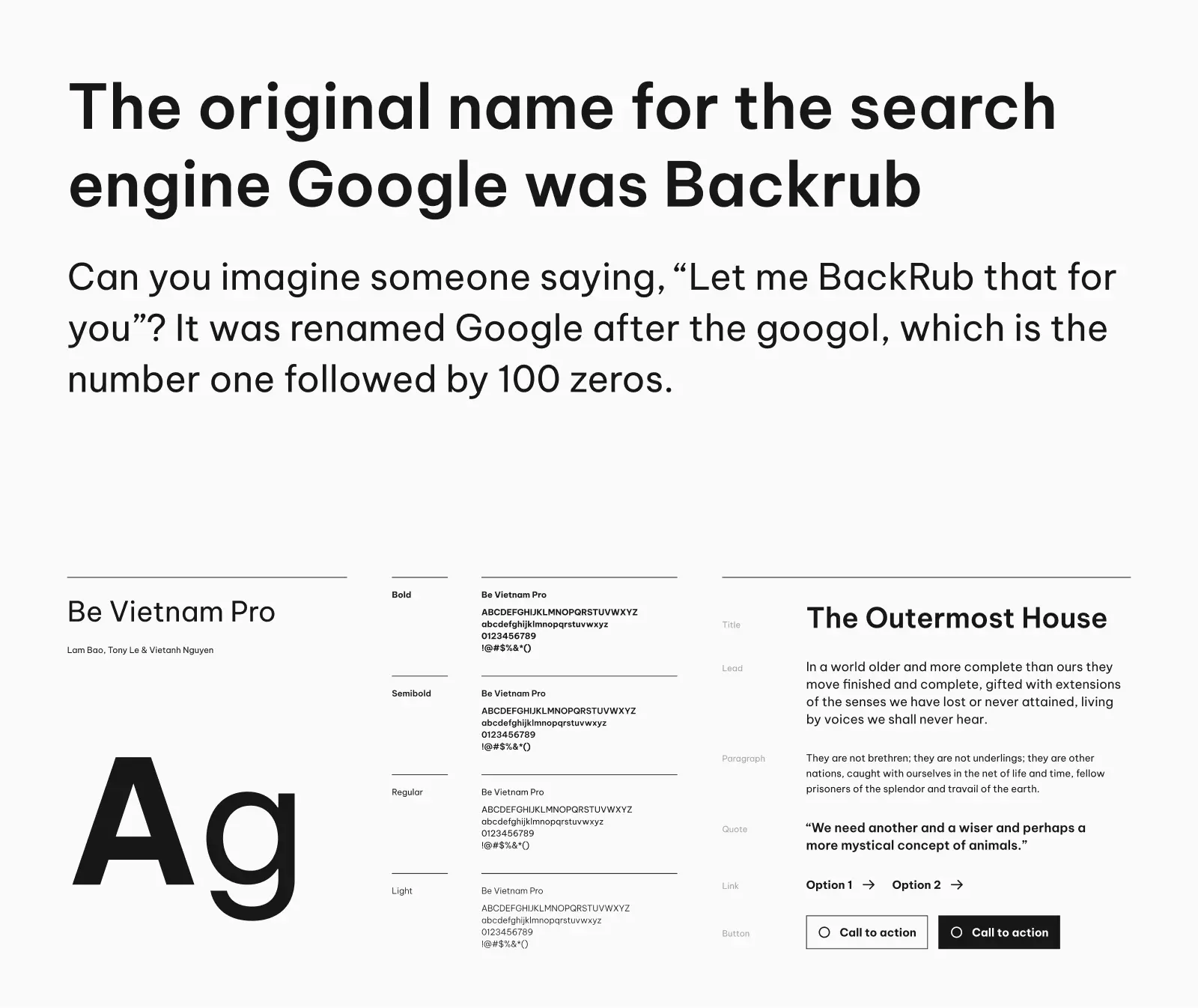
29. Be Vietnam Pro (free)
Be Vietnam Pro is a clean, modern, and functional Neo Grotesk sans serif by Vietnamese designers Lam Bao, Tony Le, and Vietanh Nguyen who set out to design a system typeface that speaks Vietnamese.
We love it for UI design because of its 9-weight range (Thin to Black, all with italics) and its carefully refined Vietnamese diacritics that stay legible at small sizes. Be Vietnam Pro is free for personal and commercial use. Its wide range of weights and full Vietnamese diacritic support make it a dependable choice for multilingual interface design work.
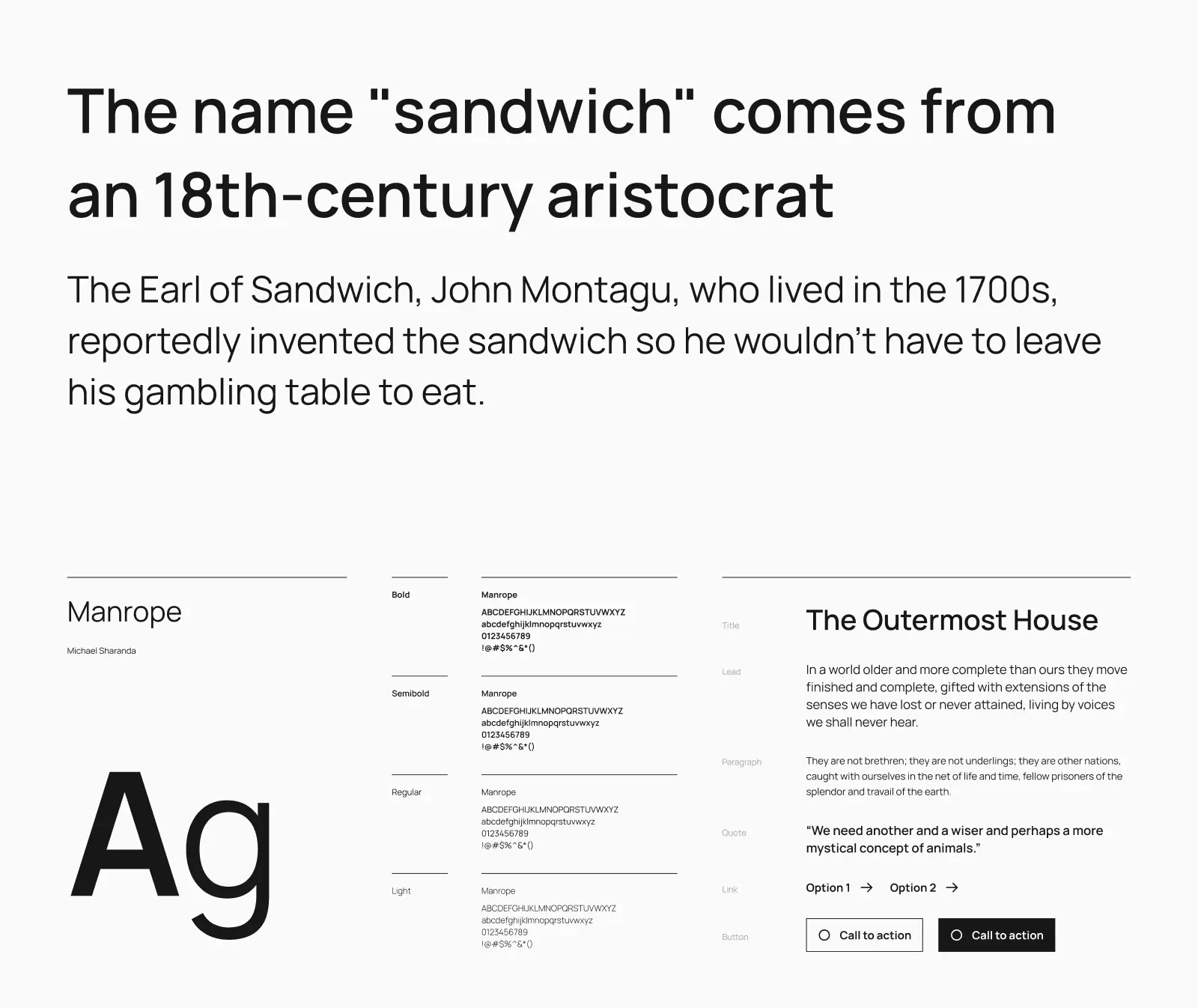
30. Manrope (free)
Manrope is an open-source modern sans serif font family, designed by Michael Sharanda in 2018. In 2019, it was updated to include a variable font.
In Michael's own words, Manrope is "semi-condensed, semi-rounded, semi-geometric, semi-din, semi-grotesque. It employs minimal stoke thickness variations and a semi-closed aperture." It's great for UI design, particularly numeric data such as phone numbers and watch faces.
Manrope font is free for personal and commercial use. The variable version is handy for fine-tuning numeric type at your base font size without swapping in a separate display cut.
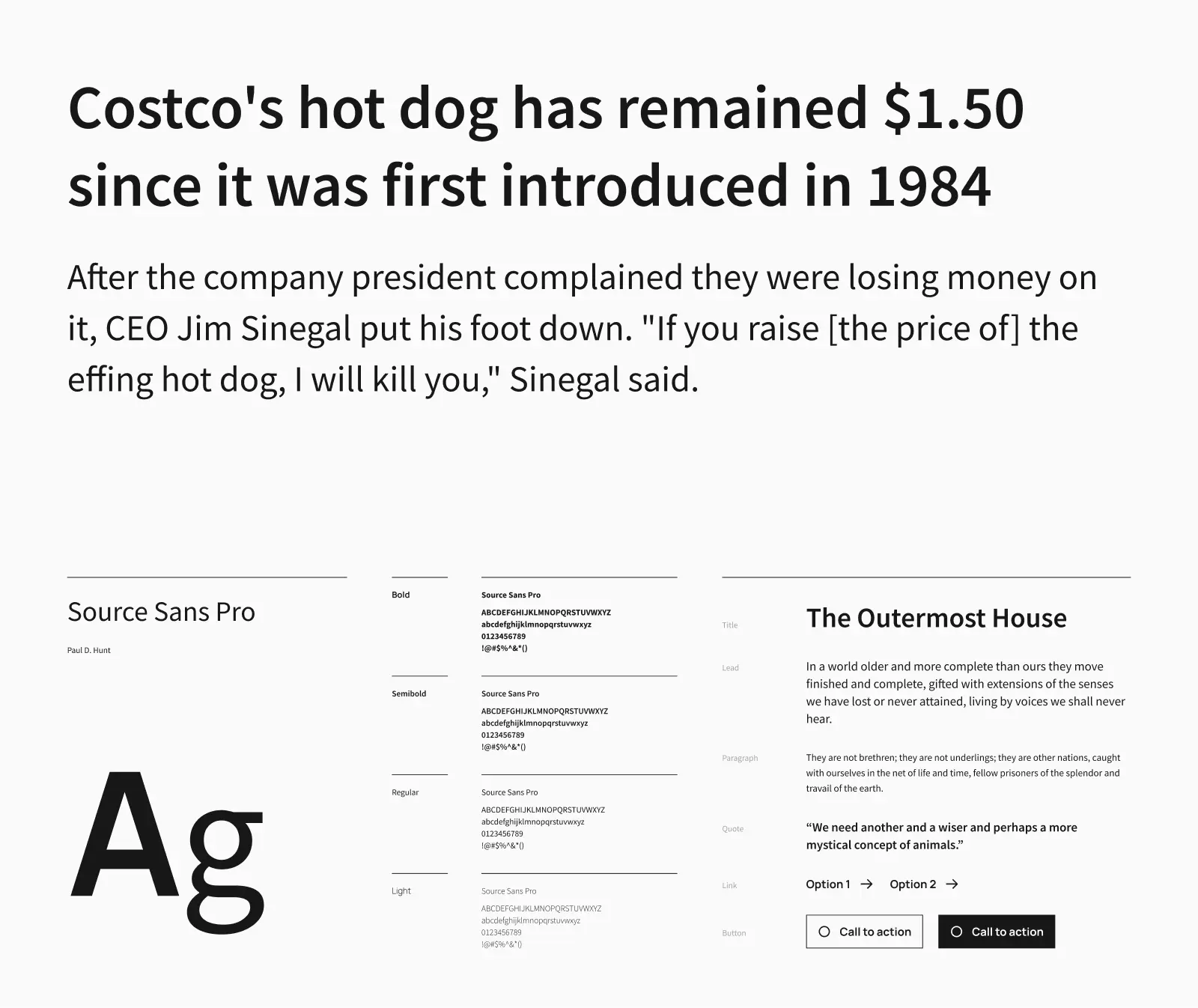
31. Source Sans Pro (free)
Source Sans Pro was Adobe's very first open source typeface. It's a neutral and useful sans serif type family designed by Paul D. Hunt in 2012 as part of The Adobe Originals Program and in-house type foundry. It's now available on Google Fonts and is 100% free for commercial use.
Source Sans Pro (renamed Source Sans 3 in 2021) is available in 7 weights with matching italics and is also available as a variable font. It's so popular that it even has its own Wikipedia page. Like Open Sans, it remains a dependable, no-surprises pick when a project needs a battle-tested workhorse, and the variable version covers the same weight range as the static family.
Wrapping up: choosing your UI typeface
You don’t need a subscription or a five-figure type budget to ship interfaces that feel considered. Inter, Onest and Plus Jakarta Sans alone cover most modern SaaS and app UI — pair one with a tighter display cut for headlines and that’s usually all the hierarchy you need. Start with one family, lean on weight and size before adding a second font, and only pay for a boutique or Adobe Fonts option once a free typeface can’t do the job. For a head start, Untitled UI’s Figma kit ships with a type scale pre-built and tested across real products. Whichever you land on, treat it as part of your broader design system rather than a one-off choice — a font with a large x-height keeps body copy legible even on dense, low-light screens.
Discovering new typefaces
Choosing the perfect font for a project can be tricky, even if you're a seasoned web designer. However, don’t fall into the trap of thinking every project needs an ultra-premium paid typeface (which sometimes costs thousands of dollars). Start by getting comfortable with free typefaces in the project first before deciding whether or not you need to invest in a paid typeface.
Here are some other great resources to discover and find the right typeface:
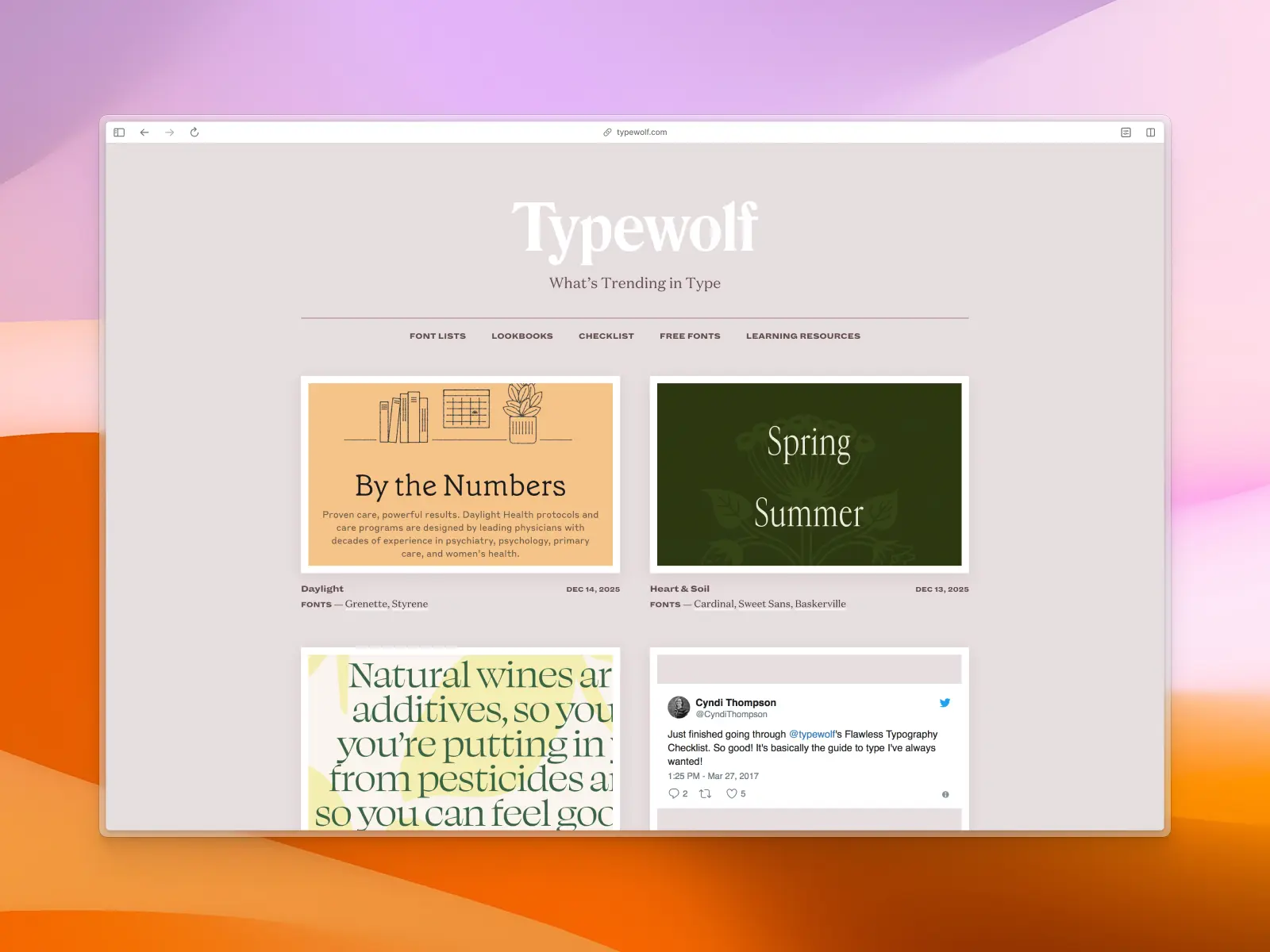
Typewolf
Typewolf is an awesome (and independent) typography resource created by Jeremiah Shoaf. It's our favorite resource for discovering great and underutilized typefaces and web fonts, both free and paid. It's also a fantastic place to discover web designers and great web design from all corners of the internet.
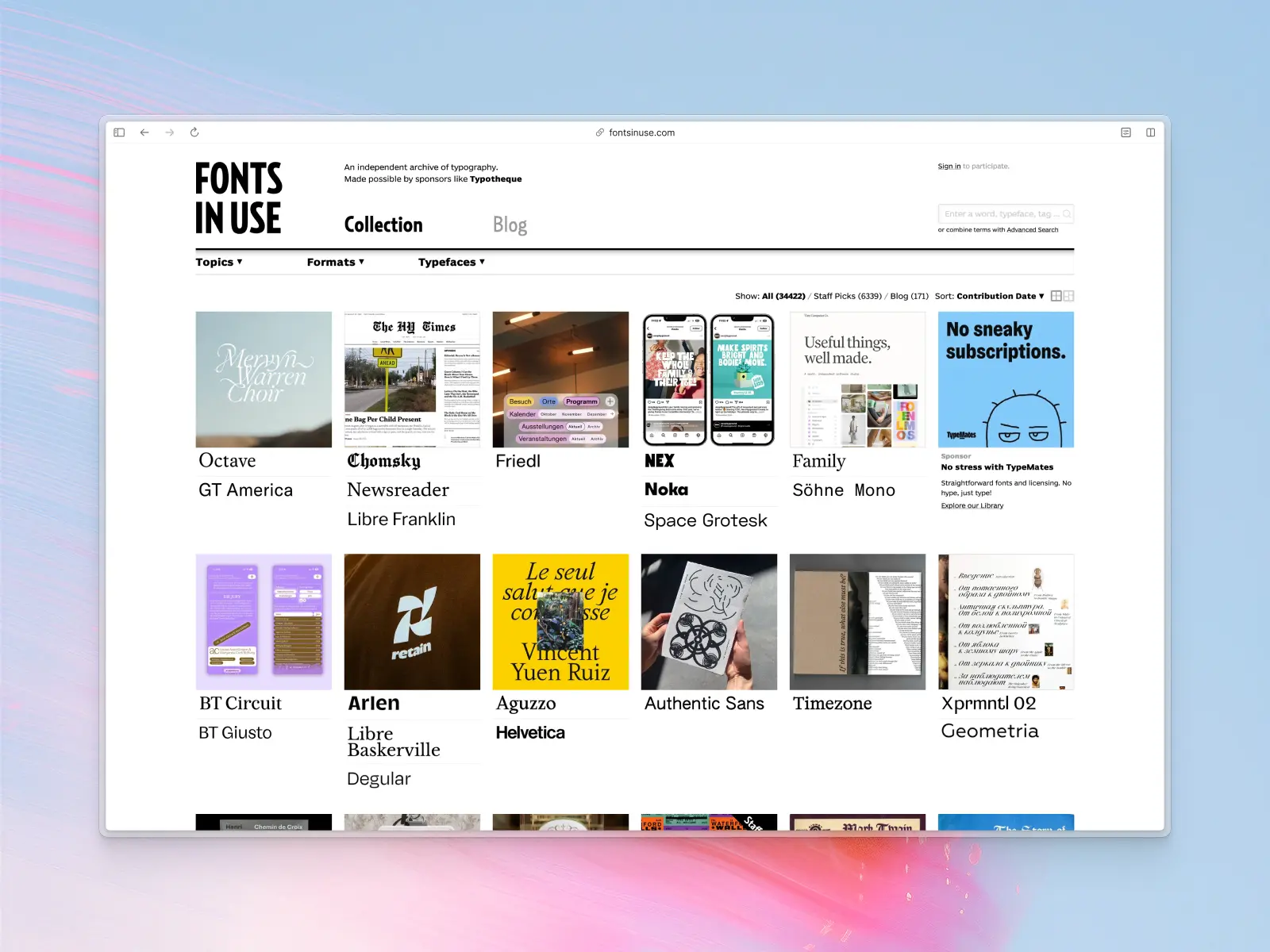
Fonts In Use
Fonts In Use is another independent searchable archive of typographic design, indexed by typeface, format, and topic. It’s a great resource of real-life examples of typefaces in the wild and a real time-sink if you’re looking for something new.
Fonts In Use is particularly great because it features typefaces used across multiple different creative projects, including packaging designs, logos, posters, and other branding materials.
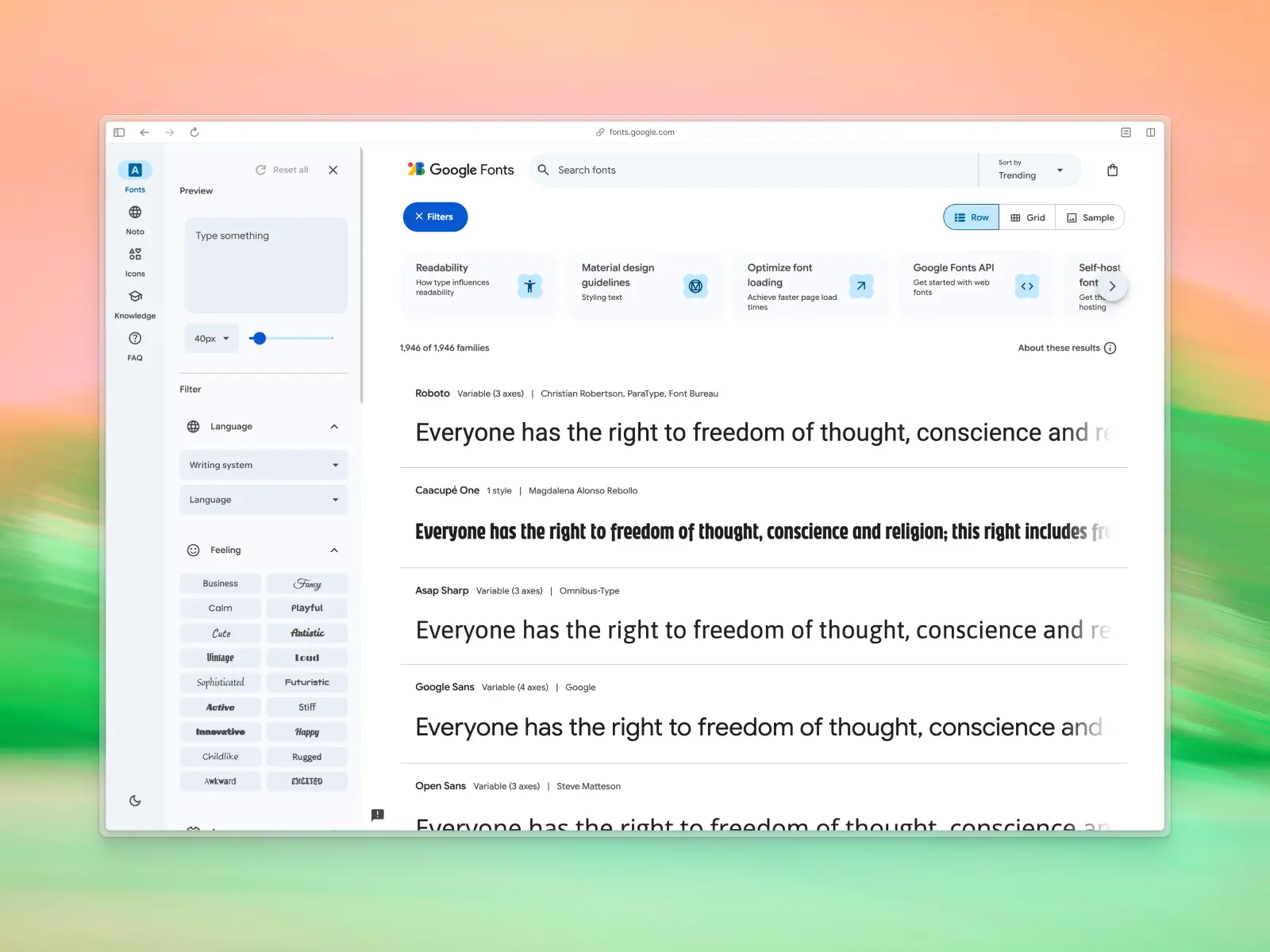
Google Fonts (free)
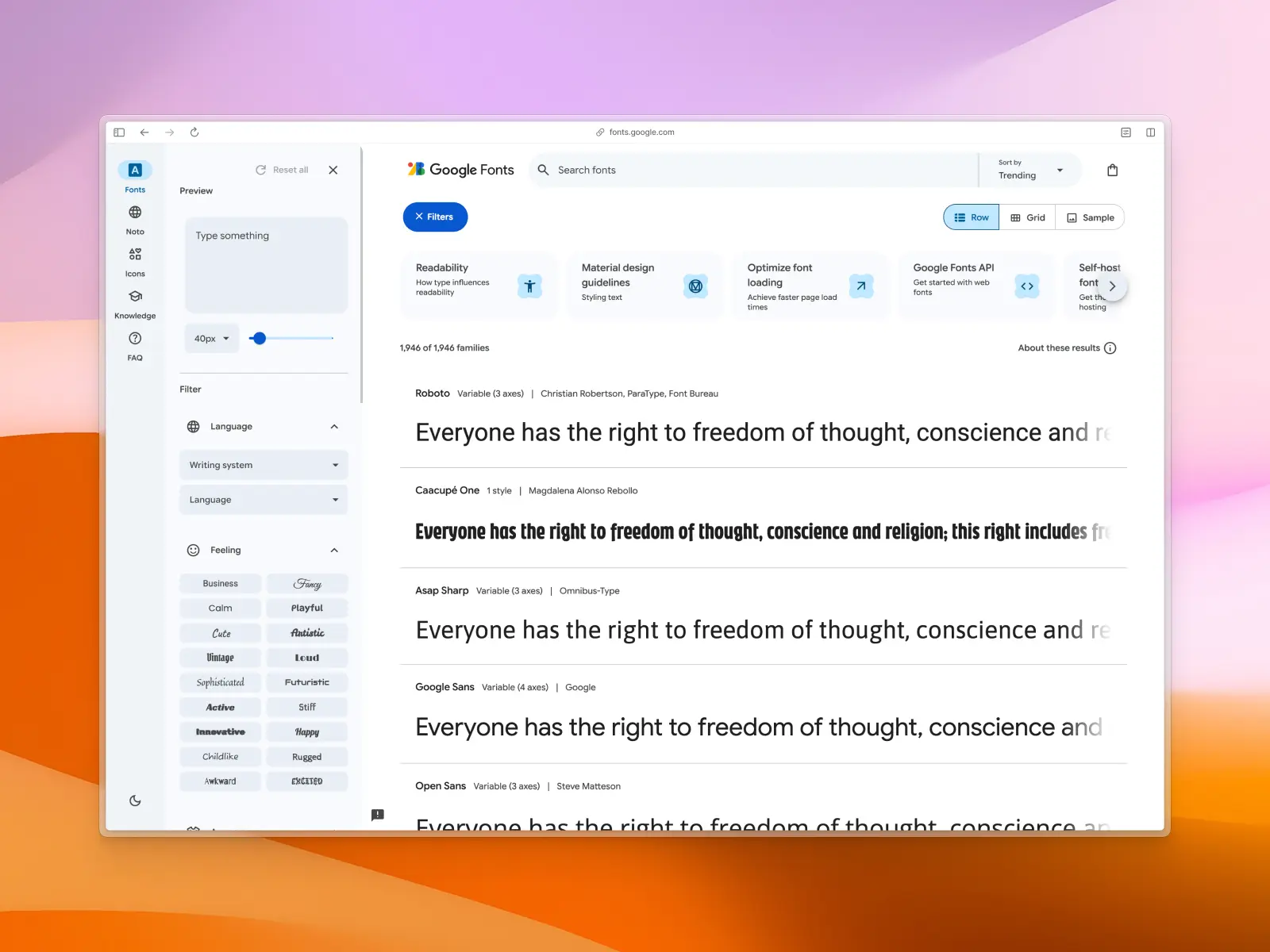
Google is “Making the web more beautiful, fast, and open through great typography.” Google Fonts is the most popular source for free typefaces. There are some really great open-source fonts and web-safe fonts here for pretty much any project you have, as well as some interesting unique fonts and a huge collection of serif fonts and script fonts.
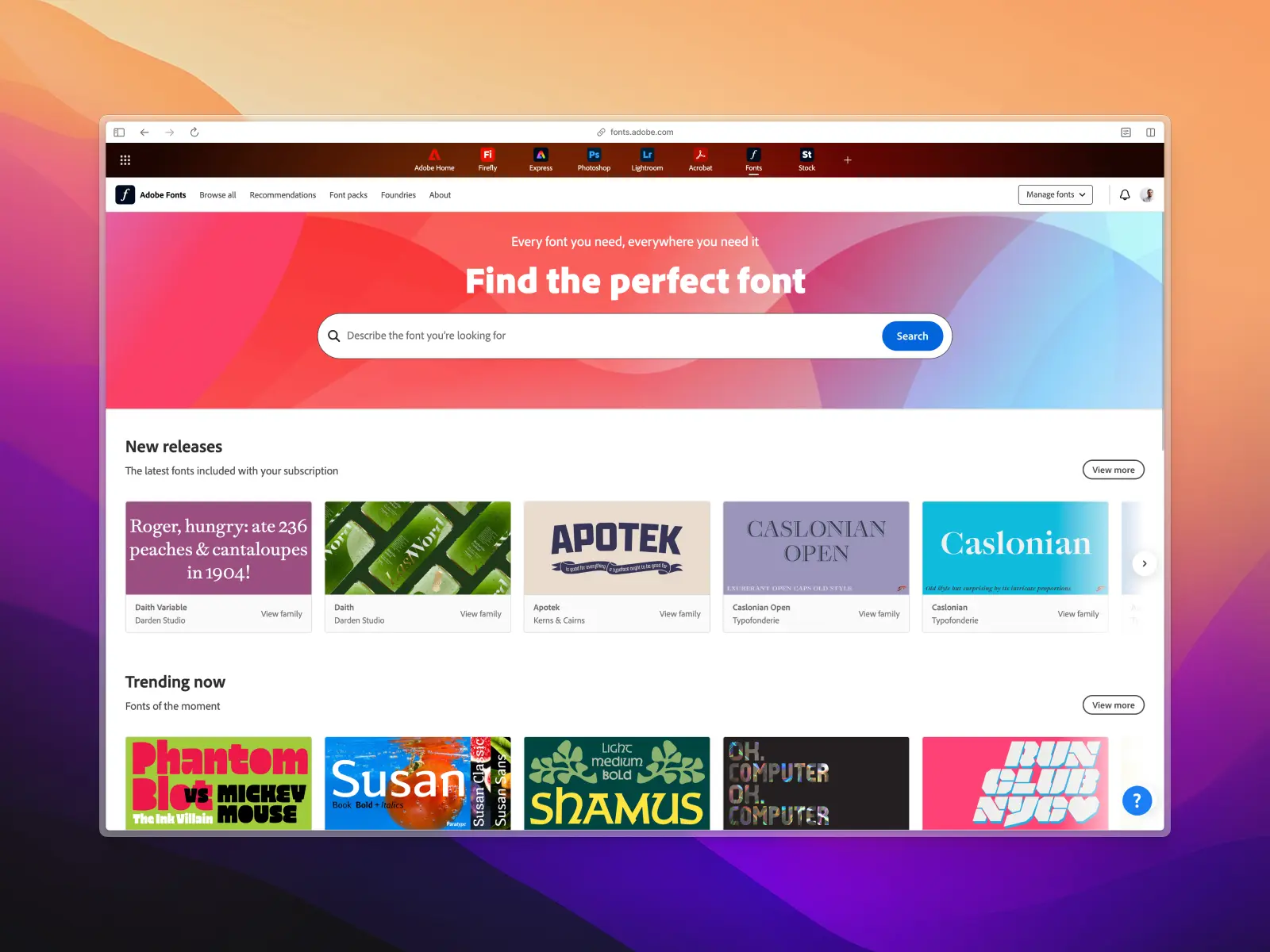
Adobe Fonts (kind of free)
Adobe Fonts (formerly known as Typekit) is a great resource for finding and discovering the best free fonts, including serif fonts, script fonts, and vintage fonts. They’re not entirely free though—you’ll need an Adobe CC subscription to use these typefaces.
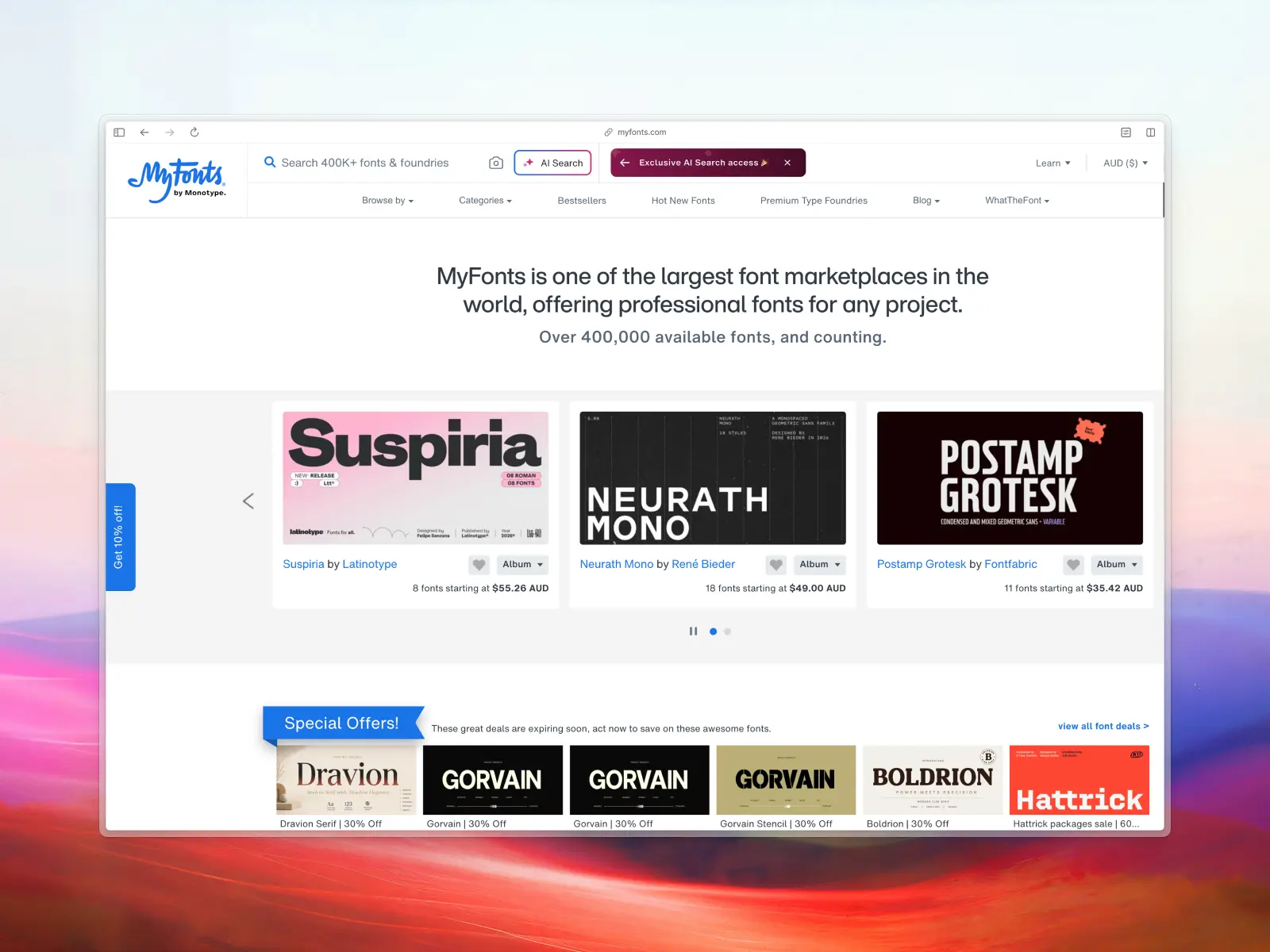
MyFonts
MyFonts is the largest collection of fonts on the web, with over 130,000. There are some great finds in here, but it can be a bit of a chore to wade through the not-so-premium typefaces.
More best practice guides
This post is an excerpt from Untitled UI Figma, world's largest Figma UI kit and design system. Untitled UI includes tips and best practices right in the Figma file to help you level up as a designer. You can preview Untitled UI Figma here.
Untitled UI Figma is meticulously crafted with 100% Auto Layout 5.0, super-smart variants, Figma's newest variables features, and with accessibility in mind.
It's a great example of Figma design system best practices and is the most popular and highest-rated Figma UI kit on the internet with 3,650+ 5-star reviews!
We've also released Untitled UI Figma PRO LITE, which is a premium and lightweight version of the full Untitled UI Figma PRO STYLES kit and have included it for free. It's 55% lighter, faster, and is designed to include everything you need and nothing you don't. It's perfect for moving fast and for smaller projects!
Untitled UI was designed to be the "ultimate" UI kit and the perfect starting point for any kind of project—from beautiful marketing landing pages, all the way to complex dashboards and web apps—Untitled UI has thought of absolutely everything so you don't have to.
We're constantly making updates and improvements to the UI kit and recently announced that we've completely refactored Untitled UI to take advantage of Figma's latest features released at Config 2023, Framework 2024, Config 2024, Config 2025, and Config 2026. This includes all the latest Figma features such as color variables (dark mode), spacing, radius, typography, and effects variables, Auto Layout 5.0, min/max widths, Auto Layout wrapping, and much more.
You can check out a full preview of the design kit, or check out the 100% free UI kit here (which is more advanced than most UI kits in its own right!). If you're short on time, here's a 60-second overview: