






The best free Figma course in 2026 is Figma's own Figma Design for beginners: 18 short videos, about three hours, recorded on the current interface, and you build a full portfolio site as you go. Follow it with Arash Ahadzadeh's 90-minute crash course and Shift Nudge's Figma 101 for the fundamentals, then UI Collective's free design systems course once components click. Everything below is free to watch, verified in September 2026, and ranked by how well it teaches, not by view count.
Figma is the most popular user interface design and prototyping tool in the world, used by user experience design and product teams everywhere, and a free Figma account on the Starter plan is all you need to learn it. Whether you are one of the many aspiring designers starting out, a developer who wants to speak the design team's language, or one of the web designers moving over from another tool, the best free Figma course will get you to a competent skill level without spending a cent.
The problem is not access, it is age. Most "free Figma course" lists still point at videos recorded in 2019 to 2021 on the old interface, before auto layout wrapping, variables, component properties and UI3. Following one of those today means learning menus that no longer exist.
So we started again. Every course on this list was checked this month for recording date, interface version, length, and whether it is actually free (not a trial, not an email-gated teaser). YouTube series count. Old classics did not make it, however many views they have. The result is a list that covers the Figma interface, auto layout, components, interactive prototypes and, further down, design systems and variables, in the order we would learn them.
Key takeaways
- Start with Figma Design for beginners, Figma's official online course. It is the only free beginner curriculum that is both current and project-based, and it takes about 3 hours.
- The best-taught free courses on YouTube right now are Arash Ahadzadeh's Free Figma Crash Course and Average Design Dude's Complete Course. Both have hundreds of comments from people who finished them, which is rarer than it sounds.
- Free courses cover the Figma skills well. The gaps are variables, design systems and Dev Mode, plus the user experience design process around the tool, which is why three intermediate picks are on this list.
- Figma has no official certification. The only free path to a recognized credential is auditing the Google UX Design Certificate, and the certificate itself costs money.
- Budget a day for the basics, two to four weeks of practice to be comfortable, and two to three months of regular work to be job-ready as a UX UI design generalist.
Quick picks: free Figma courses at a glance
Every course in this table is free to watch in full and reviewed in detail below. Length and level are from the course pages as of September 2026, and the "best for" column is our call after watching them. Two caveats are flagged in the reviews: Figma 101 asks for an email address, and the Google certificate is free to audit but not to certify.
How we chose these free Figma courses
A free Figma course has to earn its place here. We watched or worked through every candidate and checked four things:
- Recorded on the current interface. Figma rebuilt its UI (UI3) in 2024 and re-recorded its own beginner course because of it. Anything filmed on the old interface was cut, including several courses with millions of views.
- Actually free. No trials, no paywalled second half, no "free" online course that turns into a sales funnel at minute ten. One pick (Figma 101) asks for an email address, and one (Google UX Design) is free to audit but charges for the certificate. Both are flagged.
- Teaches the features you will use daily. Auto layout, components and component properties, constraints, responsive design, interactive prototypes, and at intermediate level, variables and design systems. Figma has a lot of powerful features; a good course teaches the ones a design team actually uses.
- Quality of teaching over popularity. Clear structure, a project you finish, hands-on experience in your own file, and files you can open alongside the video.
The list runs roughly in the order we would take it: Figma's official course, three courses that teach the fundamentals properly, then design systems and variables, then broader options. Where two courses cover the same ground, the one with the clearer teaching and the happier students ranks higher. We read the comments on every YouTube course here, and they told us more than the view counts did.
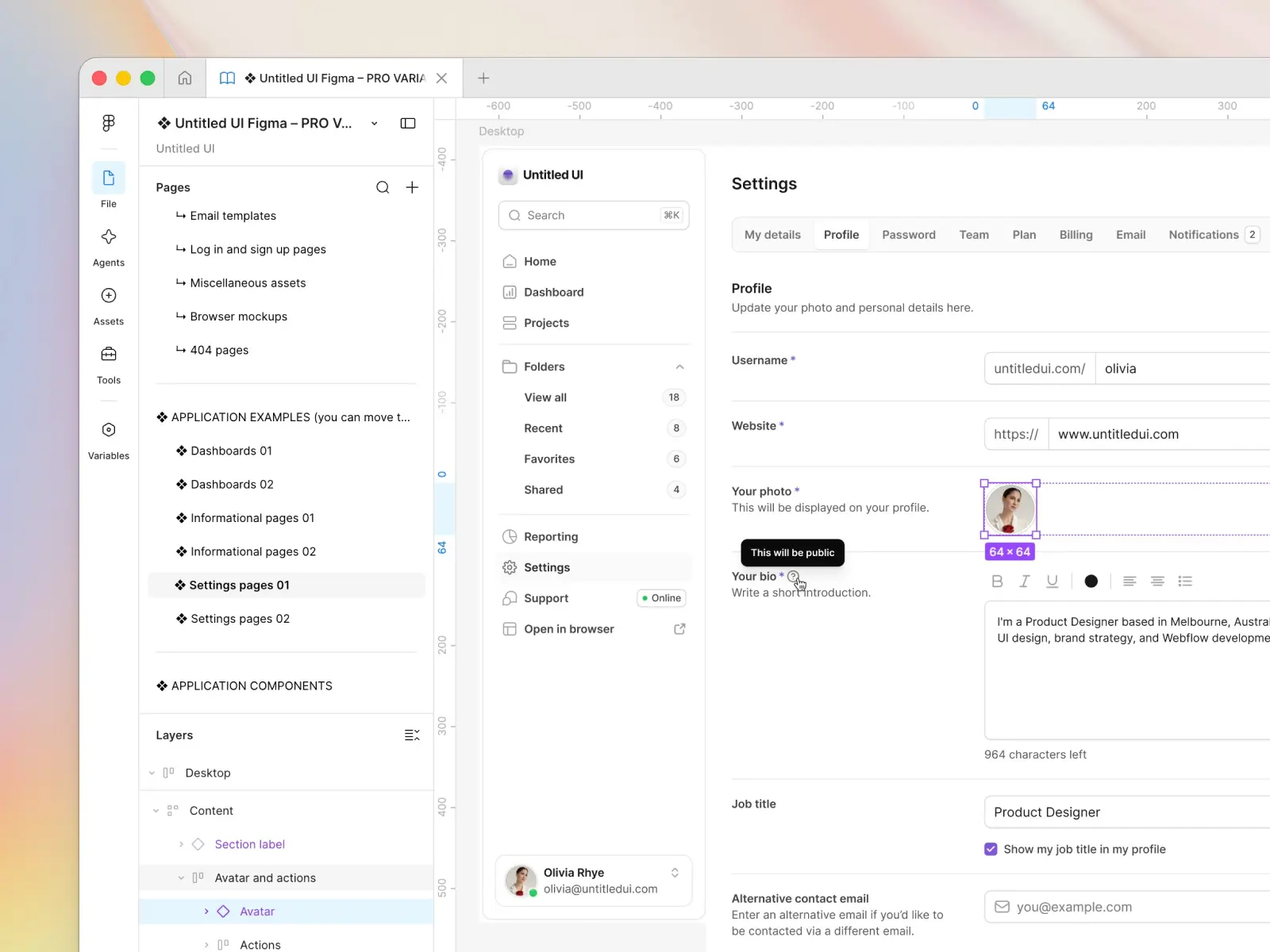
Before you start: what you need to learn Figma
- A free Figma account. Sign up at figma.com. The Starter plan is free forever, with three collaborative design files and unlimited personal drafts. You do not need a paid plan for any course on this list, and signing up takes two minutes.
- The browser or the desktop app. Figma runs in any browser; the desktop app adds local fonts and offline access. Either works. The Figma interface is identical in both.
- The current interface. Figma rebuilt its interface (UI3) in 2024. If a course's screen looks different from yours, with the toolbar at the top instead of the bottom, it was recorded on the old UI and you will spend half your time hunting for buttons.
- Time to practice. Real-time collaboration is one of Figma's best features and a core part of how user interface work happens on teams, so invite a friend or colleague into a file and build something together. Hands-on experience beats passive watching every time, and it is the fastest way to discover Figma's more powerful features, like component properties and variables, for yourself.
The 12 best free Figma courses in 2026
Every course below is free to watch in full, verified this month, and ordered the way we'd actually take them: fundamentals first, design systems once components click, then the broader options.
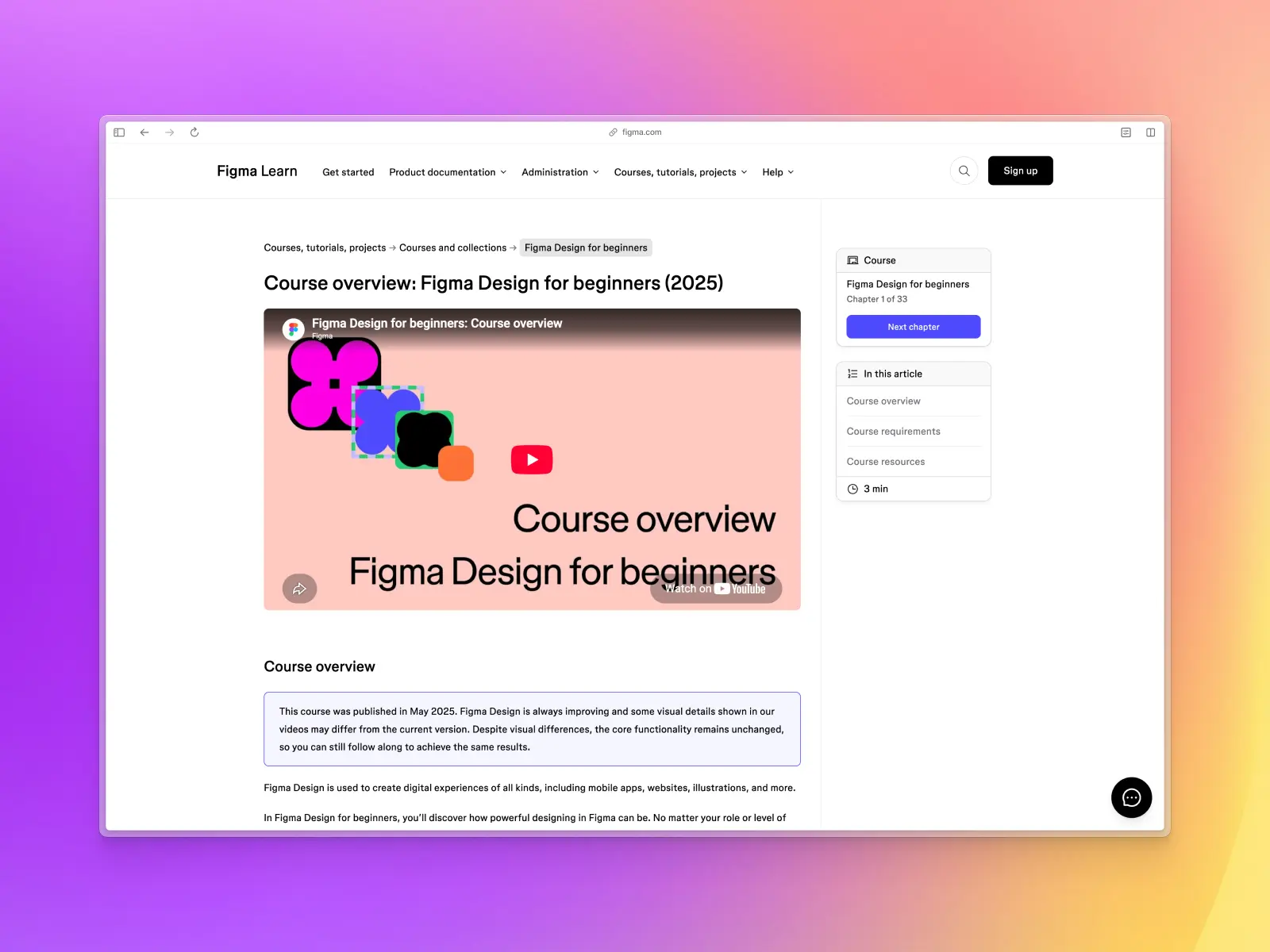
1. Figma Design for beginners by Figma
Figma Learn — FREE
Length of course: 18 videos totaling about 3 hours (13 core lessons plus 5 sidebar videos)
Instructor: Figma
This is the online course Figma built to replace its original Figma for Beginners playlist after UI3 shipped, and it is the best place to start for anyone new to user interface design. You design a complete portfolio website from a blank file, which means every feature is taught in context rather than as an isolated demo, and you get hands-on experience with the Figma interface from the first lesson.
The lessons cover the file browser and interface, frames, shapes and text, auto layout and responsive design, components, boolean operations, a card and container system, navigation and footer, assembling full pages, and interactive prototypes. A Community practice file ships with it, and the same course exists as a written track on Figma Learn if you would rather read than watch.
What it does not cover: variables, Dev Mode, or any of the 2025 and 2026 products (Make, Sites, Draw). Take it first, then move down this list.
Watch it on YouTube.
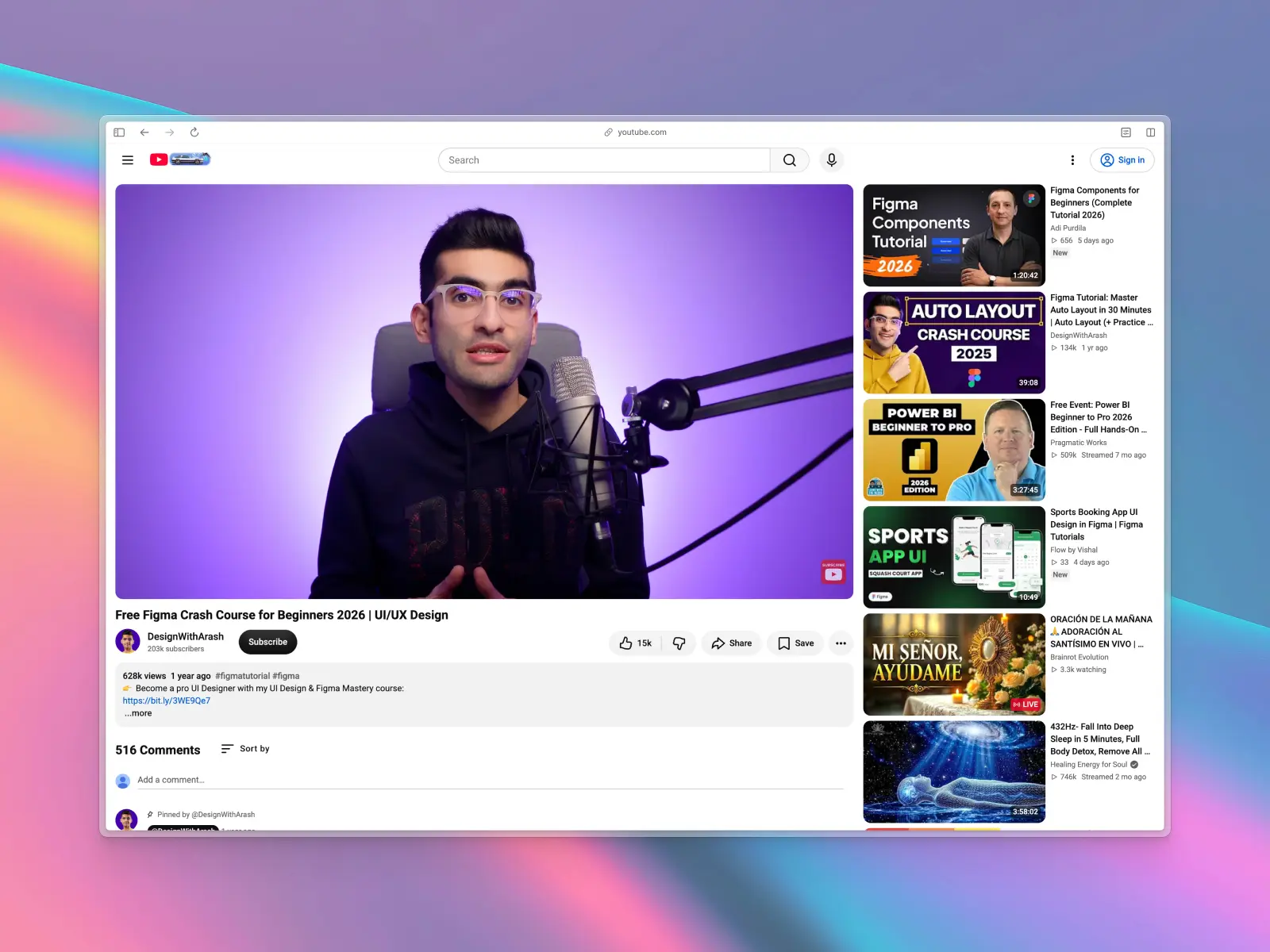
2. Free Figma Crash Course for Beginners by Arash Ahadzadeh
YouTube — FREE
Length of course: 1 video, 1 hour 30 minutes
Instructor: Arash Ahadzadeh, DesignWithArash
Arash teaches UI UX design at university level and it shows: the pacing is steady, the explanations are plain, and nothing is skipped. This 90-minute crash course, recorded in early 2025 on the current interface, covers the dashboard and file setup, frames and shapes, and building both a web design layout and a mobile app screen. It has over 600,000 views and is the most popular current free Figma tutorial on YouTube, and the comments are the most consistently positive we read for any course on this list: the recurring theme is that he explains at the speed of someone sitting next to you rather than racing through features.
It is a crash course, so it does not go deep on variables or design systems. Take it straight after Figma's official course as a second pass through the essential tools, from a human teacher this time. His paid course, UI Design and Figma Mastery, goes much further into visual design and mobile apps.
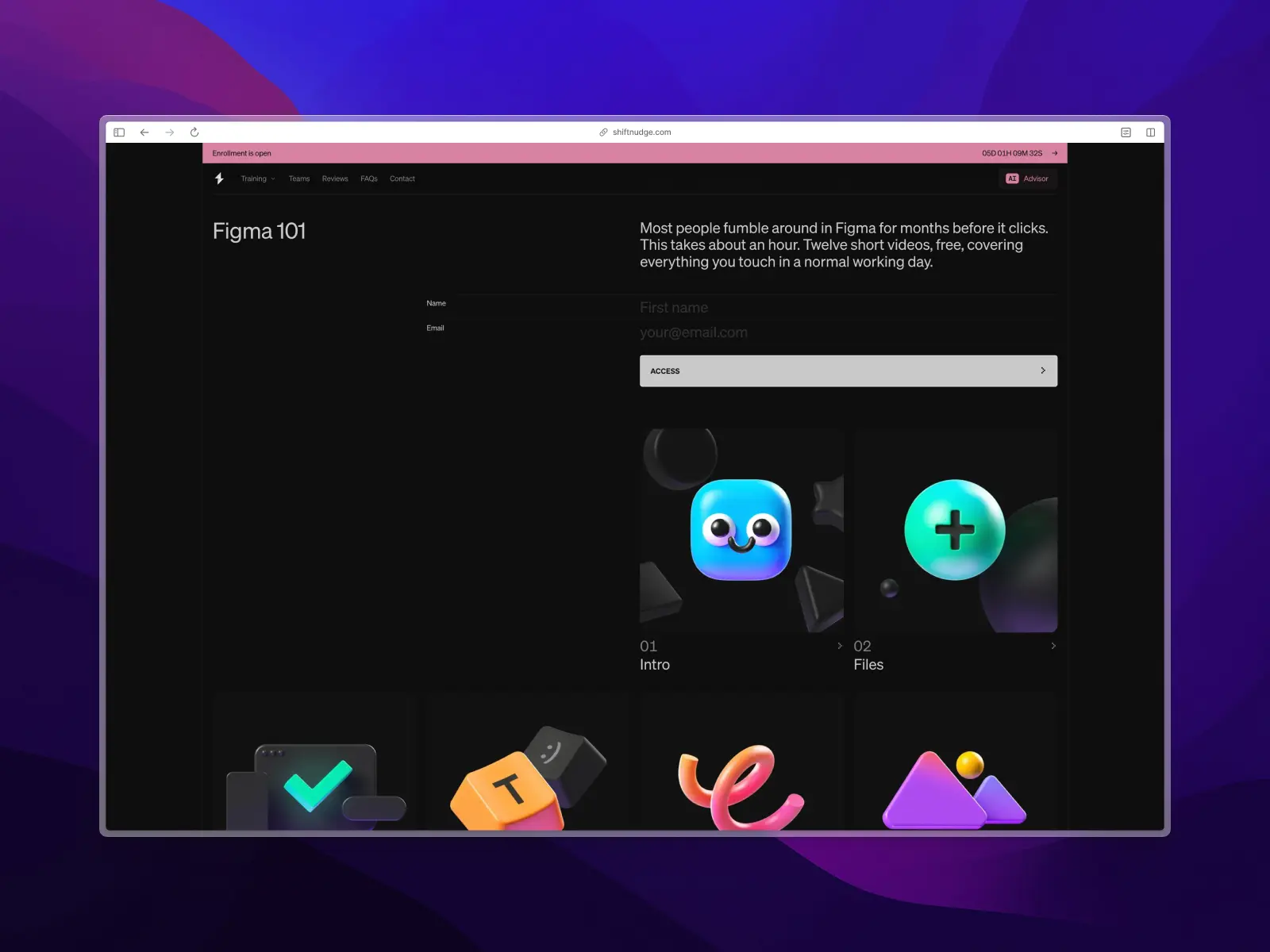
3. Figma 101 by Shift Nudge
shiftnudge.com — FREE (email sign-up)
Length of course: 12 videos totaling about 1 hour
Instructor: Matt D. Smith
Matt D. Smith runs Shift Nudge, one of the most respected paid interface design courses, and Figma 101 is his free primer. Twelve videos, each under ten minutes: files, frames and groups, text, shapes, images, getting around the interface, auto layout, components, plugins, prototyping, and real-time collaboration and sharing. It is the quickest tour of the essential tools on this list.
It is also the tightest set of Figma skills here. Matt is a visual design specialist and a working product designer, so even the basics come with taste: how he names layers, structures frames and thinks about components is worth copying. It is also a good refresher if you have used Figma for a while and picked up bad habits. Two caveats: you need to hand over a name and email address to watch, and the page does not state a recording date, so expect some interface differences from UI3.
"This course teaches the basics of Figma in one hour with 12 fast-paced videos. It's meant for beginners, but I've had a bunch of seasoned Figma users tell me they learned a lot as well."
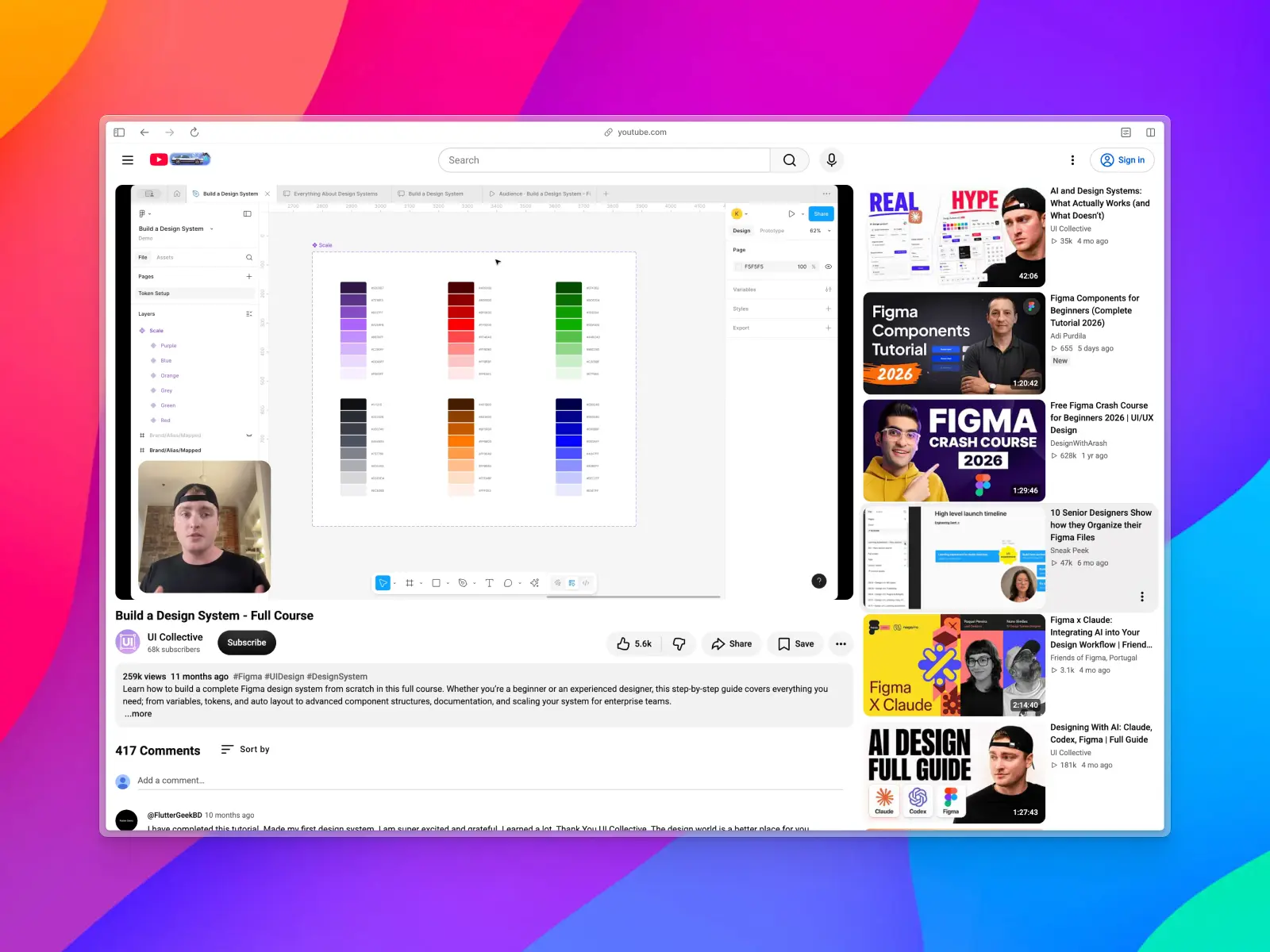
4. Build a Design System: Full Course by UI Collective
YouTube — FREE
Length of course: 1 video, 3 hours 34 minutes
Instructor: UI Collective
Most free Figma course lists stop at building screens. Once you can do that, the next skill a design team actually asks for is building and maintaining a design system, and this September 2025 course is the best free treatment of it we found. It is intermediate, so finish the three courses above first, but do not put it off for months: the comments are full of people who built their first design system by following along, and several who argue with the instructor about token naming, which tells you the audience is doing the work.
It covers variables and design tokens, auto layout at scale, responsive design, component architecture, documentation, and how to structure a system so it survives an enterprise design team. UI Collective also publishes a companion Design System and Figma Variable Set Up tutorial (2 hours) if you want the variables section on its own.
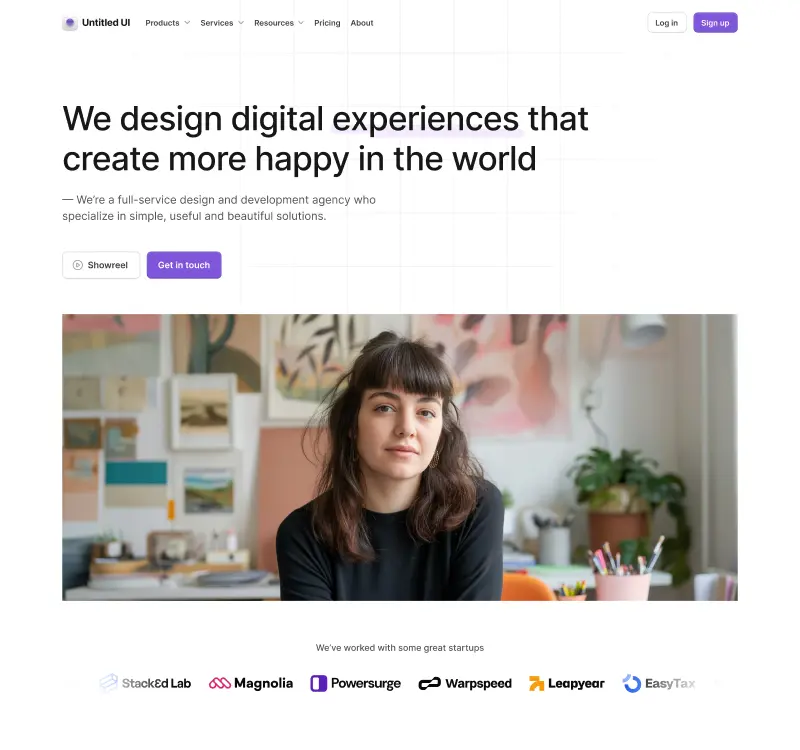
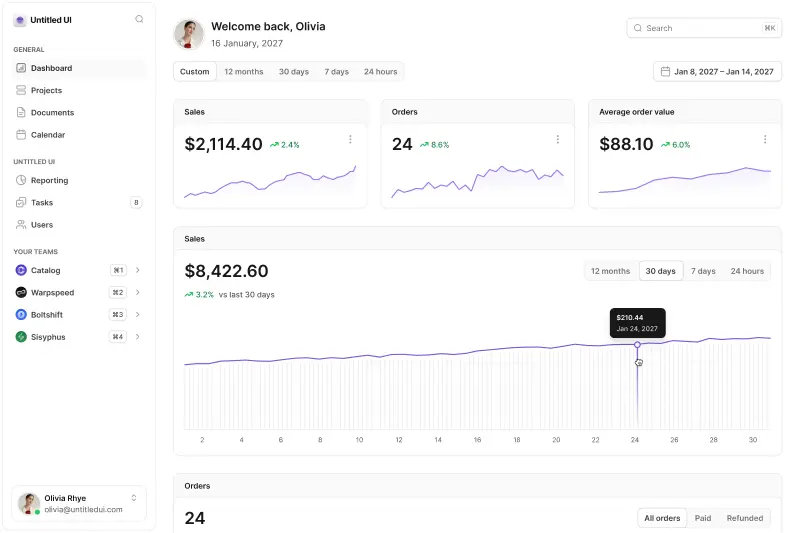
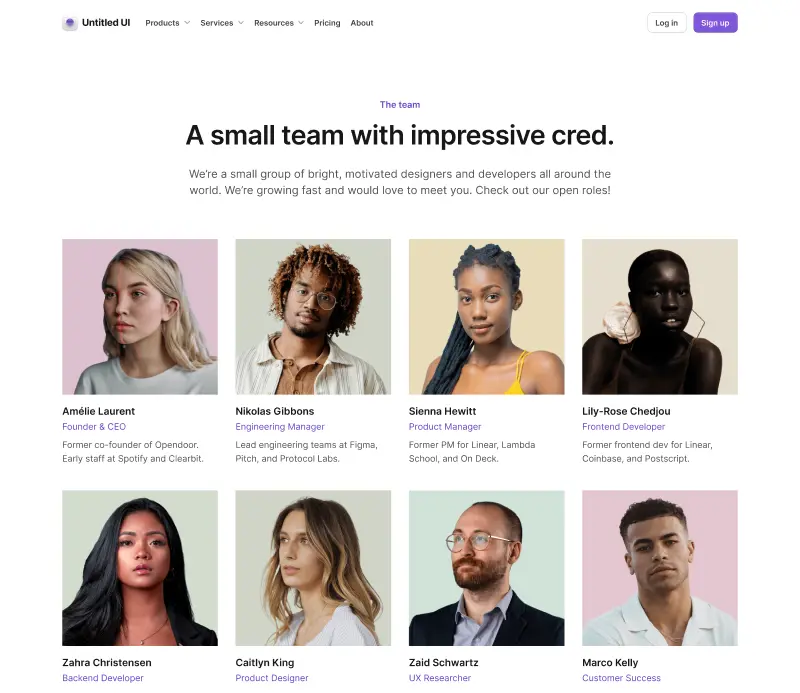
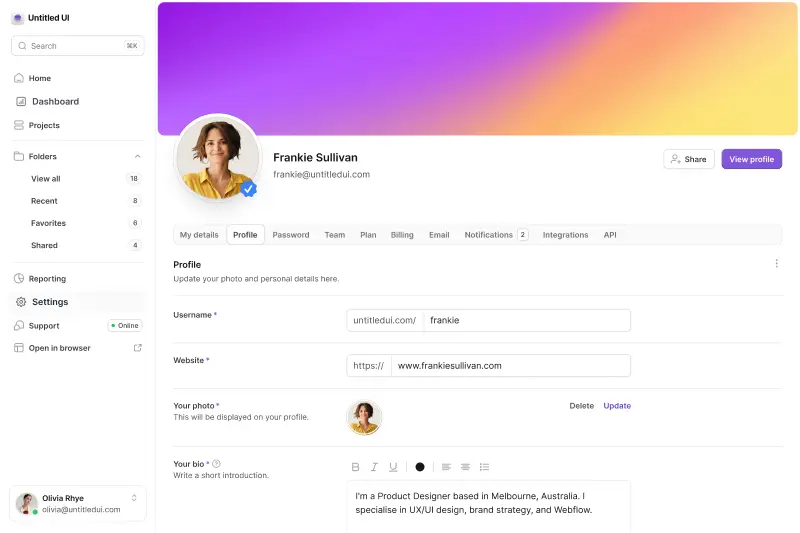
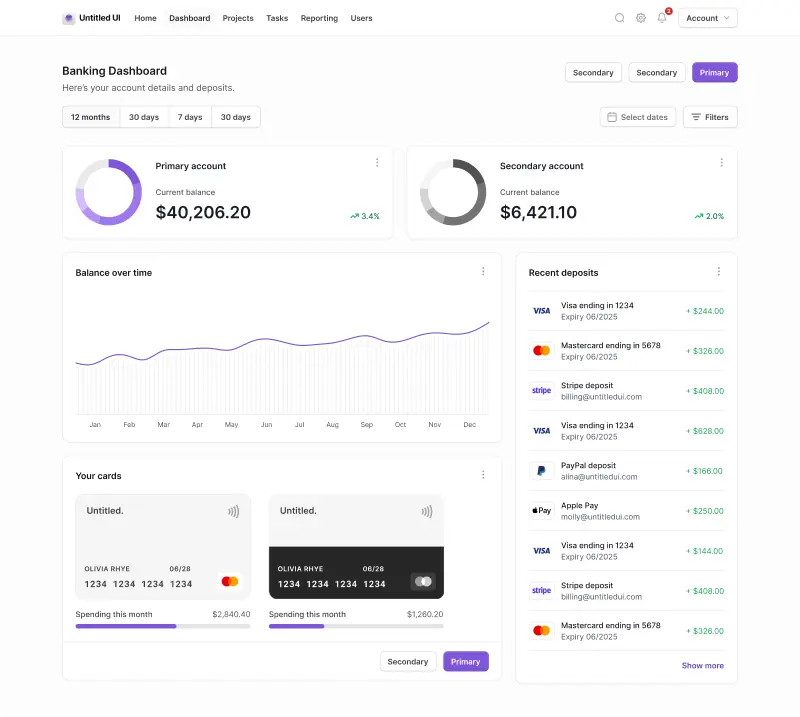
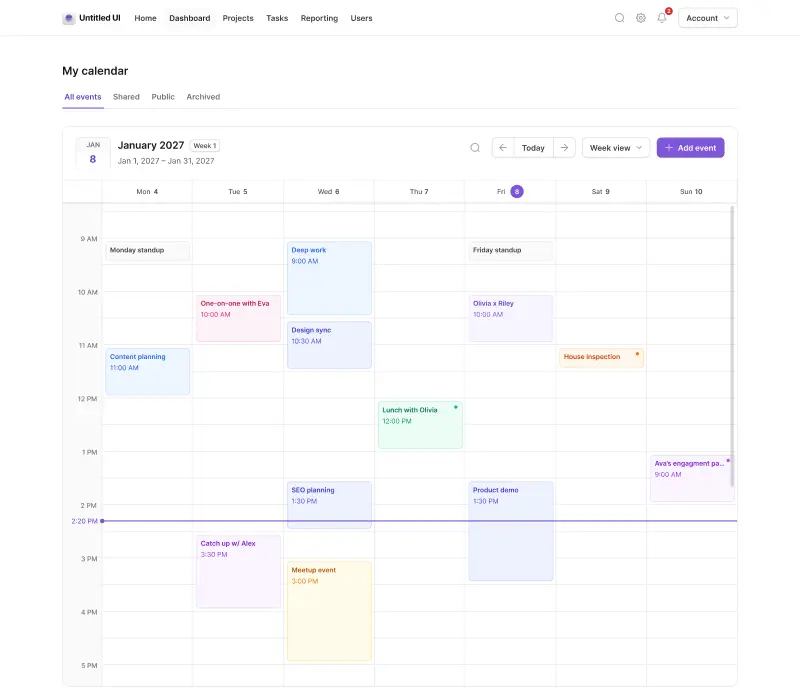
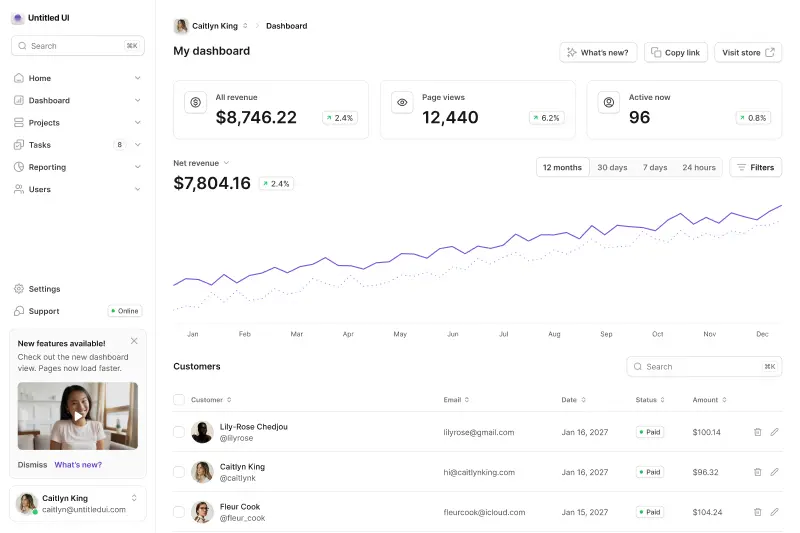
If you want to see what a finished, production-grade system looks like while you learn, open the free version of Untitled UI and reverse-engineer how the components and variables are built.
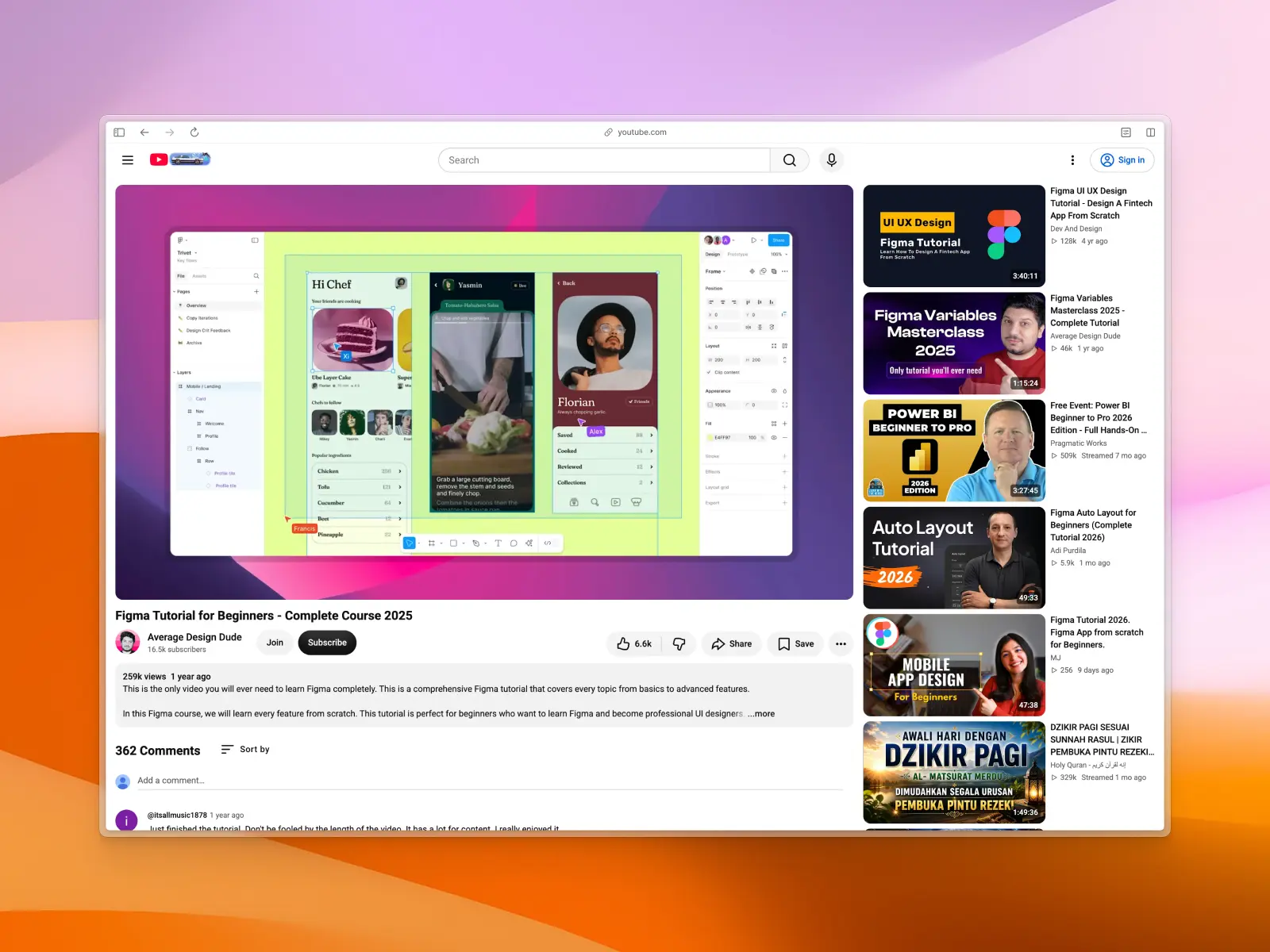
5. Figma Tutorial for Beginners: Complete Course 2025 by Average Design Dude
YouTube — FREE
Length of course: 1 video, 1 hour 55 minutes
Instructor: Average Design Dude
Judged purely on teaching quality, this is the best beginner course on YouTube right now, and it only sits at number five because the courses above it cover ground it does not. It teaches Figma itself, feature by feature, in under two hours, and the comments are unusually specific: people who had paid for Figma courses saying this one finally made auto layout make sense. It is fully chaptered and covers every core tool: frames, auto layout, components, component properties and instance swap, boolean operations, interactive prototypes and animation. Design assets and a shortcut cheat sheet are linked in the description.
Take it if you already understand user interface design basics and just need to learn the tool quickly. Skip the UX UI design theory, get the muscle memory.
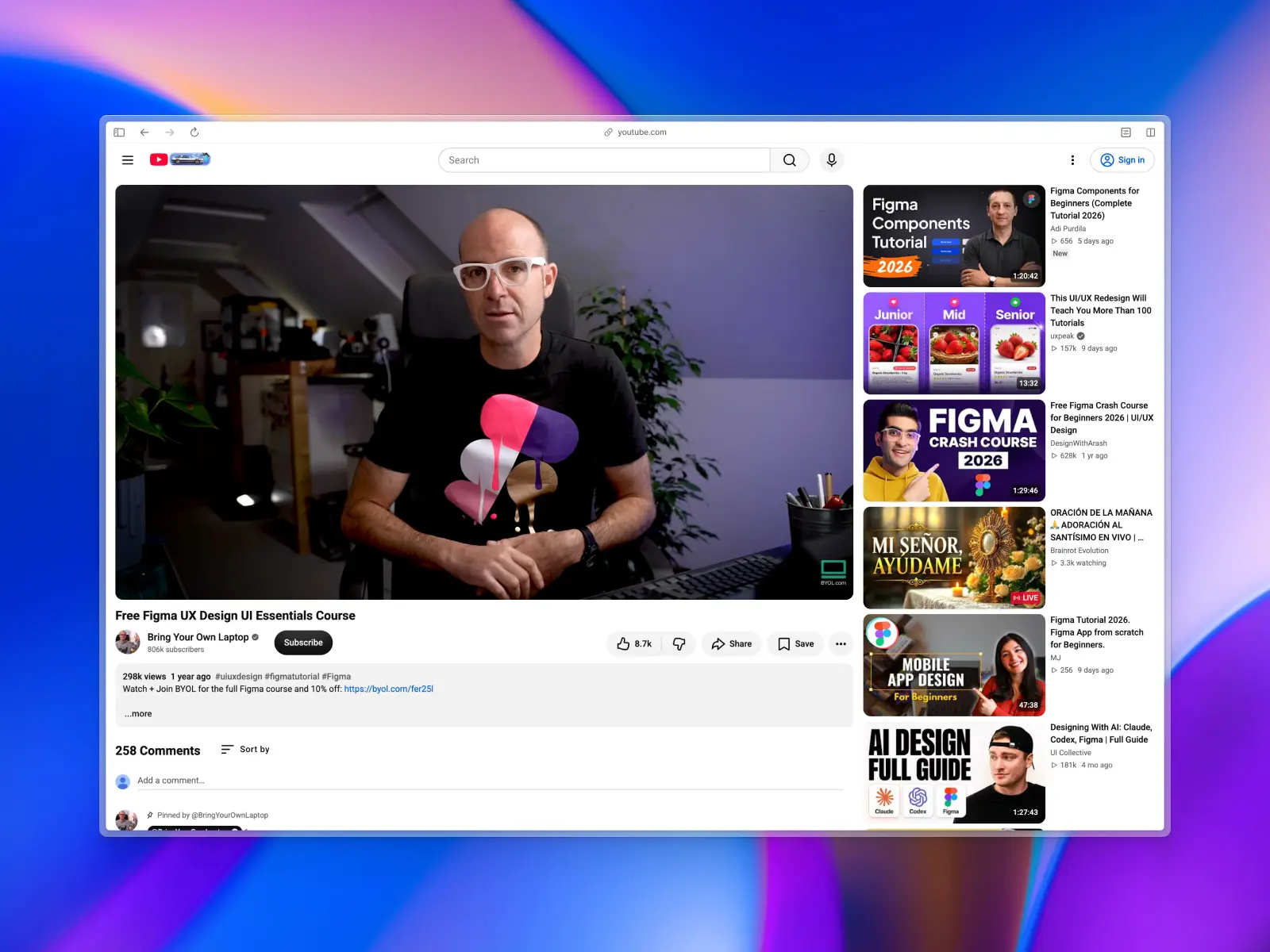
6. Free Figma UX Design UI Essentials Course by Dan Scott
YouTube — FREE
Length of course: 1 video, 2 hours 40 minutes
Instructor: Daniel Walter Scott, Bring Your Own Laptop
Dan Scott is the best teacher on this list for someone who has never opened a design tool, and the only one who teaches the user experience design process properly rather than just the software. Skip the first 20 minutes of theory if you are impatient; the comments agree it picks up sharply after that. This is his 2025 re-record for the current interface (the original 2021 version has over three million views but is now out of date). It is the free first third of his full Udemy course, and it stands on its own.
You start with a user experience brief and personas, do some light design research, sketch wireframes, then build the design: color, type and images, components, constraints and variants, working with UI kits and plugins, a style guide, interactive prototypes, and finally developer handoff. Exercise files are free to download. It is the closest thing to a full UI UX design course on this list, and the one we would point aspiring designers to first.
His paid follow-on, Figma UI UX Design Essentials, is on our list of the best paid Figma courses.
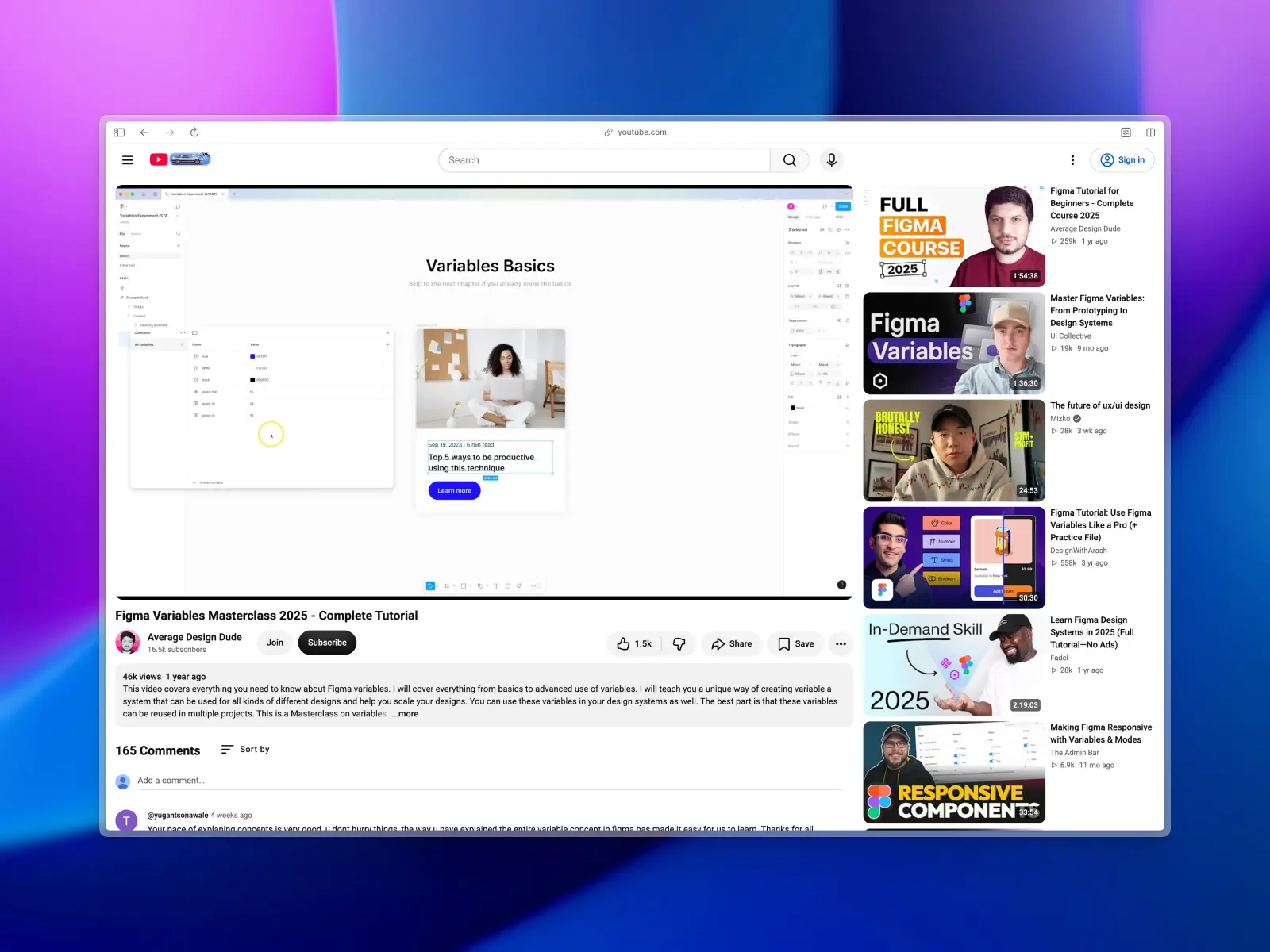
7. Figma Variables Masterclass 2025 by Average Design Dude
YouTube — FREE
Length of course: 1 video, 1 hour 15 minutes
Instructor: Average Design Dude
Variables are the single biggest gap between someone who learned Figma in 2022 and someone a design team hires in 2026, and almost every free variables tutorial is two or three years old. This 2025 masterclass is the exception: color, number, string and boolean variables, modes for light and dark themes, scoping, and binding variables to components. The practice file is shared through the creator's Discord.
If 75 minutes is more than you want, Adi Purdila's Figma Variables for Beginners (31 minutes, 2025) covers the essentials.
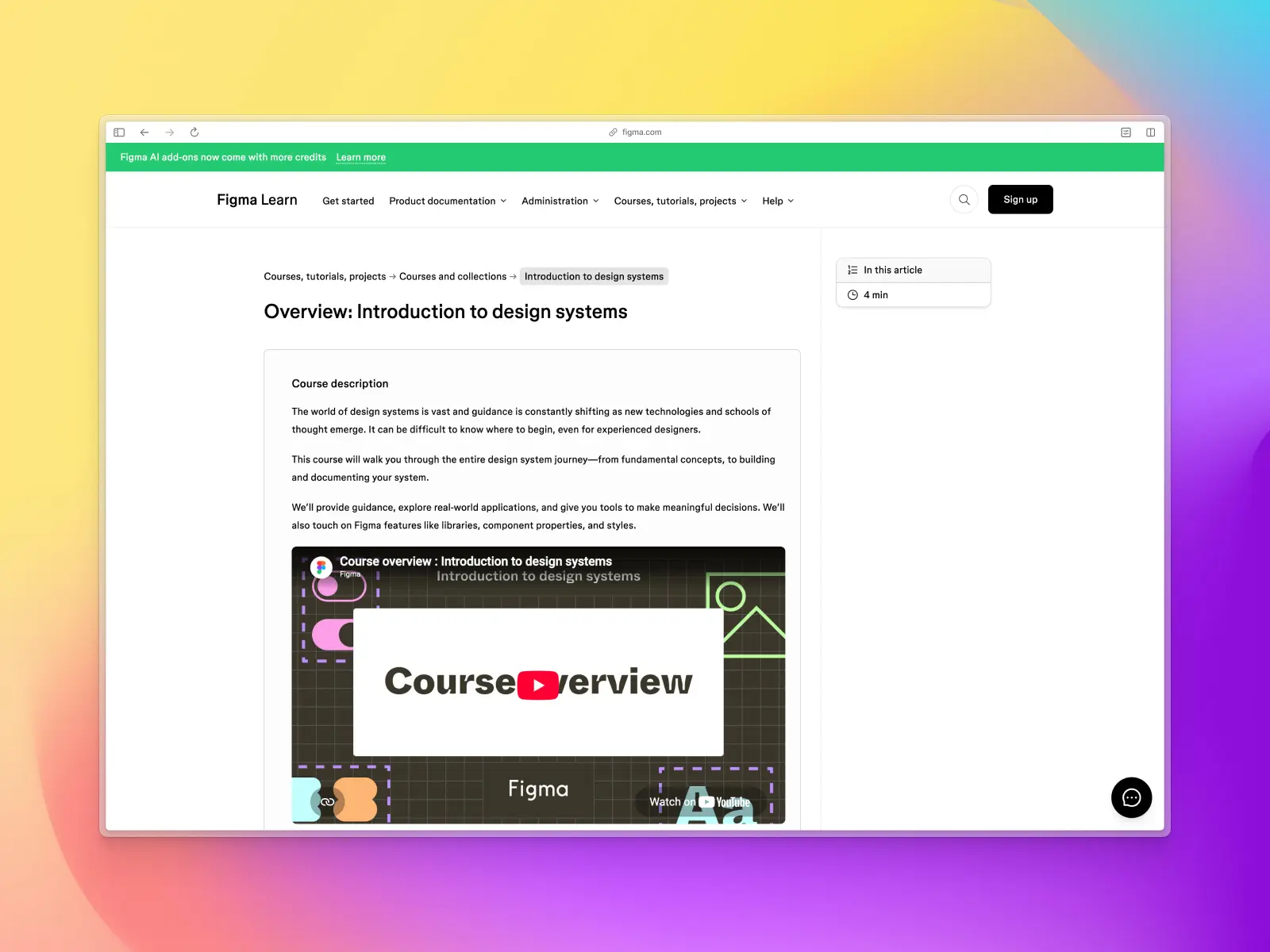
8. Introduction to design systems by Figma Learn
Figma Learn — FREE
Length of course: 4 written lessons, 7 videos, about 2 hours
Instructor: Figma
Figma's official design systems online course is the theory to go with UI Collective's practice. Four written lessons with embedded videos walk through what a design system is, how to structure foundations, components and documentation, and how to roll one out to a design team with real-time collaboration in mind. It comes with a Community file and, importantly, an added lesson covering tokens, variables and styles that brings the 2023 original up to date.
No sign-up, no upsell. It assumes you already know styles and components, so take it after the beginner courses.
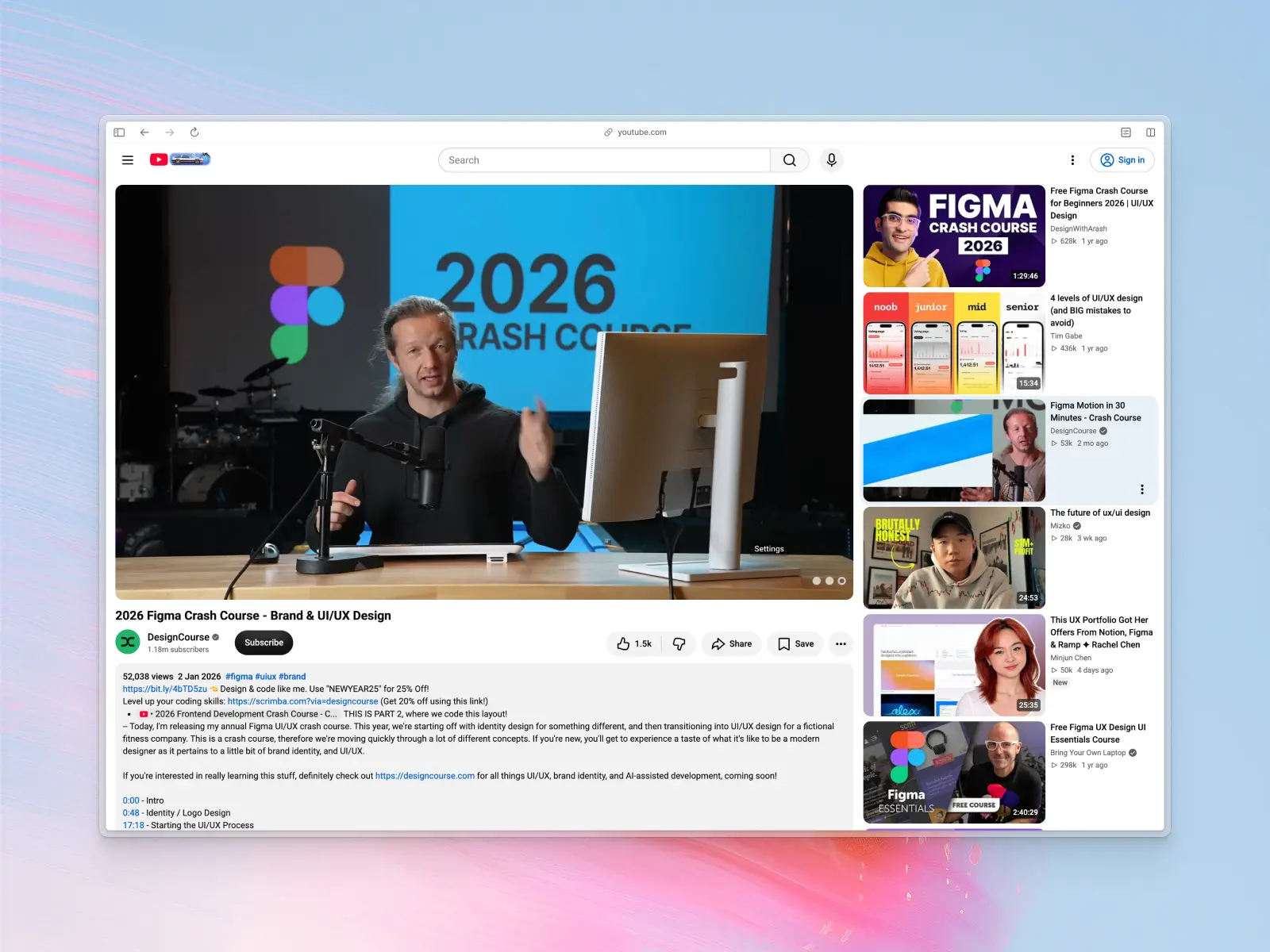
9. 2026 Figma Crash Course: Brand and UI/UX Design by DesignCourse
YouTube — FREE
Length of course: 1 video, 1 hour 27 minutes
Instructor: Gary Simon, DesignCourse
Gary Simon has been teaching visual design and front-end on YouTube for over a decade, and this January 2026 crash course is his most current Figma walkthrough. It takes one fictional fitness brand from logo and identity through to a user interface: navbar, hero, feature sections, with AI-generated imagery along the way. A second video codes the result.
The brand detour will not suit everyone, but if you want to see how identity decisions flow into user interface decisions, it is a useful bridge for aspiring designers who care about visual design. It is a crash course, so it moves fast.
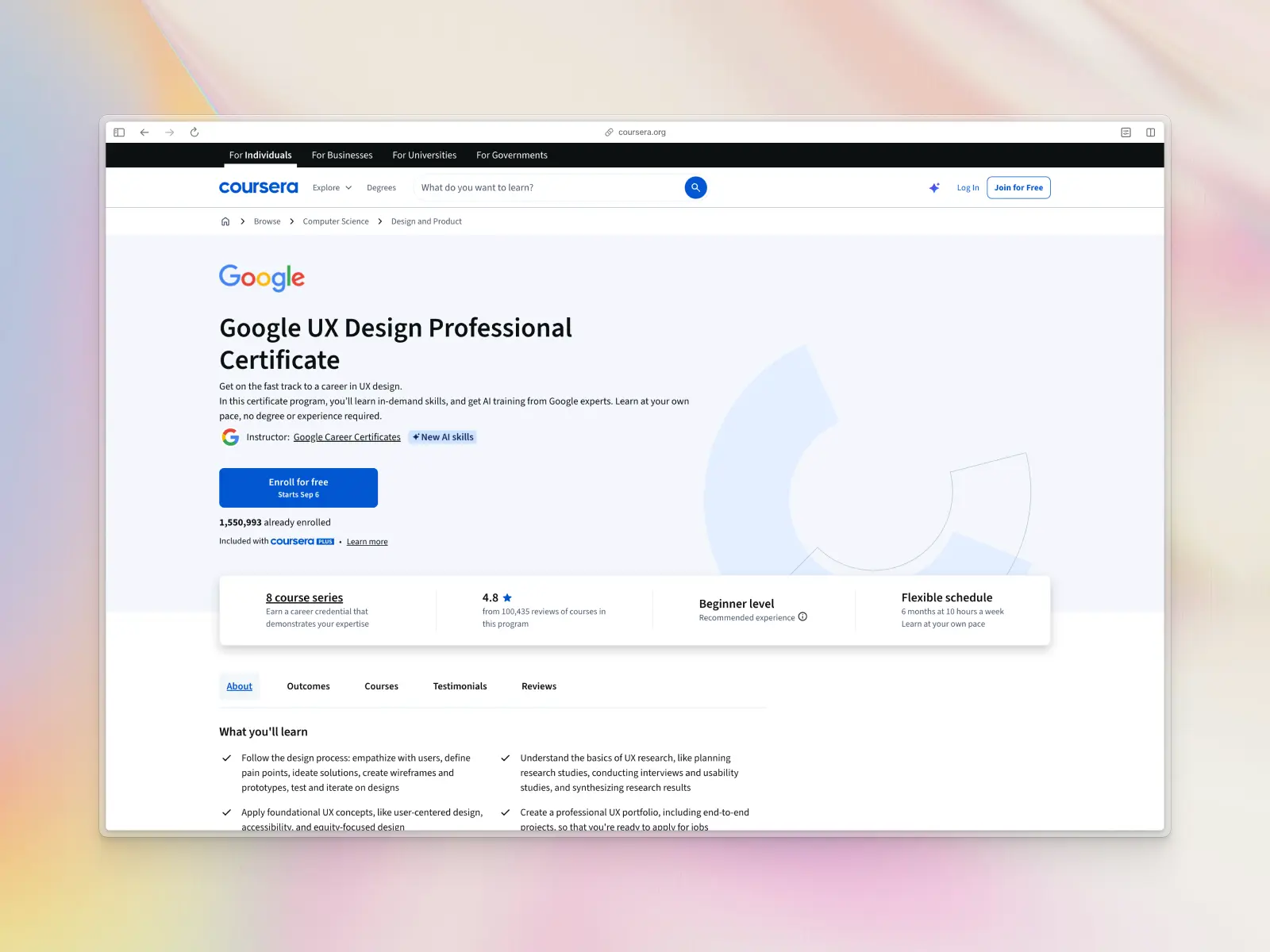
10. Google UX Design Professional Certificate by Google (free to audit)
Coursera — FREE to audit (certificate from $49 per month)
Length of course: 8 courses, about 6 months at 10 hours per week
Instructor: Google
This is the one structured, university-style user experience design program on the list, and the only one that teaches design research, usability testing and the full design process rather than the software alone. Figma is the primary tool across the program, with two courses dedicated to it: Build Wireframes and Low-Fidelity Prototypes (12 hours) and Create High-Fidelity Designs and Prototypes in Figma (20 hours), both of which build mobile apps as the running project. Over 1.5 million people have enrolled and it holds a 4.8 rating from more than 100,000 reviews.
Be clear about what is free: you can audit every video lesson at no cost. The graded assignments and the certificate need a Coursera subscription at $49 per month after a seven-day trial, so a finished certificate typically costs under $300. The Figma footage also predates UI3, so expect the interface to look different from yours.
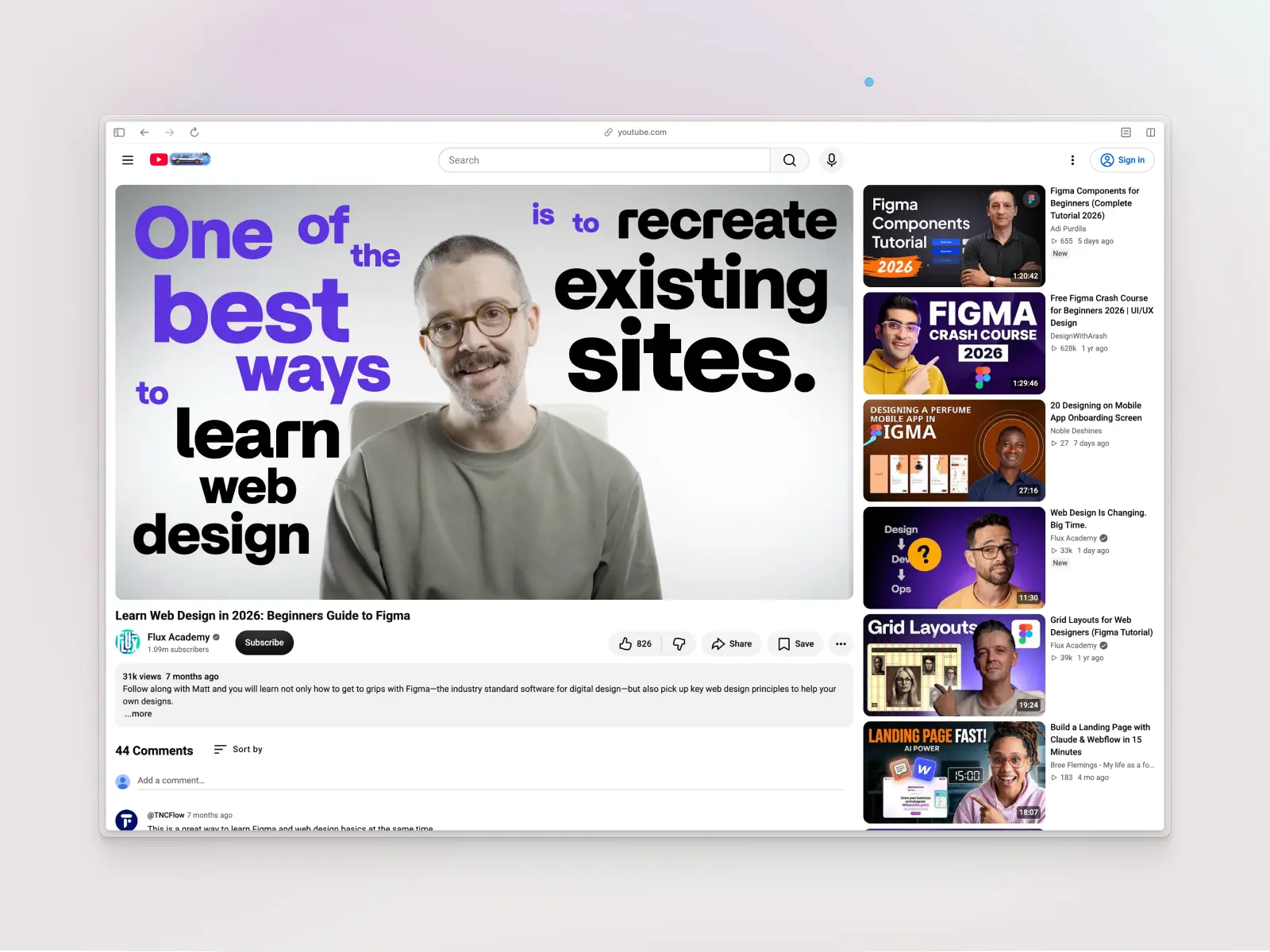
11. Learn Web Design in 2026: Beginners Guide to Figma by Flux Academy
YouTube — FREE
Length of course: 1 video, 1 hour 13 minutes
Instructor: Matt Brunton, Flux Academy
Flux Academy (Ran Segall's school) focuses on web designers who ship sites in Webflow or Framer, and its free Figma tutorial series is built with their habits in mind. This January 2026 beginner guide is the place to start if web design is your goal. It covers typesetting, frames, auto layout and responsive design, images and icons, styles and variables, gradients, sections and buttons, then ends with a design challenge. Starter files are free, though several viewers report the download link not arriving, and the reference site it recreates has since been redesigned, so expect some drift.
If you only have 15 minutes, their 13-minute Figma crash course has over 1.2 million views and is the best "first quarter hour in Figma" video we know of.
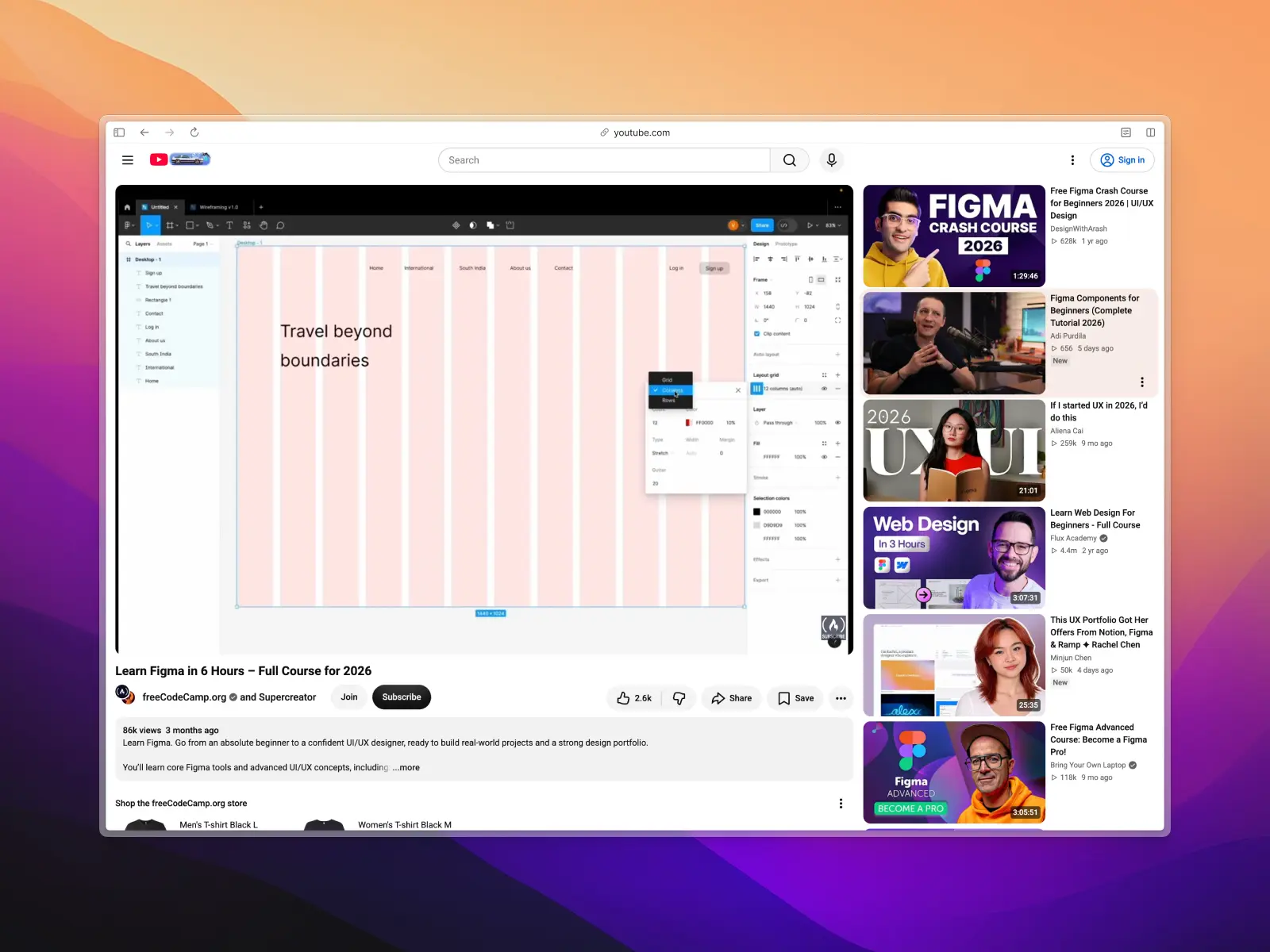
12. Learn Figma in 6 Hours: Full Course for 2026 by freeCodeCamp
YouTube — FREE
Length of course: 1 video, 6 hours 16 minutes
Instructor: Wish (Supercreator) for freeCodeCamp
This is the longest free Figma course on the list and the most recent, published in May 2026 with no upsell at the end. On paper it covers more than anything else here: the Figma interface and shortcuts, style guides and color systems, low-fidelity to high-fidelity design, components, auto layout, constraints and multi-dimensional components, then three real projects (a travel website, a car dealership site and a food delivery app) that mix web design and mobile apps.
In practice it is a mixed bag, which is why it sits last. The instructor is newer and less polished than the others on this list, and the recording has a production fault that viewers keep flagging in the comments: the left side of the Figma interface is cropped out of frame and the text is hard to read at the uploaded resolution. For a beginner course, not being able to see the layers panel matters.
We have kept it because six free hours of current, project-based Figma content is still useful once you know the interface well enough to fill in what the video cuts off, but take it after the courses above, not instead of them.
Honorable mentions: free official courses on Figma's newer tools
Figma has shipped a lot since 2025: Figma Make (prompt-to-prototype), Figma Sites, Figma Draw, Figma Buzz, Grid auto layout, and in 2026, Figma Motion. None of the beginner courses above cover them, so these short official videos fill the gap once you are comfortable in Figma Design:
- Intro to Figma Make (10 minutes), plus the full Figma Make playlist.
- Intro to Figma Sites (11 minutes).
- Learn Figma Motion in 8 minutes, with the longer Motion design fundamentals collection on Figma Learn.
- Components collection: 8 lessons and a companion file on component properties, variants and slots.
- Figma Auto Layout for Beginners (2026) by Adi Purdila, 50 minutes on the current auto layout and Grid.

A free Figma learning path: what order to take these in
- Day 1 to 2: Figma Design for beginners, about 3 hours of video. Build the portfolio site, do not just watch. Then Arash's 90-minute crash course as a second pass through the essential tools with a human teacher.
- Week 1: Figma 101 for the fundamentals done properly, then Average Design Dude's Complete Course to lock in auto layout and components. Add Dan Scott's Essentials course if you are new to the user experience design process as well as the tool.
- Week 2 to 3: Build a real project of your own, a landing page or a small mobile app, using only what you have learned. This is the point where layouts and interactive prototypes start to stick, and where the UI UX design gaps show.
- Week 4 onwards: Variables Masterclass, then UI Collective's design systems course, then Figma's Introduction to design systems for the theory. This is where Figma skills turn into user interface design skills a team can use. The freeCodeCamp course is optional extra practice at this stage.
- Practice: rebuild real interfaces. Open a professional UI kit such as the free Untitled UI, pick a component, and recreate it with your own auto layout, variants and variables. Then compare. This is the fastest way we know to close the gap between "finished a course" and "can do the job", and it is how a lot of UI UX design skills get learned in practice.
Is Figma hard to learn?
No. Figma is one of the easiest professional design tools to pick up, and by far the easiest user interface design tool for beginners, which is a big part of why user experience teams standardized on it. The Figma interface is smaller than Photoshop or Illustrator, it runs in a browser on any operating system, real-time collaboration is built in, and a free Figma account has no time limit. Most people can build a simple screen within a couple of hours of Figma's beginner course.
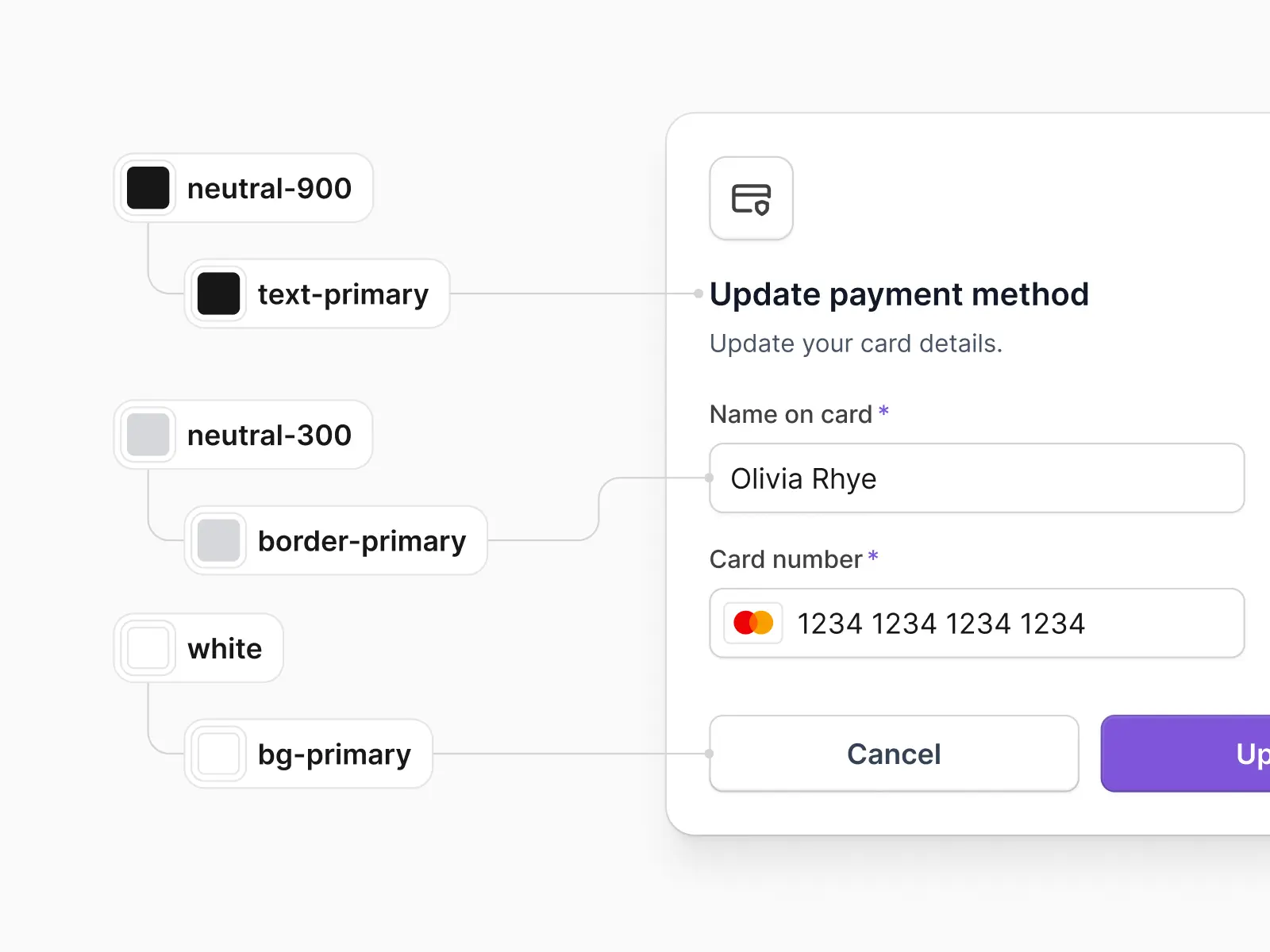
What takes longer is learning to use it the way a design team does: auto layout everywhere, components with properties instead of copies, variables instead of hard-coded colors, interactive prototypes that survive a usability test, and files organized so other people can work in them. That is the part free courses often stop short of, and why the intermediate picks above matter.

What free Figma courses skip
Free courses are good at Figma skills and weak on the rest of UI UX design. Almost none of the picks above spend real time on design research, user experience design fundamentals, design thinking or the design process from brief to handoff. That is fine for learning a user interface tool, but it is not a UX UI design education.
They also rarely cover visual design or interface design principles: typography, spacing, color and hierarchy are assumed rather than taught. Our guide to the UI design skills employers actually look for covers what to learn next.
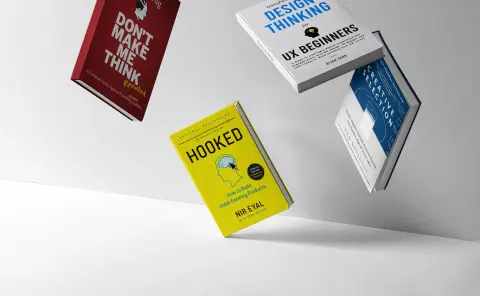
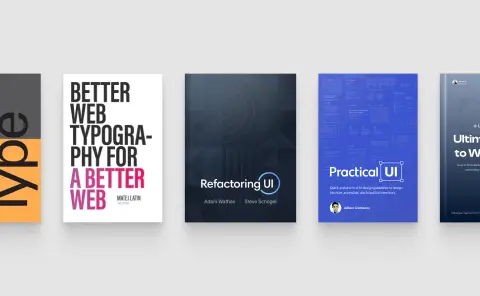
If you are learning to be a designer rather than a developer or product manager learning the tool, plan to fill those UX UI design gaps separately, ideally with some design research practice of your own. Our lists of UI design books and UX design books are the cheapest way to do it, and the Google UX Design Certificate is the most structured.
How long does it take to learn Figma?
- Basics: a day. Figma's own course is three hours; add a few hours of practice.
- Comfortable: two to four weeks of regular use, once auto layout, responsive design and components stop feeling like a fight.
- Job-ready: two to three months at roughly ten hours a week, including variables, design systems, interactive prototypes, some user experience research and UI UX design theory, and a portfolio of real projects. Coursera and Noble Desktop estimate similar timelines. You will keep learning after that, but that is the point where a design team will take you seriously (our product designer salaries guide shows what that is worth).
Do free Figma courses come with a certificate?
Mostly not, and it matters less than people think for a UX UI design career. Figma does not offer an official certification of any kind, so every "Figma certificate" is a certificate of completion issued by a course provider. Hiring managers on a design team look at portfolios, user experience thinking and Figma files, not completion certificates.
If you want a credential anyway, the Google UX Design Certificate is the most recognized, and it is paid. Sites advertising "free Figma course with certificate" typically gate the certificate behind an account or a fee, so read the fine print.
Free vs paid Figma courses: when is it worth paying?
Every course above teaches Figma's most powerful features for nothing, so it is fair to ask what money buys.
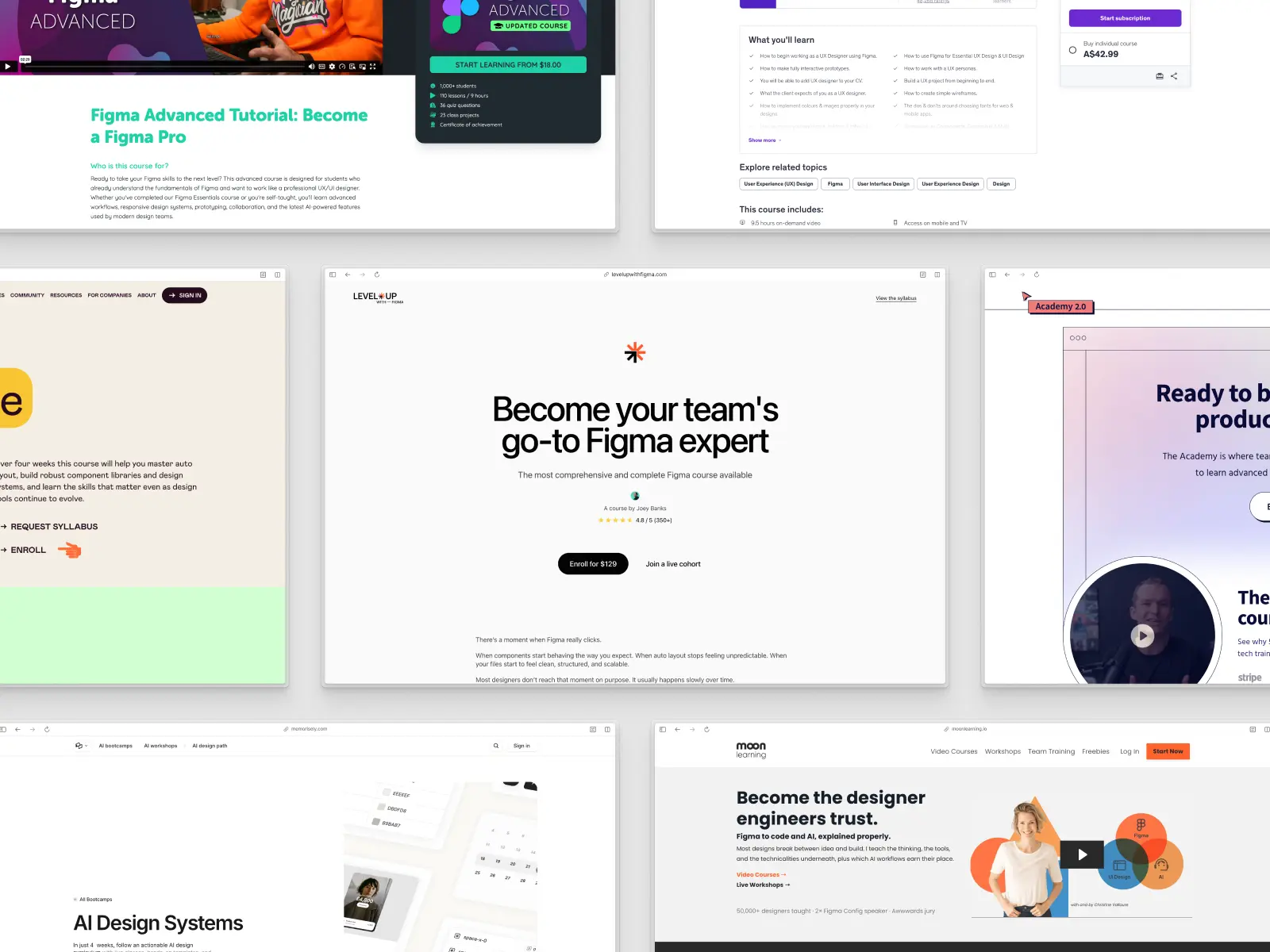
Free courses will get you to competent in Figma, though not in user experience as a discipline. Paying makes sense when you need one of three things: structured feedback on your user interface work from a mentor (cohort courses and bootcamps), depth on design systems, variables, Dev Mode and the user experience design process that free content only skims, or a curriculum that is maintained every time Figma ships a major update.
We keep a separate, verified list of the best paid Figma courses, with current prices, for when you get there.

Summary
Learning Figma has never been cheaper or better documented, and early in your design journey the free route is the right one, but only if you pick courses recorded on the Figma interface you are actually using. Start with Figma Design for beginners, lock in the fundamentals with Arash, Figma 101 and Average Design Dude, then spend real time on variables and design systems.
Wherever you are in your design journey, the free online courses above cover the Figma skills; the user experience design, interface design and visual design skills come from practice, books and, eventually, a design team. Everything on this list is free to watch today, and we will keep checking it as Figma changes.
Want to dive deeper? Our guide to the best paid Figma courses in 2026 covers cohort courses, bootcamps and advanced design systems training for every stage of your design journey.
More best practice guides
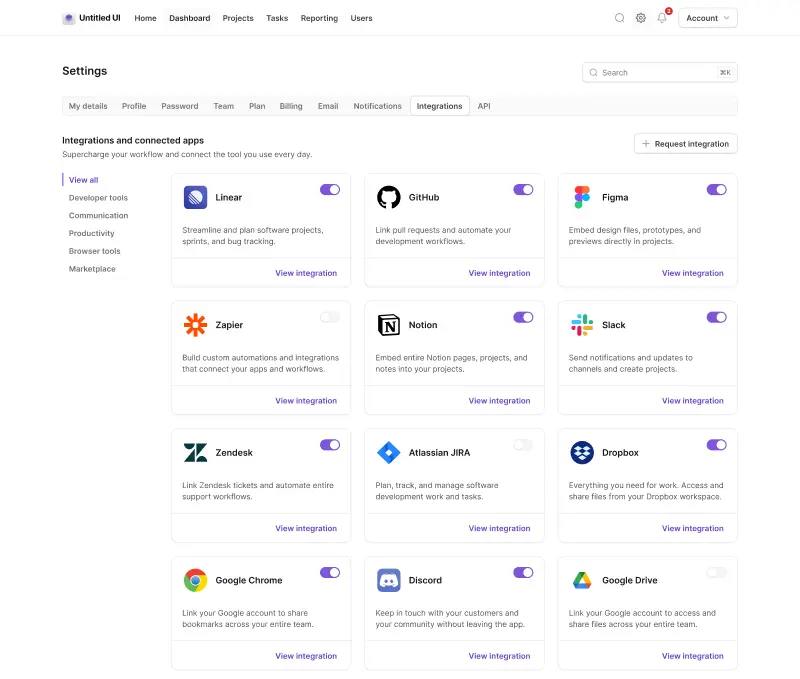
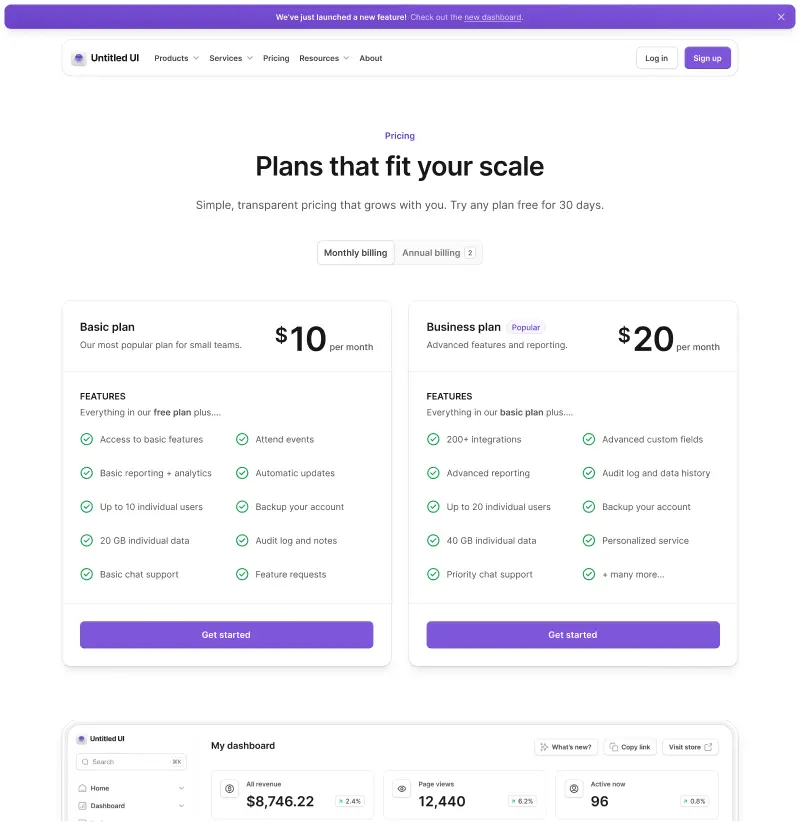
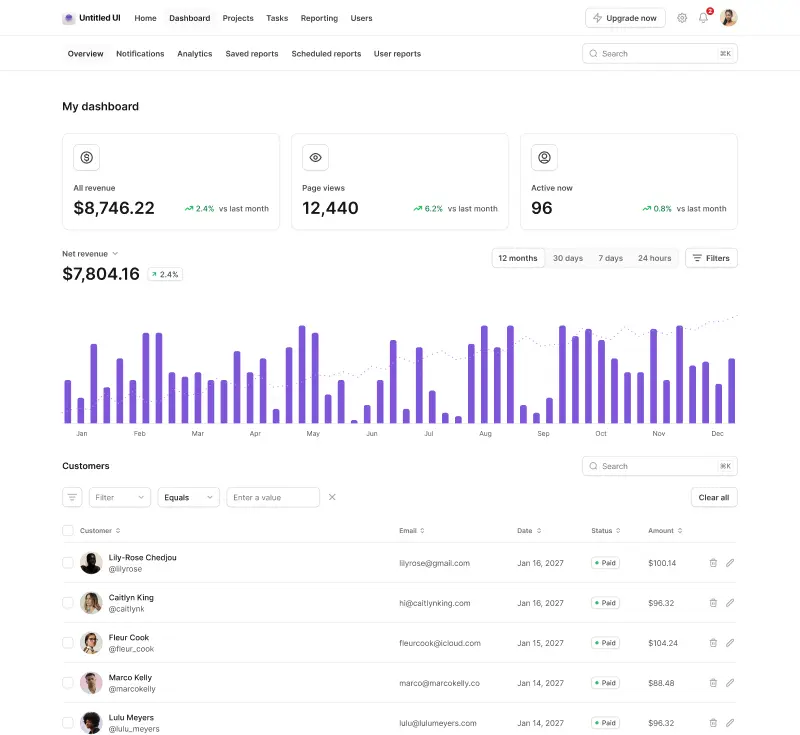
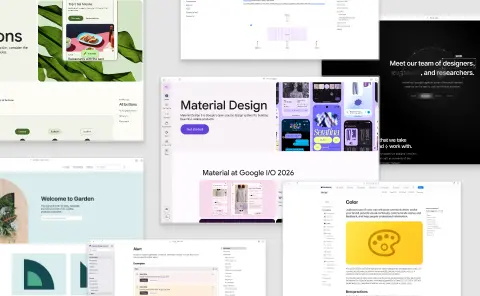
This post is an excerpt from Untitled UI Figma, world's largest Figma UI kit and design system. Untitled UI includes tips and best practices right in the Figma file to help you level up as a designer. You can preview Untitled UI Figma here.
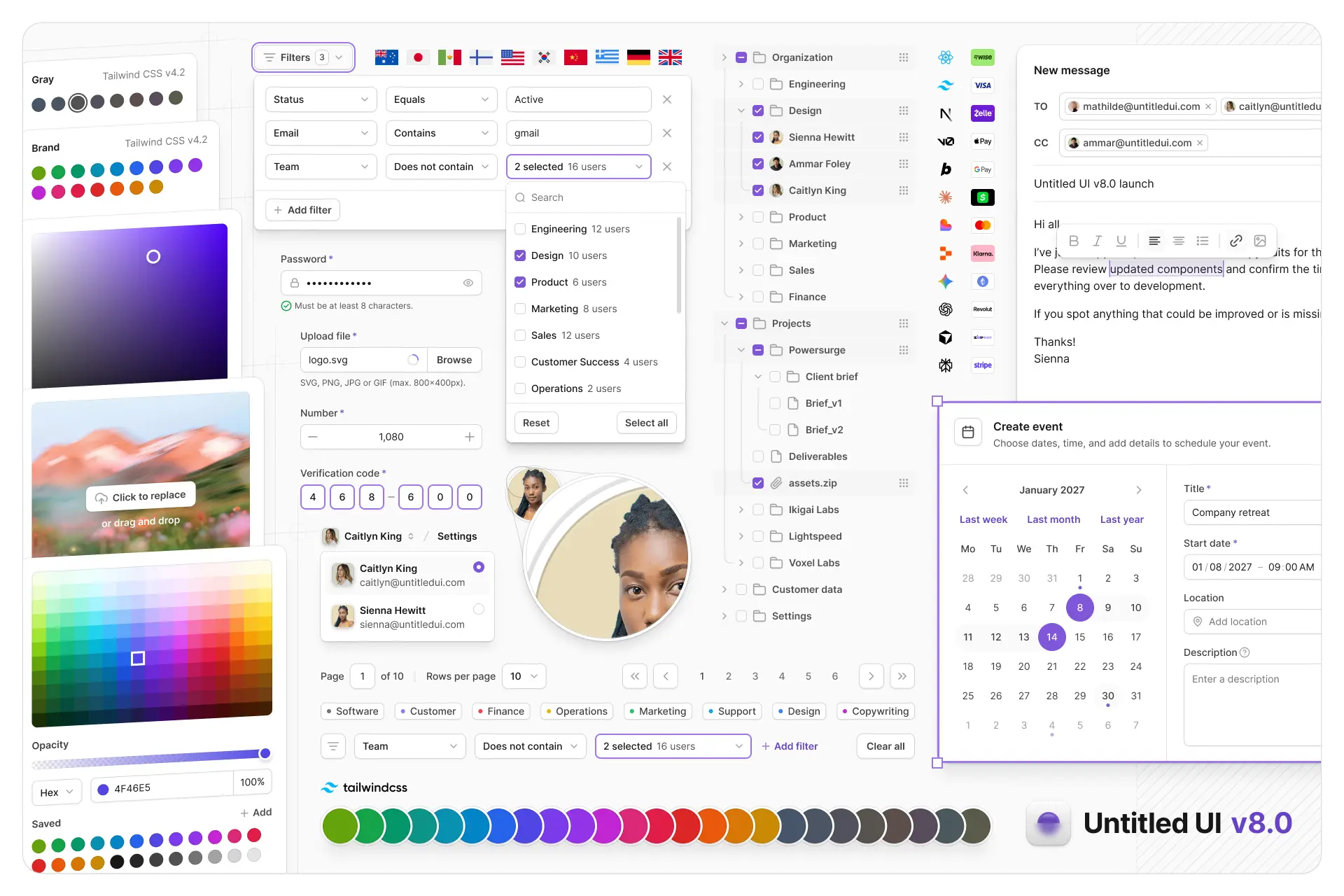
Untitled UI Figma is meticulously crafted with 100% Auto Layout 5.0, super-smart variants, Figma's newest variables features, and with accessibility in mind.
It's a great example of Figma design system best practices and is the most popular and highest-rated Figma UI kit on the internet with 3,650+ 5-star reviews!
We've also released Untitled UI Figma PRO LITE, which is a premium and lightweight version of the full Untitled UI Figma PRO STYLES kit and have included it for free. It's 55% lighter, faster, and is designed to include everything you need and nothing you don't. It's perfect for moving fast and for smaller projects!
Untitled UI was designed to be the "ultimate" UI kit and the perfect starting point for any kind of project—from beautiful marketing landing pages, all the way to complex dashboards and web apps—Untitled UI has thought of absolutely everything so you don't have to.
We're constantly making updates and improvements to the UI kit and recently announced that we've completely refactored Untitled UI to take advantage of Figma's latest features released at Config 2023, Framework 2024, Config 2024, Config 2025, and Config 2026. This includes all the latest Figma features such as color variables (dark mode), spacing, radius, typography, and effects variables, Auto Layout 5.0, min/max widths, Auto Layout wrapping, and much more.
You can check out a full preview of the design kit, or check out the 100% free UI kit here (which is more advanced than most UI kits in its own right!). If you're short on time, here's a 60-second overview: